Montreal city council: Bylaw adopted to protect municipal employees from abuse
Posted September 21, 2026 6:48 am.
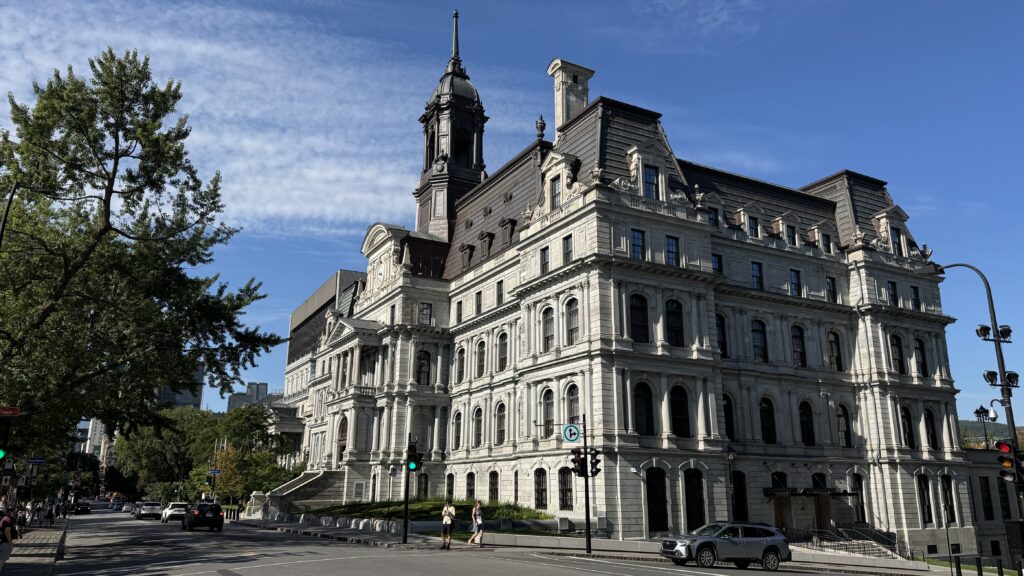
The Montreal City Council passed a municipal bylaw aimed at prohibiting citizens from insulting police officers and other municipal employees.
The debate on this measure lasted more than half an hour, with the official opposition considering the proposal to be poorly drafted. It was passed by a vote of 35 in favor and 25 against.
An opposition city councilor, Marie Plourde, criticized the fact that her colleagues were asked to vote now, before they had a chance to conduct consultations.
Under this bylaw, citizens who insult municipal staff would face fines ranging from $300 to $1,000 for a first offense. Subsequent offenses could result in fines of up to $2,000.
Municipal officials did not specify when they would implement this bylaw.
Yves Francoeur, president of the Montreal Police Brotherhood, said that members of his union have been calling for such a bylaw for years. But lawyers and civil rights groups fear that this bylaw could infringe on the constitutional right to freedom of expression.
Other municipalities in the province, including Quebec City, Laval, Longueuil, and Sherbrooke, already have similar ordinances.
The Canadian Press reported in June that some of these municipalities had issued thousands of fines over the past six years.
Vague definition of prohibited acts
Before the city council meeting began, Mayor Soraya Martinez Ferrada clarified that gestures such as giving the middle finger would not result in a fine, and that the bylaw would target more serious forms of behavior.
Montreal’s new municipal bylaw would prohibit insults, harassment, threats, abuse, and intimidation, as well as offensive and aggressive behavior.
It also includes provisions allowing municipal employees to refuse to provide services to anyone behaving inappropriately. However, the bylaw does not define what might be considered an insult.
City Councilwoman Carla Beauvais strongly criticized the administration for failing to provide clear definitions. She also questioned the lack of public consultations.
She questioned when an offense begins and where legitimate anger ends, adding that the text does not address this. In her view, threats can be proven and offensive words can be felt, but the interpretation of these actions varies from person to person.
She cited various rulings handed down by the Quebec City Municipal Court in which judges were unable to agree on what constituted an insult, expressing concern that this rule could lead to a strain on judicial resources.
Opposition Councilwoman Martine Musau Muele added that the city council had been asked to vote on this rule without having sufficient information. She noted that the documents provided to council members contained neither statistics nor reports justifying the need for this regulation.
She also pointed out that the city had not conducted any risk assessment nor demonstrated that the measures provided for in the Criminal Code were insufficient to deal with aggressive residents.
She cited citizens’ concerns—noting that they did not understand the administration’s reasoning—and asked the administration what had led it to decide today that this was the best solution.
Both council members also expressed concerns about granting additional powers to the police at a time when public trust is fragile. In June, the Montreal Police Service disbanded a night patrol unit in the multicultural neighborhood of Montreal North following allegations of racism and professional misconduct.
The city wants to protect its employees
During the council meeting, Martinez Ferrada acknowledged that other questions about the ordinance would arise in the coming months, but insisted that the administration needed to take action. She stated that the administration would make the reports available to the public.
She said she understood the concerns—some of which she shares. However, she emphasized that incidents of inappropriate behavior had increased significantly, which was harmful to city employees and made it more difficult to recruit new staff.
According to her, her administration is simply asserting that there is a distinction between questioning an institution and behaving inappropriately toward the people who work there. She defended the right of the thousands of women and men who work for the City of Montreal to be protected by their employer.
She pointed out that women are most often the targets of disrespectful behavior and listed the misogynistic insults that, in her view, employees commonly receive.
The debate over banning insults in Montreal resurfaced in March after videos showing a man insulting a police officer with misogynistic remarks went viral. The man was charged in July with defamation under the Criminal Code and pleaded not guilty.
However, critics have argued that this municipal bylaw could hinder de-escalation efforts and harm people who are victims of racial profiling, in crisis situations, or experiencing homelessness.
Four community organizations sent a letter to the mayor on September 17 to express their concerns. Among these organizations are civil rights and liberties groups, a legal clinic, and an anti-racism collective based in the Montréal-Nord borough, where the police patrol unit was disbanded.
The draft bylaw “is not limited to prohibiting objectively violent or threatening behavior, but also bans a wide range of conduct of varying severity, without even bothering to define it,” the four organizations wrote in a joint letter.
“The signatory organizations also emphasize that by prohibiting non-threatening expressions simply because they may be offensive, the draft bylaw unjustifiably infringes on the freedom of expression of Montrealers.”
They also argued that these rules could be applied arbitrarily, as the authority to issue fines would be left to the discretion of police officers.
Another attorney, Sibel Ataogul, offered to provide free legal assistance to citizens challenging this municipal bylaw.
–This report by La Presse Canadienne was translated by CityNews