Exhumation of allegedly abusive priest in Kahnawake to bring ‘closure’ for some, begin healing process
Posted March 30, 2022 3:53 pm.
Last Updated March 30, 2022 6:47 pm.
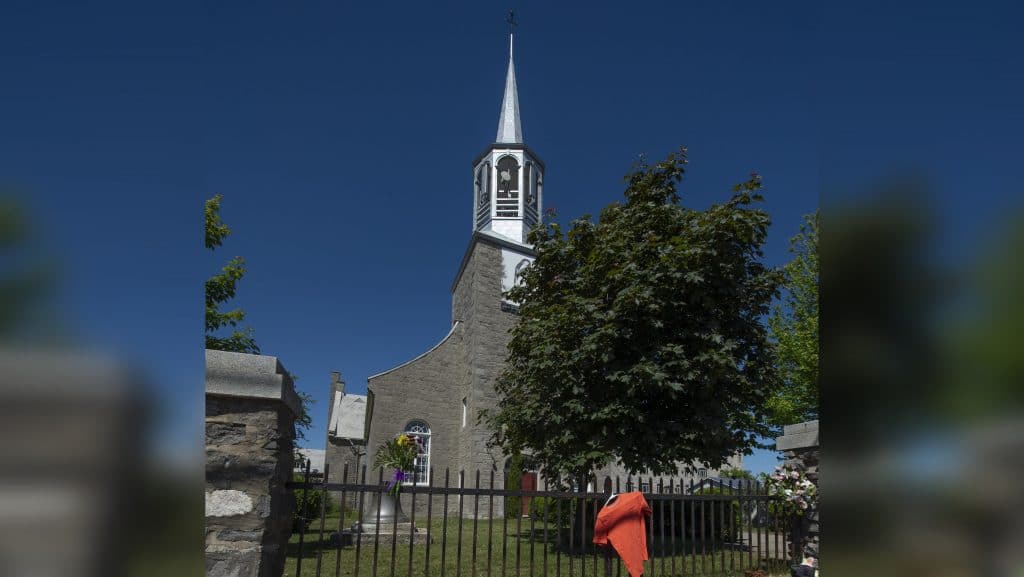
The removal of the remains of a priest facing sexual abuse allegations in Kahnawake will act as the beginning of a healing process, according to the group demanding the exhumation.
Allegations that Rev. Leon Lajoie had abused several residents in the Mohawk community west of Montreal came to light last summer.
The Mohawk Council of Kahnawake voted in favour of removing Lajoie’s remains. There were 223 votes in favour of exhumation while 195 people opposed it.
BACKGROUND: Quebec Mohawk community votes to move remains of allegedly abusive priest
“The fact that this is actually getting done now is going to bring closure for the people that were affected by him,” said Melissa Montour-Lazare, the spokesperson for the group in favour of exhumation. “And I think that now is going to be a larger healing that’s going to occur within our community, within our village.
“It was very emotional, very moving. It’s unfortunate that it even had to come to a vote. That should have never happened in the first place. So, you know, there’s a lot of hurt still, there’s still a lot of anger toward the system.”
Lajoie, a Jesuit assigned to Kahnawake from 1961 to 1990, was buried in the community in 1999 and will be moved to Saint-Jerome, Que., at the Jesuits’ gravesite.
The Jesuits’ independent investigation into the allegations failed to turn up evidence of abuse, according to a report released Feb. 28.
READ MORE: Jesuits continue to investigate alleged sexual abuse in Quebec Mohawk community
“I know there was some opposition back in 1999 when they were burying him,” said Montour-Lazare. “I think that came as a shock to those people that were here, and we have heard accounts from women who were there at that time when they were burying him in the church grounds.
“We’re just hoping that this really gets resolved and done, and the exhumation happens in the fastest way possible. And hopefully these things don’t happen again ever in any community.”
Montour-Lazare says the remains leaving the Mohawk territory will begin a healing process for those affected.
“They’re setting up for healing circles, discussion circles, sweats,” she said. “There’s people coming in from other areas to do ceremonial or healing processes. So there was a lot that came with this process. It wasn’t just like, you know, we’re going to talk about something and just when it’s over, it’s over. No, it doesn’t end there.
“There’s still a lot of reparation to be done. There’s still a lot of healing to be done.”
—With files from Virginie Ann, The Canadian Press