Red Coalition takes legal action against city of Longueuil and police force
Posted November 7, 2022 2:46 pm.
Last Updated November 7, 2022 6:30 pm.
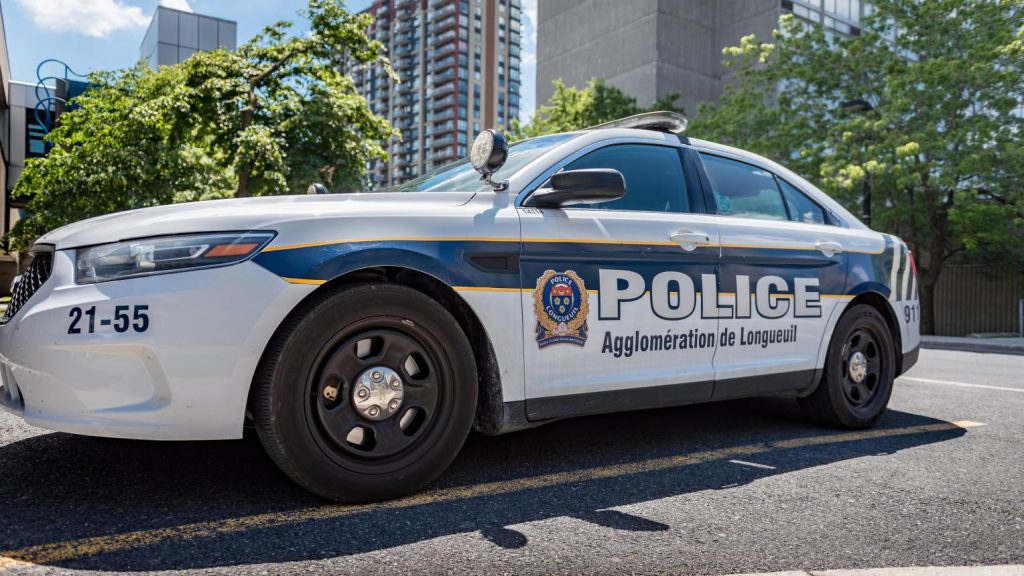
The Red Coalition – which fights to eliminate racial profiling – has taken legal action against the city of Longueuil and its police force. The group is alleging the city has failed to provide racial profiling data, among other things, which were court ordered. We chatted with Alain Babineau – a former RCMP police officer and the director of racial profiling and public safety for the Red Coalition.
Why are you taking legal action against the city of Longueil and its police force?
It’s a public interest matter. In 2020, in a landmark case against the police by Joel DeBellefeuille, the judge actually made some groundbreaking decisions by requiring the city and the police force to put in place some systemic measures to combat racial profiling.
What were some of those measures?
For example, they asked that there be specific training regarding racial profiling for all of their police officers. They insisted that it be conducted in person within 24 months of the judgment. So they had two years to do that. But one of the main things that they asked for was, starting in 2021, the collecting of race based data on all of their street checks and police traffic stops.
You have requested to see this data and what has the city of Longueuil and the police force responded?
We requested to see the data. We went through the Quebec Human Rights Commission asking if they had received that data. We asked also the city of Longueuil and today we have received no answers. But really, at the end of the day, the order not only asked the city to collect the race based data, but also to publish the results. So making it public would have meant that we wouldn’t have needed to ask to see the result. It should have been made public. So either the data has been collected and it’s embarrassing or they didn’t collect it. We’re filing a letter requesting to see the data and giving them a reasonable time to do so.
Why is it important that it be made public?
We’ve been talking about racial profiling in this province for probably four decades. But recently in the decision of judge Yergeau in the Luamba case, the justice of the Superior Court of Quebec, made very clear that racial profiling is not a figment of some Black people’s imagination, but it’s real and it’s hurting the community and it’s also hurting the police institution as a whole. So it is a public interest matter because we want to make sure that all citizens are treated equally before the law. A lot of times these court orders are put in place and they consist of monetary compensation and damages which is fine. But this particular case is special because it also included systemic measures to combat racial profiling and that ought to be at the forefront of any kind of practice or any kind of initiative to combat the curse of racial profiling.
We reached out to the city of Longueuil for comment and they asked us to contact the Longueil police force for more information. We asked the police force for a statement and more information – and they said they are working on our request, but have not gotten back to us with more so far.