Forest fire situation in Quebec northern regions worrisome
Posted July 13, 2023 11:01 am.
Last Updated July 13, 2023 11:06 am.
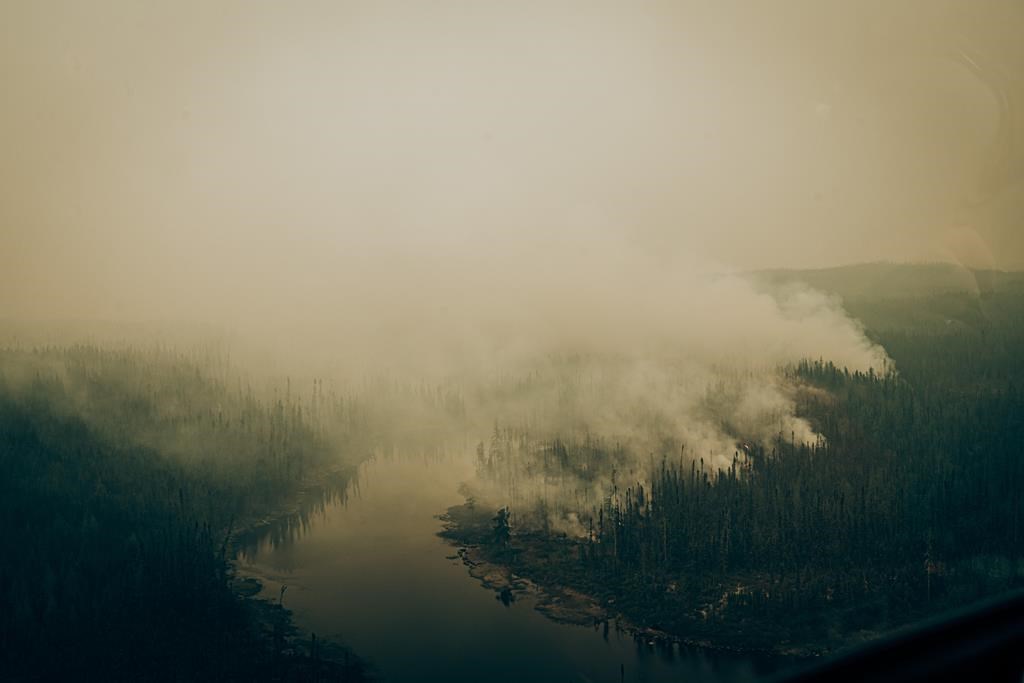
QUÉBEC – Although the fight against forest fires continued to progress on Wednesday evening in the intensive fire zone of northwestern Quebec, the Société de protection des forêts contre le feu (SOPFEU) reported that in the northern zone, several fires were progressing.
In its latest operations update, SOPFEU described the situation in the northern zone as worrisome. On Thursday morning, of the 129 active fires in Quebec, 88 were in northern Quebec. Fifteen of these were identified as priority fires.
SOPFEU reiterated that its mandate in the North is to fight only fires that threaten communities or strategic infrastructures. However, due to the progression of certain fires, measures were taken to protect the access roads to the communities of Eastmain, Wemindji and Waskaganish, the Billy Diamond road, the Route du Nord, the Transtaiga and certain Hydro-Québec facilities, notably LG3 and LG4, east of Radisson.
Ground and aerial fire-fighting operations were launched, as several fires were out of control.
RELATED
SOPFEU no longer reports uncontrolled forest fires
State of emergency lifted in Lebel sur Quévillon
As a result of these operations and changing weather conditions, the Ministry of Natural Resources and Forests (MRNF) announced on Thursday morning an extension of the northern territory affected by the forest access ban and the closure of forest roads.
On the rest of the territory, in the so-called intensive protection zone, 41 fires were active on Thursday morning, and SOPFEU considered the situation stabilized. No fire was considered out of control, and only three priority fires remained, two on the North Shore and one in the James Bay region. Twelve fires remained unattacked, but were not putting a community or infrastructure at risk, according to SOPFEU.
The organization said that work to bring the fires under control was progressing. Forest firefighters were working on the edges of the fires, using a variety of firefighting techniques, including ground spraying and controlled burning.
Helicopter and air tanker spraying was also used, while thermovision was used on the fires to detect hot spots and extinguish them.
This report by The Canadian Press was first published in French on July 13, 2023.