5 years since COVID-19 hit Quebec: doctors reflect on lessons learned
Posted February 27, 2025 7:59 am.
Last Updated February 27, 2025 2:26 pm.
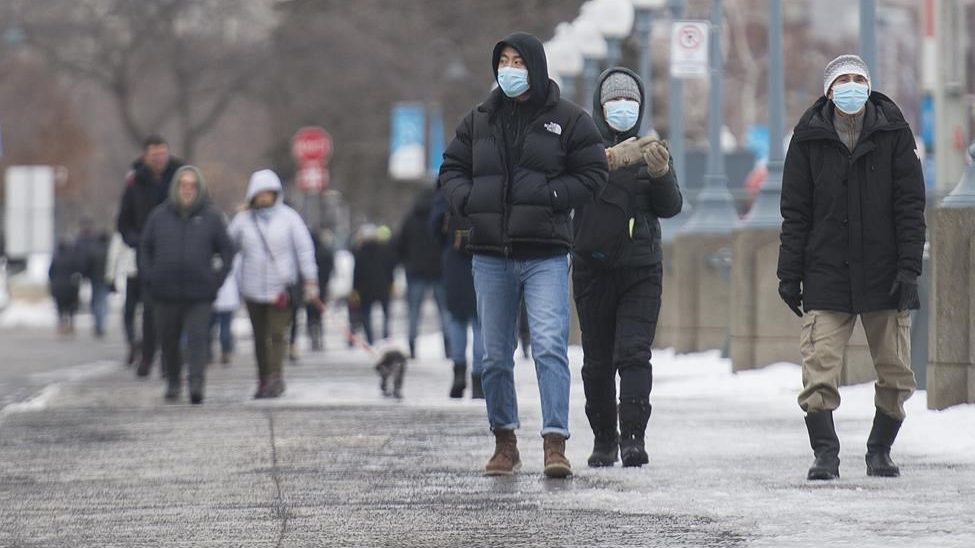
Five years after COVID-19 hit Quebec, Montreal doctors are reflecting on the lessons learned from the pandemic.
“This is a birthday that we have some reservations about celebrating,” said infectious disease specialist Dr. Don Vinh.
On Feb. 27, 2020, the first case of COVID-19 was reported in the province. On March 18, there was the first death attributed to the virus.
Quebec was shut down that month: quarantines, lockdowns and later, curfews.
The virus went on to claim the lives of over 10,000 Quebecers in the first year of the pandemic alone, and COVID-19 was ranked among the top-10 causes of death in the province.
“We were completely ill-prepared,” said Vinh. “We were ill prepared medically, scientifically, health-care wise, and I think as a society. In fact, you know, one of the first cases in Quebec originated at a mass gathering and it really reminds us that in retrospect, when the scientists and the public-health experts are saying that we need to implement certain measures in place, if we don’t, it can be catastrophic.
“And as we saw over the next four years from that, we’re still continuing to deal with the COVID pandemic.”
Vinh says COVID-19 led to many advances and drawbacks scientifically.
“We learned a lot about the virology very quickly,” he said. “We learned about this brand-new virus at an exponential rate about, its biology and how it functions. We learned about translating some of this knowledge into developing vaccines. This was at warp speed that we developed the vaccines. And not only that, this was the inauguration of mRNA vaccines. Technologies that have been studied for over a decade were now going to be mobilized to answer to this pandemic.
“We also learned about immunology. Why is it that some people are getting sick? When you start looking, taking a few steps back, you realize that there’s certain proportions of the populations that are particularly vulnerable.
“The beauty of the pandemic is in terms of the scientific knowledge that we gained. The beast, however, is that despite all these, the elegant science and the translational aspect of the science, we somewhere went along the way and became 180 (degrees) against science. We stopped listening to the scientific experts and the medical experts, even scientists and physicians within the scientific community started to downplay the importance of the pandemic. We had misinformation where people took some points here and there about different studies and made their own interpretations, which perhaps in retrospect was dangerous.”
Dr. Christopher Labos, a cardiologist with a degree in epidemiology, was at the forefront of disseminating information about COVID-19 in Montreal and across the country.
“People were trying to minimize it at the time,” Labos said. “People tried to minimize it in retrospect. I think a lot of people were scared and they had good reason to be scared. People were dying. Young, healthy people were dying and nobody really knew what was going on. And there was a lot of misinformation and some of it was conspiracy theories, stuff that was just bizarre. But a lot of it was scientific disagreement. Nobody really knew what was happening.
“People don’t like to dwell on collective trauma. COVID was a collective trauma for a lot of people, both in health care and out. It disrupted everybody’s lives, it ruined a lot of lives, and it changed a lot of lives.”
Dr. Labos says it’s important to never forget what COVID-19 did to the health-care system and society.
“We have to remember what the impacts of a pandemic are, so that they don’t repeat themselves, so that we have the preventative measures in place and that we continue putting money into research and development and public health, because if it’s not there, eventually something like this is going to happen again. Will you and I be alive to see it? We don’t know, right? But something like this is going to happen again. Ignoring problems, don’t make it go away.”
A concrete plan, similar to those created for natural disasters, is what Dr. Labos says needs to be outlined. Quebec public health had promised a new provincial pandemic plan for this year.
“A lot of what happened during COVID, people were making it up as they went along, because we didn’t have a plan in place,” Labos said. “Well, we need to start making a plan, because when this happens again, we need to know what to do and who’s going to be in charge of what, so that we don’t repeat a lot of the inefficiencies that happened at the beginning of the pandemic.”