Economic debate in Montreal compares parties’ positions on key themes for business community ahead of federal election
Posted April 23, 2025 10:49 am.
Last Updated April 23, 2025 4:35 pm.
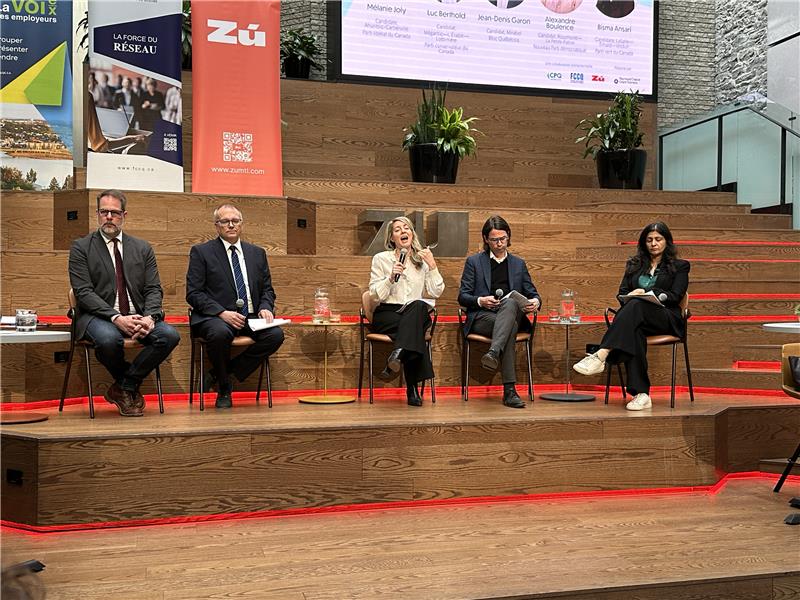
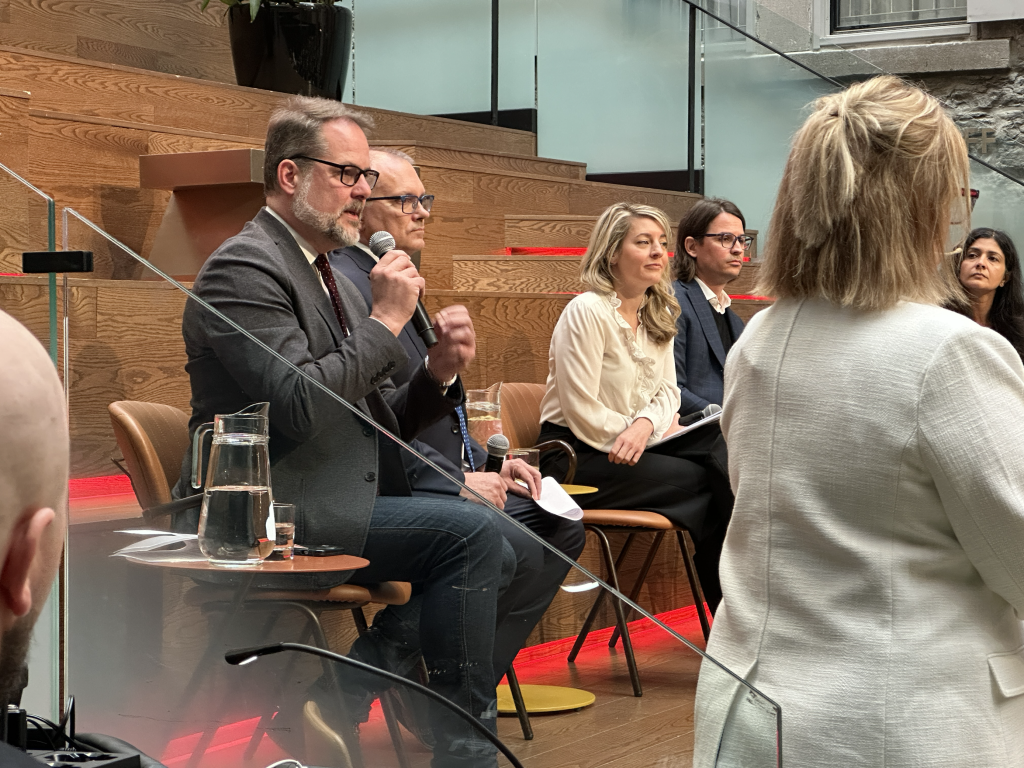
Candidates from the five major political parties presented and debated the economic visions tied to each of their platforms less than a week before the federal election.
The event took place in downtown Montreal in front of business leaders as key themes addressed were trade relations, taxation, immigration, government procurement and economic sovereignty.
Candidates present:
- Mélanie Joly, Liberal Party of Canada (LPC) candidate replacing François-Philippe Champagne
- Luc Berthold, Conservative Party of Canada (CPC) candidate
- Jean-Denis Garon, Bloc Québécois (BQ) candidate
- Alexandre Boulerice, New Democratic Party (NDP) candidate
- Bisma Ansari, Green Party of Canada (GPC) candidate
“The debate will be a unique opportunity to compare the parties’ positions on key themes for the business community,” the Conseil du patronat du Québec wrote in a news release on Wednesday.

Trade relations with the U.S. was one of the first questions during the debate.
Each candidate was asked to speak on this issue.
“Everything is happening at a time when there’s a tariff war, and we also know that President Trump is making some pretty drastic decisions regarding immigration,” said Joly. “So for us, it’s important to protect our border.”
“It’s really about who will be the best prime minister to confront Trump and make our economy believe in itself,” she added. “We know the answer is obvious. It’s Mark Carney. Donald Trump respects only one thing: strength. He is very, very aware when someone is in a weak position. Putting us in a minority government position is putting us in a weak position relative to the Americans.”
“Free the Canadian economy from all the constraints imposed by the Liberals over the last 10 years,” said Berthold. “To ensure that we can face this economy, which is very, very strong, but by growing.”
As for Garon, he said they must ensure that Quebec’s interests are defended.
“For that to happen, there must be transparency, and the current Canadian negotiation process is not transparent,” said the BQ candidate. “Negotiations are taking place behind closed doors.”
Boulerice for his part said that the federal government must set an example and award public contracts to Quebec and Canadian companies.
“We must be able to buy Canadian, buy Quebec-made with Quebec materials and content,” the NDP candidate said. “The federal government is setting an example and awarding public contracts.”
The debate was organized by the Quebec Employers Council, Quebec’s Federation of Chambers of Commerce and Zù, a business incubator for the entertainment, hospitality, and sports industries.
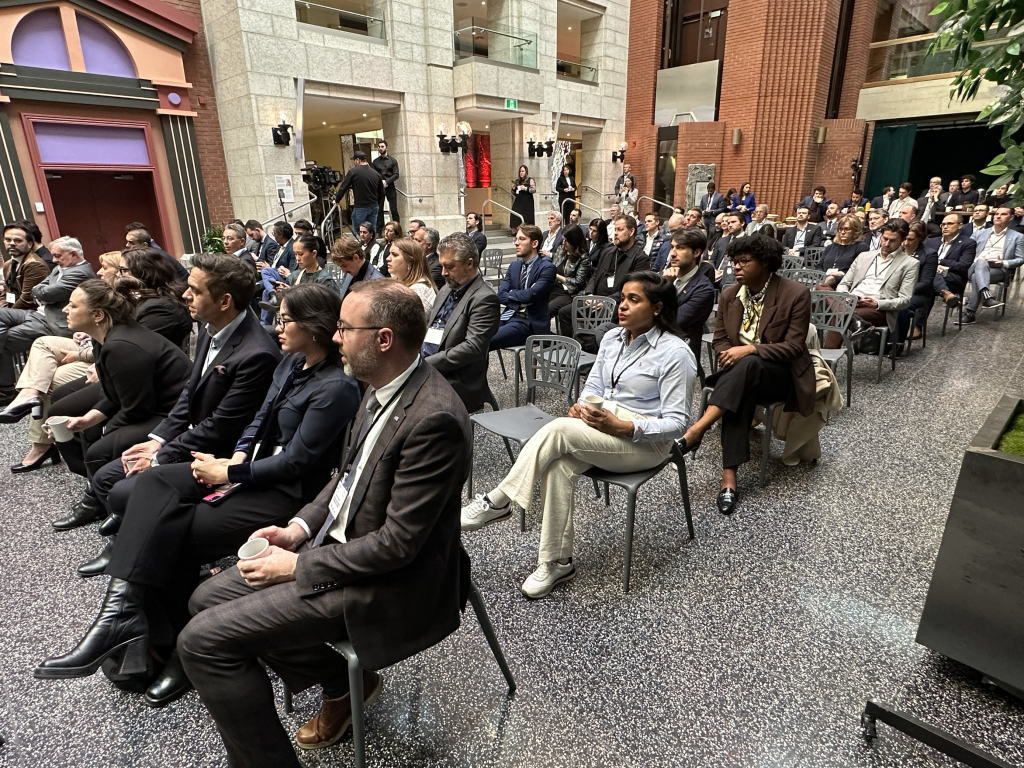
After the debate, each of the five candidates explained why their party has the best economic vision for Quebec and Canada.
“We are the party that are the best suited to be able to deal with Trump and his trade war that launched against us. We know also with Prime Minister Carney that we have somebody that has in the past dealt with a lot of important crises,” said Joly.
“After 10 years of the Liberal government, we are in a weak position for facing Trump, so we need to be able to develop our whole economy independent from the U.S. and to unleash the potential of our entrepreneurs,” said Berthold.
“When I read the economic platforms of other parties,” said Garon, adding, “they don’t have the specific knowledge of our industries. I often times take the aerospace industry as an example, you’ve seen it in the debate today. We don’t have a national strategy on aerospace.”
“I think for aerospace or the wood industry, Jagmeet Singh has been really clear, we have a commercial war with the United States and we have to buy Canadian products that create jobs here and we have to diversify our exportation,” said Boulerice.
“Our economic vision is one that is more sustainable, not only for the business of today or the larger business of today, but for Canadians, for small businesses. And we believe that’s what actually drives the economy for the longer term,” said Ansari, the Green Party candidate.
The most recent Leger poll on Quebec voter intentions shows the Liberals ahead with 42 per cent, the Bloc Québécois at 26, the Conservatives at 22, the NDP at seven per cent and the Green Party at one per cent.
In the same poll, but on Canada voter intensions, the Liberals remain on top with 43 per cent, the Conservatives at 39, the NDP at eight per cent, the Bloc at six and the Green Party at two per cent.
Business leaders at the event that CityNews spoke to seemed satisfied with the debate.
“I’m encouraged to see a shift towards unity around sovereignty,” said Jason Trembley, Vice President Commercial for Terrestar Solutions Inc.
“It’s nice to see that every political party sees our economy as being a major priority,” said Glenn Castanheira, the executive director for SDC Montréal centre-ville.
“And I think what really comes out is the importance of diversifying our economy, building a resilient economy, and strong programs to ensure that our workforce can be taken care of, should they be unlucky enough for their sector of activity to be hit negatively by a recession.”