Quebec hearing aid specialists condemn RAMQ coverage for seniors
Posted May 13, 2025 3:25 pm.
Last Updated May 13, 2025 5:03 pm.
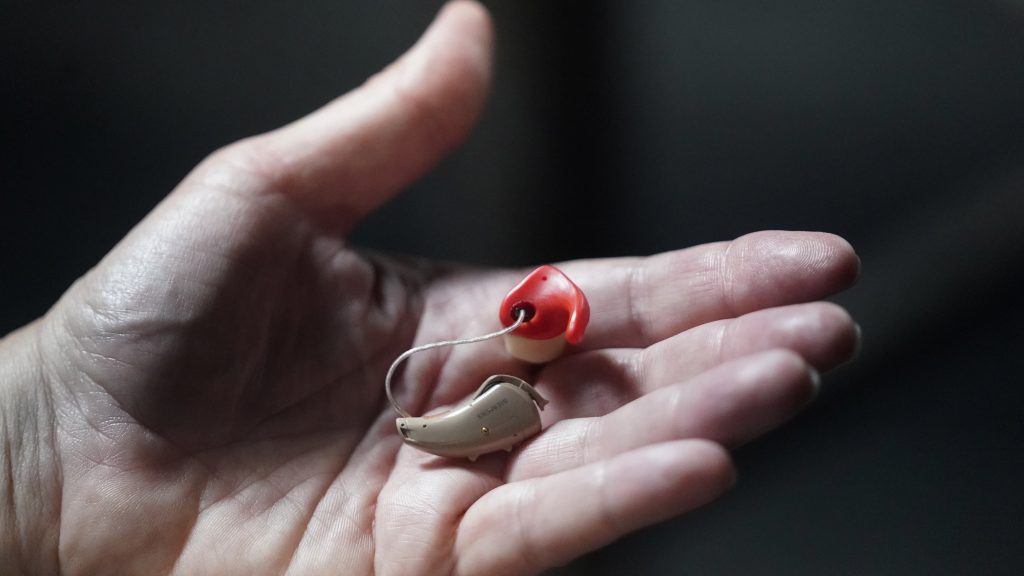
Seniors are deprived of hearing aids or are delaying their purchase because RAMQ coverage is insufficient, Quebec’s Order of audioprosthetists denounced Tuesday.
The Order is calling on the Legault government to modernize the eligibility criteria for the Régie de l’assurance-maladie du Québec (RAMQ) hearing aid program.
Currently, to be reimbursed for a hearing aid, one must be hard of hearing in both ears and have an average hearing loss of at least 35 decibels in each ear. At this threshold, hearing loss is “well established,” since hearing loss above 25 decibels is already considered to be impaired, emphasized hearing aid acuity acoustician David Gélinas, also president of the Order.
To illustrate the discrimination this creates, Gélinas spoke of one such patient who became eligible for RAMQ coverage at the age of 99. Before that, one of his ears had a hearing loss of 32 decibels and the other 37 decibels. He was able to get a hearing aid when his better ear deteriorated to 35 decibels.
Gélinas mentioned that to cover the hearing aid for the second ear, people must pay an average of $1,000 to $2,000.
Students of all ages can be reimbursed for a single hearing aid if the eligibility threshold is met, which is 25 decibels for them. They can also be reimbursed for both hearing aids if both ears are affected. For seniors and unemployed people aged 19 and over, Quebec does not cover the reimbursement of a second hearing aid.
“What we deplore at the Order of audioprosthetists is that coverage for adults is restrictive, much more restrictive, for example, than that offered to children and students. So what we’re asking the government is quite simple: if there’s hearing loss in one ear, we pay for one hearing aid, and if there’s hearing loss in both ears, we pay for two hearing aids, and that applies to everyone,” he said.
The inconsistency in public plan coverage means that many people who need a hearing aid go without one. The adoption rate for hearing aids in Quebec is 32 per cent, while in other countries where there are few, if any, barriers to access, such as Germany, France, or Denmark, approximately one in two people benefit from them.
Quebec’s Order of audioprosthetists also argues that access to hearing aids can improve the health of seniors. Properly fitted hearing aids are associated with up to a 30 per cent reduction in the risk of dementia, up to half the risk of falls, and a reduction in symptoms of depression. It also contributes to greater social interaction.
Gélinas noted that this isn’t the first time the Order has criticized public coverage. “What we’re told, obviously, is that it’s a question of money,” he said, adding he’s not insensitive to the current budgetary context.
“We know the government has run significant deficits. So, we wanted to speak the same language as the government, as the political decision-makers, with language that is purely economic.
“What we’ve demonstrated with an independent study is that it’s not only beneficial in terms of health, but it’s also economically sound to invest in hearing health because all the spinoffs generate substantial savings for the government.”
Different scenarios for improving RAMQ coverage were evaluated in a cost-benefit analysis of the hearing aid program conducted for the Order. One of the scenarios was inspired by the French model, with a 46 per cent hearing aid adoption rate, which would require an additional investment of $133 million from the Quebec government over five years. The government would realize gains of $1.2 billion, for a net benefit of $1.04 billion.
–This report by La Presse Canadienne was translated by CityNews