Montreal police still using knee-on-neck method five years after George Floyd murder: CRARR
Posted May 20, 2025 3:39 pm.
Last Updated May 20, 2025 5:24 pm.
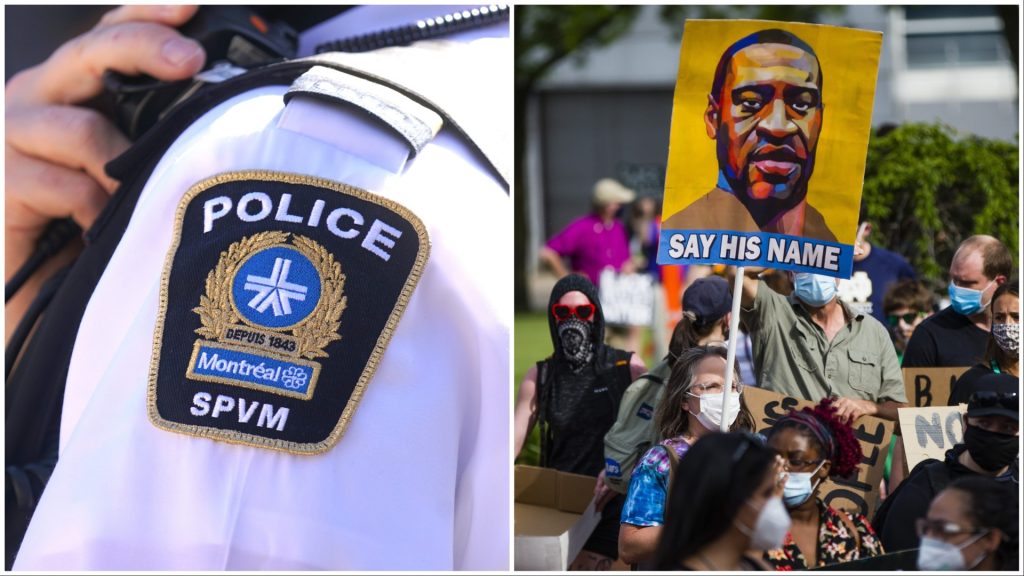
Questionable police practices still exist in Montreal, five years after the May 25, 2020, murder of George Floyd in the United States, according to a civil rights organization.
Floyd died after a Minneapolis police officer pressed his knee on the Black man’s neck for nine minutes and 29 seconds while he was handcuffed. His death sparked a racial awakening in cities across the U.S. and the world, including protests on the streets of Montreal.
The Center for Research Action on Race Relations (CRARR), which has been at the heart of Montreal’s fight against racial injustice for over 40 years, says the issues haven’t seemed to improve all that much since 2020.
“Unfortunately, since the George Floyd incident, we have seen in Montreal here a few cases involving knees-on-the-neck methods by police officers,” said CRARR executive director Fo Niemi. “We have a case of a Black woman in 2021. More recently last fall, another Black man in Montreal North was arrested, but also police knees on his neck.”
Five years after the words “La vie des noires compte,” French for “Black lives matter,” were painted in bright colours across Sainte-Catherine Street in downtown Montreal, Niemi says racial profiling cases have gone up, as more people in the Black, Latin American and Arab community are speaking out.
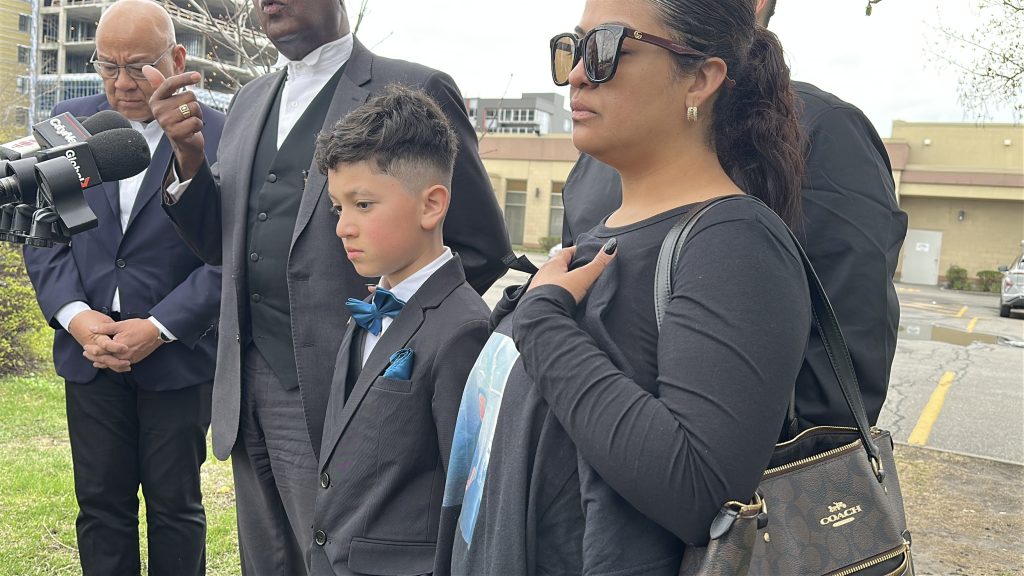
Niemi’s team is currently dealing with the case of Abisay Cruz, the 29-year-old Montrealer who died following an SPVM intervention on March 30 in Saint-Michel. Montreal police have said Cruz died following a physical altercation with officers, as he was restrained.
“The reason why we have to really push for more transparency for the answers in that case, because the video shows that the technique or method was used,” Niemi said. “Whether it contributed to his death, we’re waiting for the autopsy report on that.”
René Saint-Léger, a lawyer representing the Cruz family, says the man’s loved ones are looking for a “sense of justice.”
“Not only them, but all communities need to feel that,” he said.
“We can hope that in the future it won’t happen again to any individual. You know, you didn’t have to die.”
According to the Code of ethics of Quebec police officers, an officer must not use more force than is necessary.
“I understand that the police officer also needs to be protecting themselves as well,” said Saint-Léger. “There are ways, you know, you can use mace or whatever in order to subdue that person. The taser is another thing that they also use.”

Niemi says an August 2020 resolution by the City of Montreal asked police to stop using the knee-on-neck technique. It also asked the provincial government to review the technique and to come up with policy directives.
“Obviously, that resolution didn’t go far,” Niemi said. “There has been no follow-up on the part of municipal elected officials to this resolution.
“In the city of Montreal, I think the current police leadership is really trying to do, we call it transformative change of the organization, and some of the training and hiring in terms of also reviewing certain methods.
“So there are efforts to bring about those changes. But as you know, changing in this political climate, changing an organizational culture with more than 4,500 police officers, you’re not going to achieve that overnight. It may take a decade of change in order to bring about the kind of solutions that we want.”

Niemi says there has been change, over the last five years, in the judicial system.
“There have been major court decisions on racial profiling, on other forms of police discrimination and violation of privacy rights and of other constitutional rights,” he explained. “We’ve seen the courts moving in the direction of, we call it a more pro-charter and pro-citizen direction.
“It’s not only just the courts, but also other institutions also start to realize that they have to do something about the phenomenon of racial bias in law enforcement in general.”
Niemi believes 2025 could be a “very crucial year” in Montreal insofar as police race relations are concerned because of the upcoming municipal election in the fall.
“This could be an election issue in terms of police race relations and the use of techniques or intervention methods that could create disproportionately adverse consequences for racialized groups,” he said.
“It belongs to each of us to ensure that the legacy of George Floyd continues with the push to end those kind of potentially fatal methods.”