35 years since the start of the Oka Crisis
Posted July 11, 2025 7:18 am.
It’s been 35 years since all eyes were on the small town of Oka, an hour west of Montreal.
July 11, 1990 was the start of what’s been called the “Oka crisis” that lasted 78 days. The dispute was over the land known as The Pines – sacred Mohawk land that housed a cemetery. The mayor of Oka at the time wanted to expand a golf course on that land.
Months before the conflict, in March, Mohawks at Kanesatake set up a blockade to prevent bulldozers from breaking ground for the golf course.
On July 10, the mayor of Oka called on provincial police to enforce a court injunction to have the blockade torn down.
The next day, the Sûreté du Québec (SQ) attempted to dismantle the barricade, leading to a gunfight where SQ Corporal Marcel Lemay was killed.
The conflict also involved blockades of roads and bridges by Mohawk warriors in solidarity with Kanesatake, including the closure of the Mercier bridge, which links Montreal to Kahnawake.

Mohawk warriors had a standoff with authorities for weeks. It paralyzed Quebec for an entire summer.
The situation escalated, with more violent incidents, leading to the deployment of the Canadian Armed Forces to Oka, further intensifying the standoff.
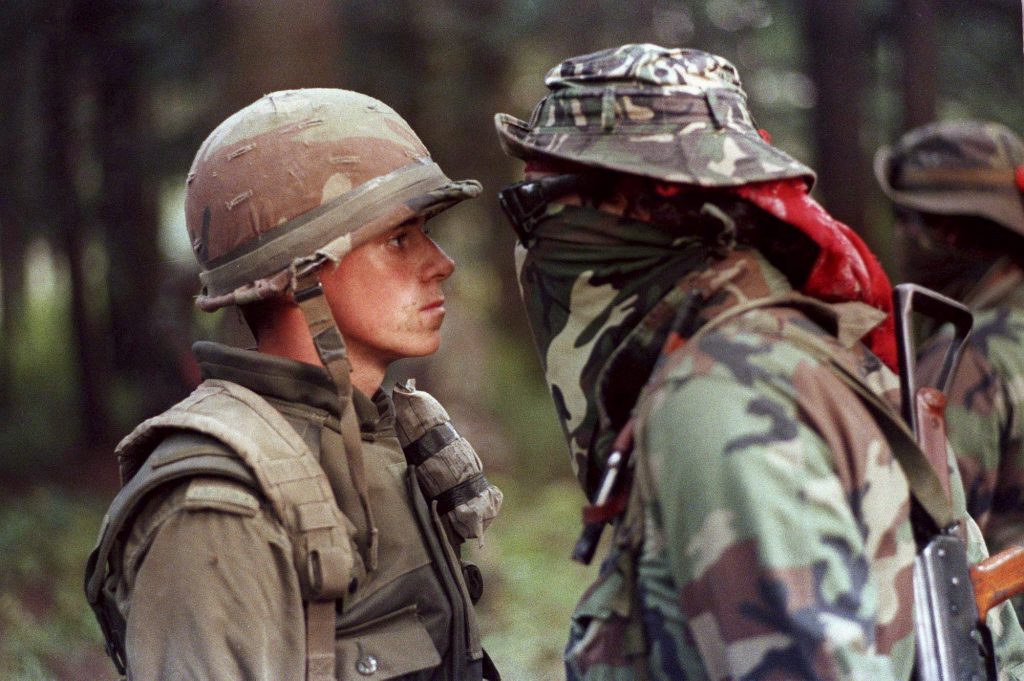
This photo above, known as Face to Face, became the most recognizable image of the Oka Crisis.
The iconic picture, taken by Shaney Komulainen, depicts Canadian Army soldier Patrick Cloutier and Ojibwe activist Brad Larocque staring each other down on Sept. 1, 1990.
The conflict ultimately forced Canada to confront a new reality in its relationship with Indigenous peoples.
It brought national and international attention to Indigenous land rights and self-determination in Canada.
It also led to the establishment of the Royal Commission on Aboriginal Peoples.
Sept. 26 of that year marked the end of the conflict. Most of the leaders of the resistance were arrested.
While the immediate plans for the golf course development were halted, the land ownership issue remains unresolved – with Mohawks still fighting for their land and living with the consequences of the crisis.