Saint-Leonard residents deal with intense flooding after Sunday’s storm
Posted July 14, 2025 1:27 pm.
Last Updated July 14, 2025 6:08 pm.
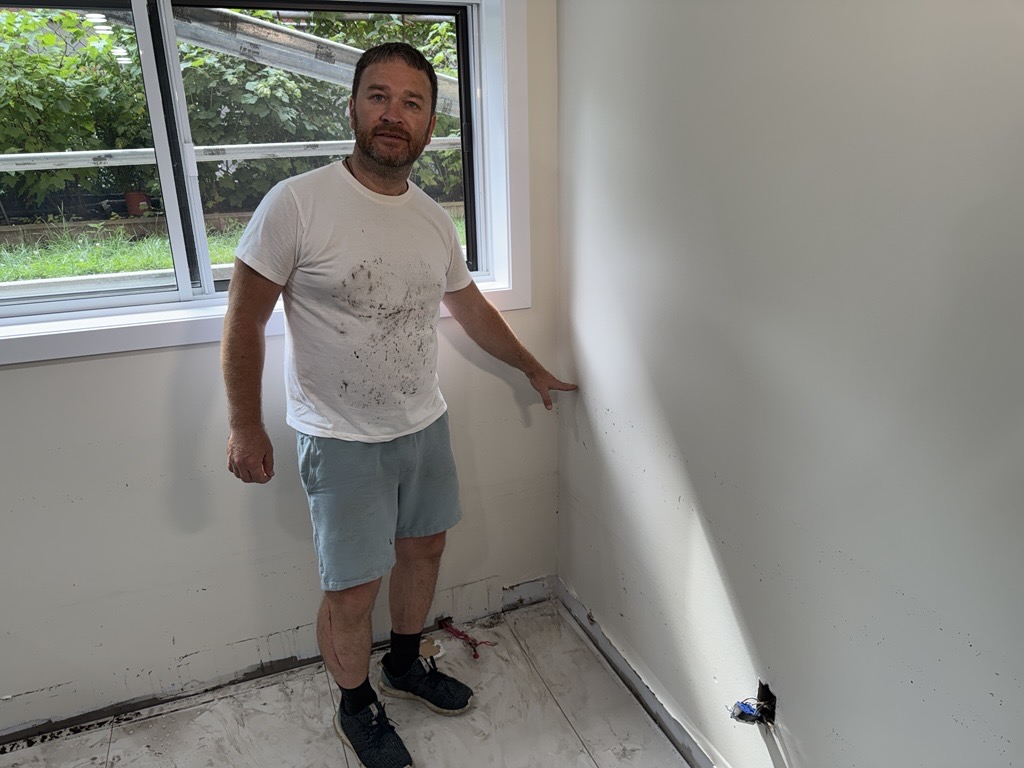
Montrealer Andriy Marunych has been living in the city’s Saint-Leonard borough for 20 years – and since, he’s seen his share of flooding.
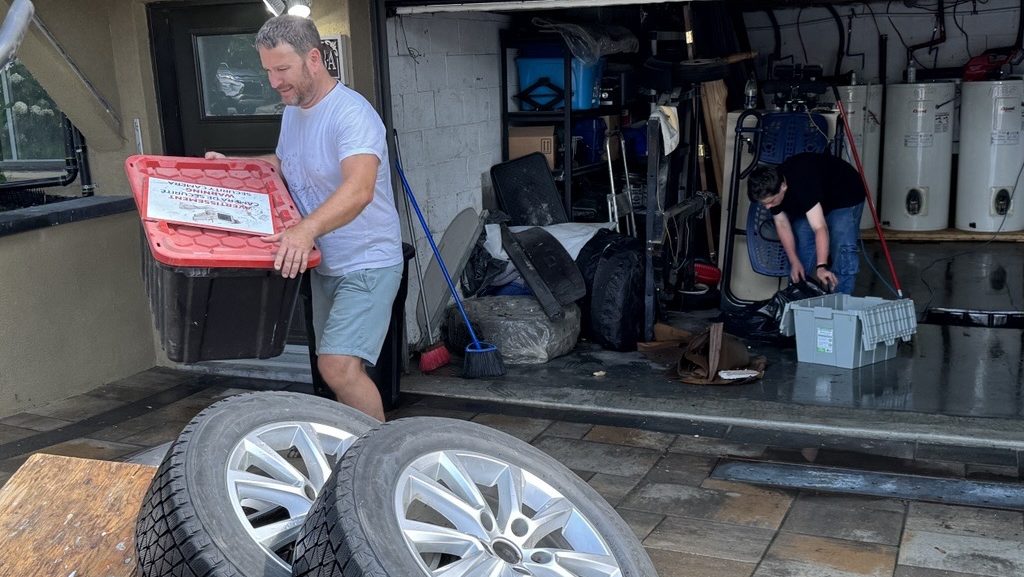
His basement was inundated with around four feet of water during a severe thunderstorm Sunday. Even with a water pump installed on his basement floor, he said that it took firefighters four hours while using two industrial-grade pumps to reduce the water.
“I cannot do more,” he said. “If the water comes from outside, the pumps have nowhere to pump. It’s a river here.”
According to preliminary data from Environment and Climate Change Canada (ECCC), Montreal was pummeled by 70 to 100 millimeters of rain. The city’s North Shore was hit particularly hard, with up to 110 millimeters of rain falling within the span of a few hours.
At its peak, nearly 100,000 Hydro-Québec customers were without power. As of Monday morning, that number has dropped to fewer than 5,000 addresses affected by outages.

Marunych had just shelled out $60,000 renovating an apartment on his property that he was renting to a tenant. He also said that repairs had just wrapped up following the aftermath of Hurricane Debby last year, what has been labelled as the most costly severe weather event in Quebec’s history.
After Sunday night, he feels as if he’s starting from square one. After bearing damages from last year’s storms, he’s not sure if insurance will cover the costs of this year’s flood.

Marunych said that it was the city that recommended residents to install anti-flooding measures like pumps. But after Sunday night, Marunych said that he’s had enough, and he’s calling on municipal officials to do more.
“They ask us to invest, to install clamps, pumps — I have it all,” he said. “(The city) doesn’t listen.”
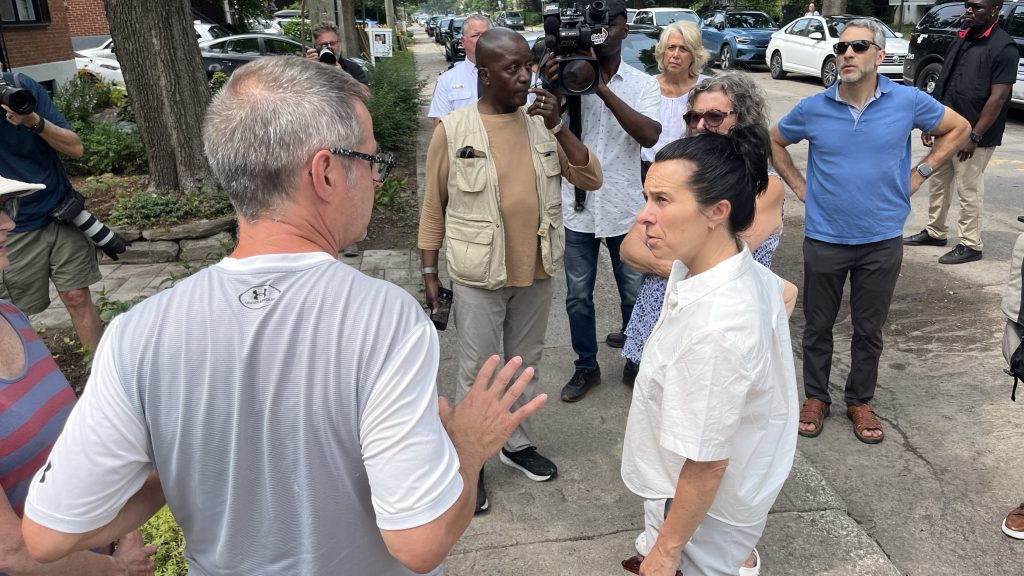
Houses on Belmont Street in Saint-Leonard were particularly affected due to being located in a low-lying area where water tends to accumulate more easily, according to Dominic Perri, chair of Saint-Leonard’s standing committee on the environment, the ecological transition and living environment quality.
Perri said that on top of the flood-prone location, a local water collector under Langelier Boulevard is smaller than what it’s supposed to be compared to the rest of Montreal.
“When that gets full, the other sewers cannot flow and of course they back up,” he said.
Belmont Street residents are saying that this is the second year in a row where their basements have been fully inundated.
“Honestly, were at a point where we’ve lost words after all that,” said May Slim, whose property had flooded last August. “We’re not even physically we’re tired – we’re tired mentally.”
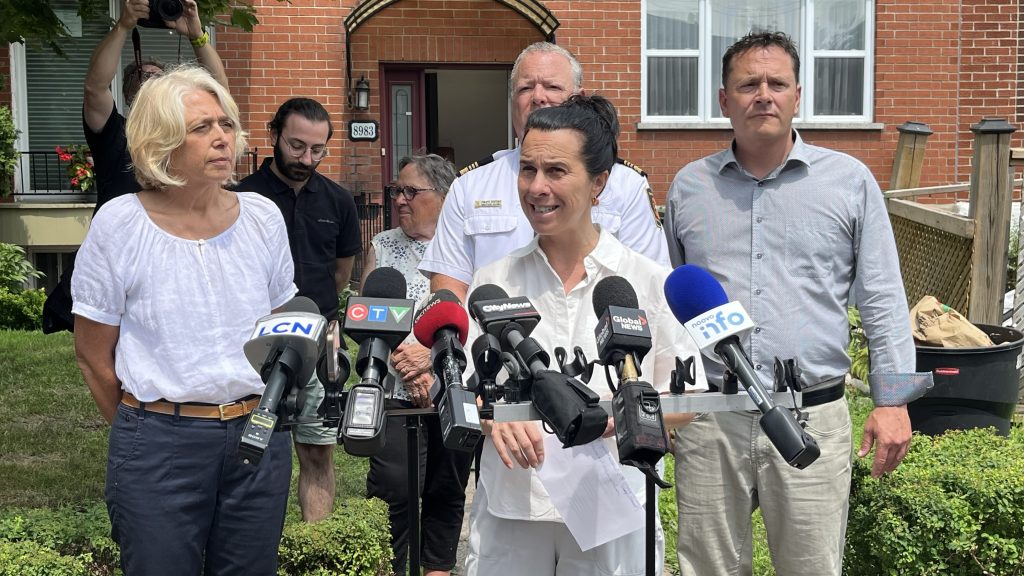
Perri was joined by Ensemble Montreal leader Soraya Martinez Ferrada on Belmont street Monday in the aftermath of the floods. Ferrada told reporters that flood management would be a top priority for her should she become mayor in this fall’s municipal election.
A plan to combat water damage in flood-prone areas would come about in her first 100 days if elected, she added.
“On day one as mayor I’m going to put it in my budget,” she said.
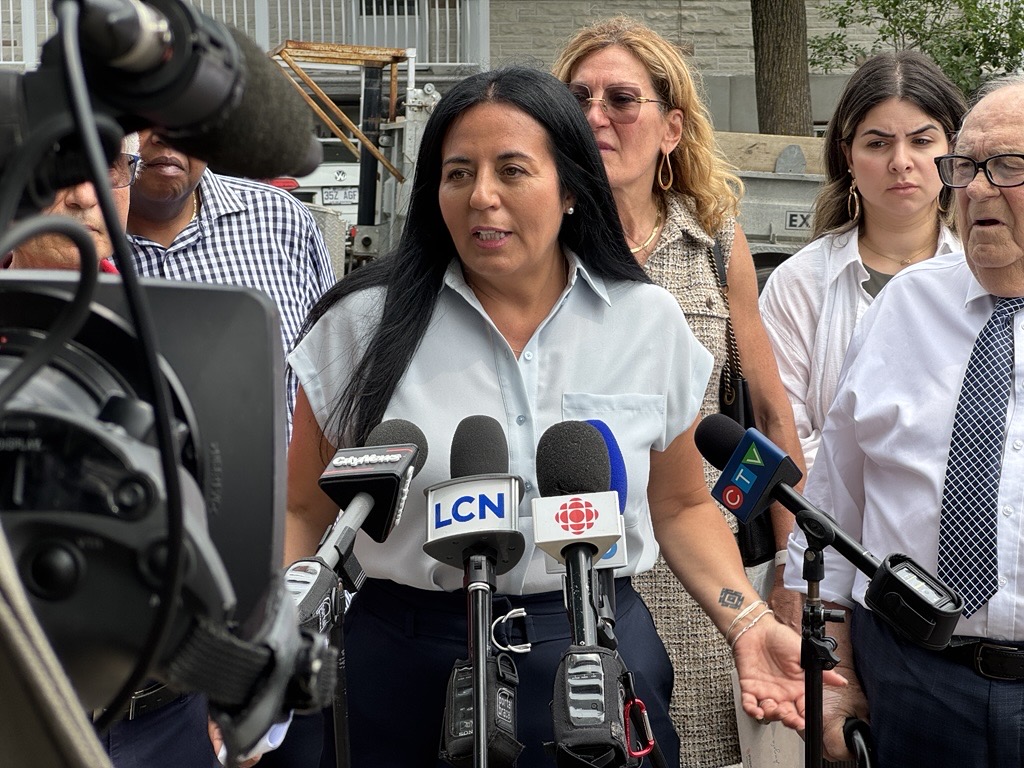
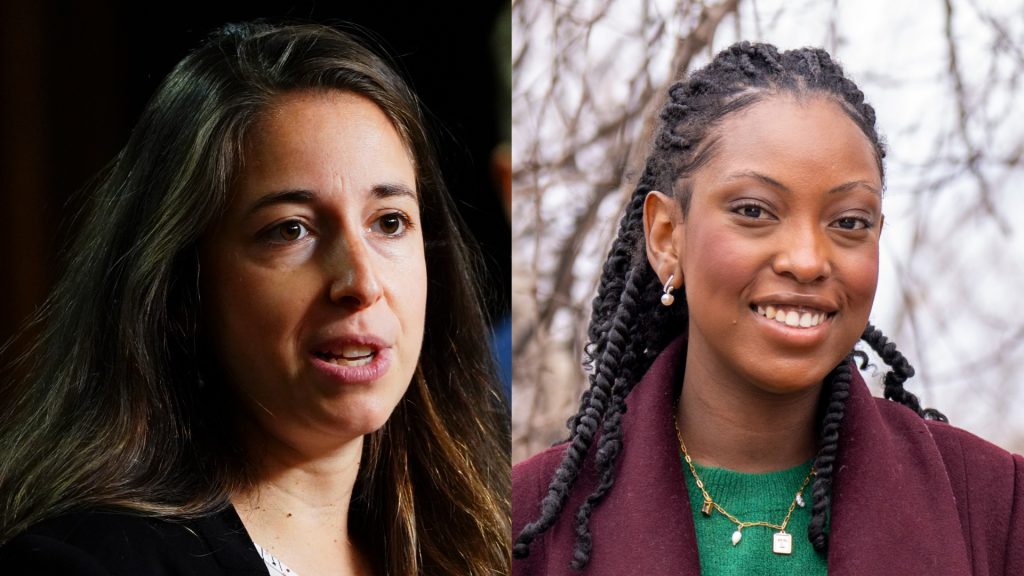
Speaking in the Ahuntsic-Cartierville borough, Lachine borough mayor Maja Vodanovic was joined by city mayor Valérie Plante and said that the city offers subsidies for renovation and flood-proofing work on buildings with 1 to 5 dwelling units.
Vodanovic, who is also responsible for consultation with the boroughs on problems related to flooding, said that the city is gathering data from each borough to pinpoint and better protect flood-prone areas.
“What we’ve asked is that every borough gives the central security service their points of flooding, where they flood and what area is at risk,” Vodanovic said.
Marunych, who was only beginning to clean up, said that he now faces a daunting recovery.
“Now I have to start from scratch,” Marunych said. “Opening up the walls, drying, changing it all.”
Long-term solutions?
Montreal Mayor Valérie Plante says the city is “working really hard to find long-term solutions.”
“There’s not a unique solution for the entire territory,” she told reporters Monday.
“We have demonstrated, I believe, in the last few years since we took office that we care a lot about climate change and how it impacts people. So whatever it is, through record investment in sponge infrastructures that are really helping, but also how we are investing massively into real-time infrastructure.”
The mayor says priority goes towards the most at-risk sectors, “according to a vulnerability chart and how many people we affect.”
“And for each of those vulnerable areas, the potential solutions are varied. And then what we’re trying to do now is we want to make sure that we consider everything; maybe it’s the underneath work, maybe it’s this plus a sponge infrastructure, maybe it’s this plus something else. We’re really trying to consider, so we don’t just move the problem around. And we don’t want to put money in if it’s useless.”
Plante called on support from the provincial and federal governments to help with those long-term solutions, including for the Legault government to adjust its compensation program so that Montrealers can benefit from it.
“Because last year sadly it was decided that they wouldn’t be able to access it,” Plante said, referring to the provincial government’s flood relief program that was expanded last year in the wake of Hurricane Debby.
“I hope that the Government of Quebec can have this sense of equity with all Quebecers, with everybody that pays tax and contributes to our society,” Plante added. “When there’s a flooding, everybody suffers.”