Montreal’s McGill University researchers explain why chronic pain is often discounted
Posted July 16, 2025 12:36 pm.
Last Updated July 17, 2025 4:30 pm.
Often invisible to medical tests, McGill University researchers are explaining why chronic pain is generally discounted.
In a new study, they are showing that it can be better assessed when doctors take a holistic approach. The researchers said that they were able to create a fuller picture of chronic pain by combining biological data with information about patients’ mental health, sleep and stress.
“Biological data tells us what’s wrong, but not how something feels,” said lead author Etienne Vachon-Presseau, a member of McGill’s Alan Edwards Centre for Research on Pain and an associate professor in the Faculty of Dental Medicine and Oral Health Sciences.
“Sleep problems, stress and mood can all influence how the brain processes pain, shaping how severe it feels and how much it interferes with daily life,” he added.
The researchers said that their findings, published in Nature Human Behaviour, stand to improve how the condition is diagnosed and treated.
“Chronic pain impacts so many people, it’s about one out of five general population and some studies even report higher numbers,” said Vachon-Presseau.
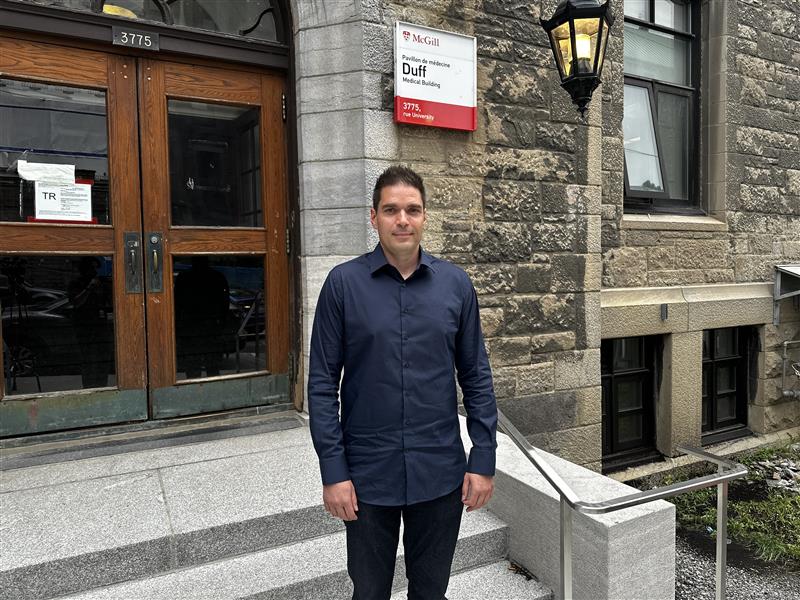
“The problem here is that there’s no one-to-one relationship between the manifestations of the disease or the injury, the physical damage to the body, and the pain itself.”
He adds by saying that one of the main difficulties is to measure chronic pain, noting its often subjective and there’s no standard medical imaging test that can tell how much a patients will feel their pain.
While explaining more on biological data and biomarkers – which Vachon-Presseau says can help predict and monitor various conditions while using machine learning — says this is the first phase of an inevitable long lasting study.
Vachon-Presseau explained that they can derive different biomarkers from inflammatory markers in the blood, changes in the brain, genetic predispositions or bone structures — discussing how this type of information can be applied within the machine learning algorithm.
The machine learning analyzed data from more than 500,000 people in the United Kingdom. They explained that their models could accurately identify medical conditions linked to chronic pain, such as arthritis or gout.
However, they could not predict how much pain a person reported feeling.
“This tells us that we can have some hint about who we should invest with different programs, such as psychological support, for instance, stress reductions, improved sleep quality. There’s some intervention targets that we can derive from that,” Vachon-Presseau explained.
“The novel approach could help doctors choose treatments that target the source of pain and address the psychological and emotional struggles that may be making it worse.”
The authors added that their findings also help validate the experiences of patients living with a condition that is notoriously difficult to diagnose. While also discussing nerve damage, he said it becomes even more complex as there are different clinical diagnoses associated with it.
“Ultimately, how you would feel your pain and how you would experience it and be the burden of it in your social life, for instance, your ability to work, this depends on other factors,” he said.
He says the most common injury that many experience is lower back.
“There’s a lot of different things that can cause back pain. So it’s really hard to find a single biological marker for back pain because it really depends on the etiology or the nature of the conditions,” he explained.
“It’s a worldwide problem. It has a huge societal burden over the individuals, but in terms of cost, economy, in terms of health resources, it’s something that really needs to be addressed. And I think people underestimate how much pain can impact the people in society,”
He adds that patients, health-care providers and policymakers will benefit by adopting these approaches to assess chronic pain.
“At least raise awareness that this is like a real condition that impacted a lot of people and we need to be aware of it to better understand it and then hopefully have better approach to treatment to manage it.”