Increase in the number of workers exposed to dangerous noise levels in Quebec
Posted August 6, 2025 9:57 am.
The rate of workers exposed to intense noise is increasing in Quebec, which can have an impact on their hearing health, including developing deafness at a young age.
A recent report from the Institut national de santé publique du Québec (INSPQ) provided estimates of the prevalence of exposure to loud noise in the workplace. The authors based their findings on the 2020-2021 Quebec Population Health Survey and compared it with the 2014-2015 edition.
The results show that workforce exposure to loud noise has increased since 2014-2015, rising from 7.7 per cent to 8.6 per cent of workers aged 15 or older who report being exposed to loud noise often or all the time at work. This represents 340,000 workers who work in workplaces that are potentially hazardous to their hearing.
“It’s not an objective measure of the intensity level. It’s really an approximation that they make,” says Ronald Choquette, a retired professor at the University of Montreal’s School of Speech Therapy and Audiology.
In its document, the INSPQ specifies that it understands loud noise to mean that it is often or all the time “difficult to hold a conversation a few feet away, even while shouting. This corresponds to a noise exposure level estimated at least 85 decibels.”
“That’s a lot,” says Choquette. “I mean, 85 decibels is a level that, if you’re exposed to it for eight hours a day, can cause you to develop high-pitched hearing loss.” He points out that it’s not uncommon for workers to work up to 12 hours a day, which further increases their risk of hearing loss.
“Every time you increase the noise level by three decibels, you have to reduce the time by half. This means that if you work longer, the noise level has to be lower. In our field, we call this a question of dose. It’s the intensity level of the sound compared to the duration of exposure. The more the noise level increases, the more your exposure time should be reduced. Or if the time increases, your exposure level should also be reduced,” explains Choquette.
Higher prevalence for certain professions
Choquette believes that the increase in workers exposed to intense noise is due in part to “a boom in construction,” whether “in residential construction or the construction of buildings or businesses.”
However, there is an increase in noise exposure in almost all sectors of economic activity, even in areas such as information, arts, health, finance, insurance, education, etc.
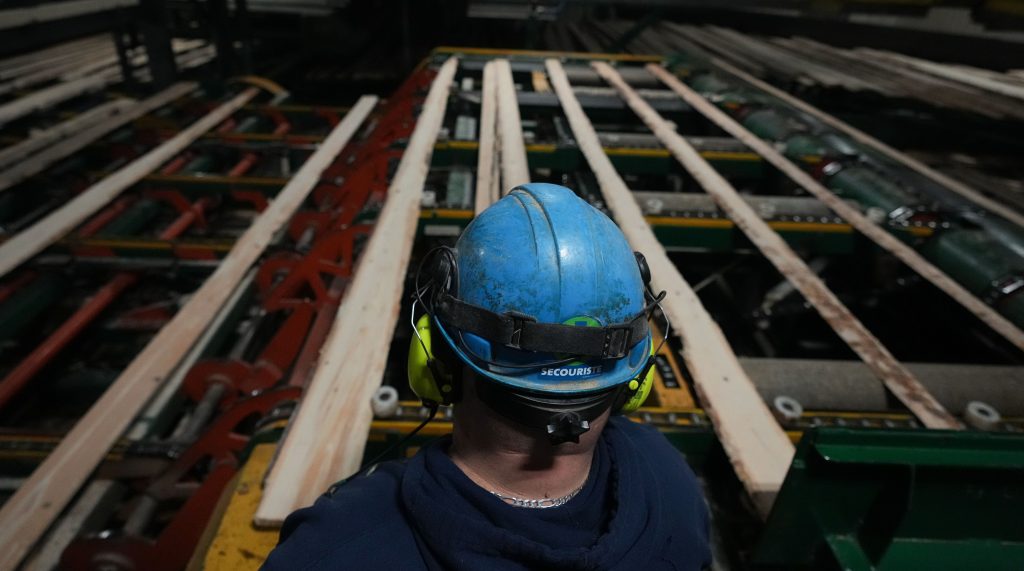
Some industries are, however, much more affected by excessive noise levels. The INSPQ report identified 20 occupations that stand out for their high prevalence of exposure to intense noise in the workplace, many of which are in the construction sector. There are also jobs in manufacturing sectors, including paper, primary metal processing, plastic and rubber products, food and beverages, etc.
Other areas at risk include: mining, quarrying and oil and gas extraction; forestry, logging and support activities and sawmills; and transport support activities, for example, rail transport operations personnel.
How to protect yourself?
To protect yourself, the report suggests that the best thing is to reduce noise at the source, “but it’s not always easy,” says Choquette, who also sits on the board of directors of Audition Québec.
There are also earplugs and earmuffs that workers must wear in the workplace. However, the protection provided by these devices is not infallible.
“The problem with these tools is that they have to be used properly. There’s a way to place the caps because if they’re not placed correctly, they lose a lot of their effectiveness. […] If they’re used incorrectly, it creates a kind of false sense of security,” explains the specialist.
For example, a worker exposed to 95 decibels and wearing earplugs might believe they are operating at a safe noise level because their equipment reduces 15 decibels. However, if they are improperly placed, the earplugs could reduce the noise level by only five decibels, which is considered hazardous to their hearing.
Earmuffs also have some limitations, as workers will often remove them to talk to each other or if it is very hot and they are working outside.
The report’s conclusion reiterates the importance for workplaces and health and safety resources to continue their efforts to protect workers’ hearing health and prevent deafness. Choquette believes that better monitoring is needed in the field to “ensure that workers are using hearing protection properly” and that it is “truly good protection.”
—The Canadian Press’s health content is funded through a partnership with the Canadian Medical Association. Editorial choices are solely those of The Canadian Press.
—–This report by La Presse Canadienne was translated by CityNews