Hand-foot-and-mouth disease isn’t just a childhood illness: Montreal doctors explain what adults need to know
Posted August 19, 2025 11:21 am.
Last Updated August 19, 2025 4:11 pm.
Hand-foot-and-mouth disease isn’t just a childhood illness, so what exactly is it and how can one help prevent their child or even themselves from getting it?
For the second time in three months, little 19-month-old Clementine Bouchard from Valleyfield, Quebec caught the virus. This time around though, her mother Alexandra Armstrong Cossette also has it.
“It is very painful in the throat especially,” she explained. “Then in the next few days following the hands and the feet.”
“It’s very painful to even walk,” she added.

“This time it wasn’t as bad as the first time I’d say,” explained Cossette about her daughter’s symptoms. “The first time was a little bit more rough though. The fever was higher and lasted longer and she didn’t feel so good.”
What is hand-foot-and-mouth disease?
Pediatric infectious disease specialist and microbiologist at the Montreal Children’s Hospital, Dr. Jesse Papenburg explained that hand-foot-and-mouth disease is caused by a virus within the family of viruses called the enteroviruses.
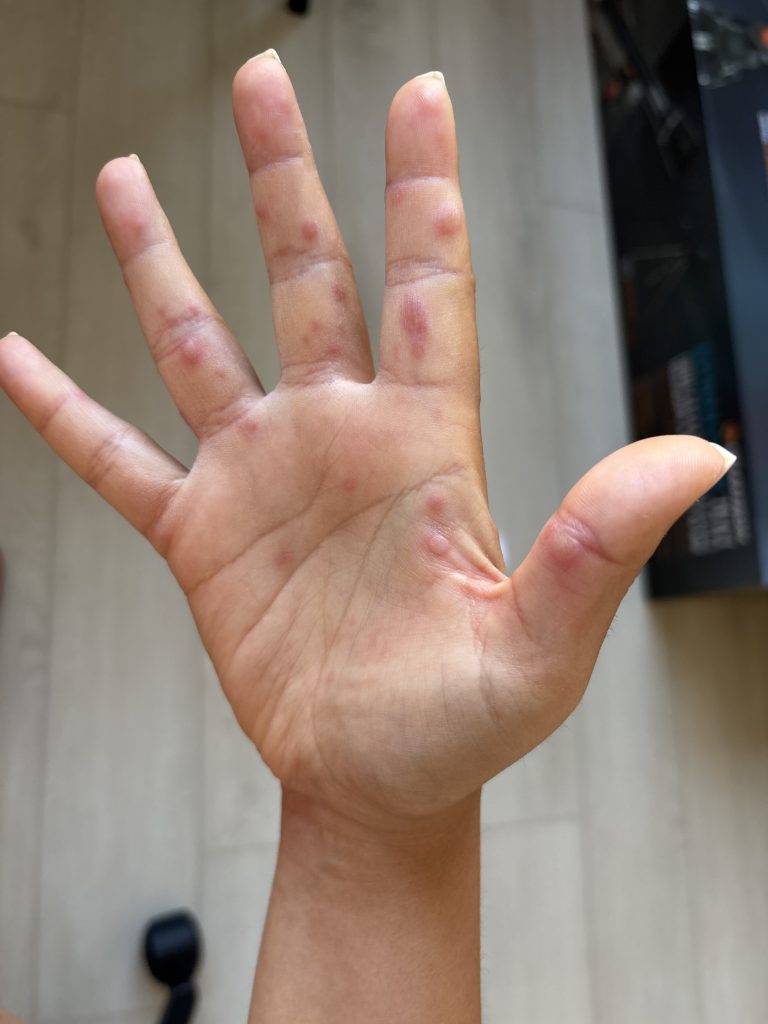
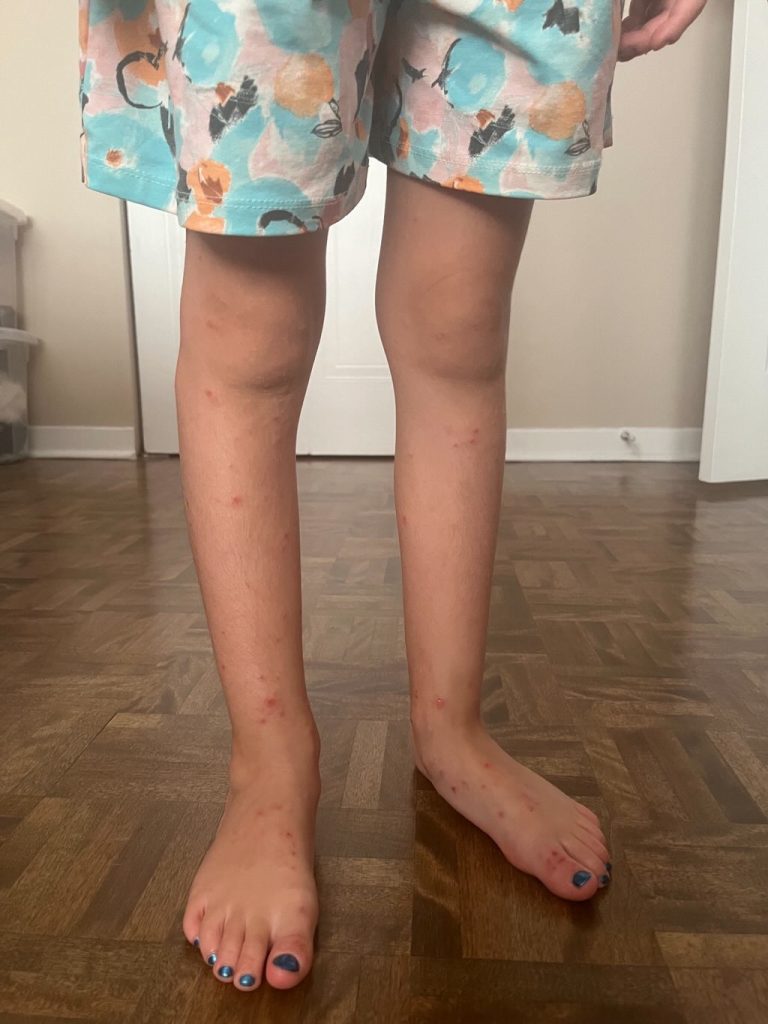
“It’s often associated with a fever a few days after the infection,” he said. “Then this very typical rash that can be quite painful that involves lesions in the mouth and often in the throat as well, as well as the typical lesions that can be found on the palms of the hands and the soles of the feet.”
Adding that a person can also see the rash extended to other parts of the body.

Cardiologist and epidemiologist Dr. Christopher Labos explained that usually the symptoms are mild and tend to go away, but it can be severe in certain cases.
“While we typically see it in kids and people often associated with outbreaks like in daycares where one kid will infect another, it is a virus,” he said. “It can infect anybody and so it can be passed from person to person, whether you be a child or adult or anything in between.”
So, adults can get it too?
Dr. Papenburg explained that while hand-foot-and-mouth disease isn’t dangerous, it is unpleasant.
Adding that it is seen more frequently in young children since they tend to have social contact with less hand or respiratory hygiene.
But yes, adults can get it too.
“It’s not rare in adults,” he said. “It’s not very common for adults to seek medical attention due to it, as most adults will recognize that it’s likely a viral infection that will pass over time.”
As for Cossette, she said she had to head to the ER.
“I went to the emergency room because I was just, I’ve never been so dizzy in my life,” she recalled.
Dr. Labos explained that this is a virus that will pass from person to person.
“There’s no reason why it can’t spread amongst adults, and of course it does,” he said. “It’s just that because adults tend to be a little bit better about hand washing on average, not great, but a little bit better.”
How is it transmitted, how can you avoid it?
Hand-foot-and-mouth disease can be transmitted in two main ways:
- Respiratory secretions (like coughing or through saliva)
- Fecal-oral (contaminated objects can be a source of transmission in an indirect way)
“If you had one of these vesicles and it ruptured, there could be virus particles there,” said Dr. Labos. “Remember, the virus is inside of you, so no matter how it gets out of your body, if it can then transmit to another person, it’ll make that person sick.”
“The typical root is what’s referred to as the fecal-oral root,” he added. “But all of these other potential avenues are certainly possible.”
Frequent hand washing is the best way to help avoid getting it, the doctors explained.
What’s unique about enteroviruses Dr. Papenburg added is that they actually tend to stay infectious on inanimate objects for a longer period of time.
“They’re actually quite hardy and we know they get shed in the stools as well,” he said. “So particularly for young children who aren’t potty trained, that makes for an excellent source of transmission as the environment can be contaminated and then somebody, but just by touching an object can then contaminate themselves.”
Typically, he explained that people are most contagious with an enterovirus infection during the febrile illness, and while there are still new lesions popping up either in the mouth, hands, or feet.
“This is the period of time where really we would hope that people stay at home to avoid transmission,” said Dr. Papenburg.

When is the higher season for it in Montreal?
The seasonality for enterovirus infections in Montreal, Dr. Papenburg explained: in the summer and fall.
“That’s why we’re seeing a lot of hand foot mouth and other febrile illnesses associated to enteroviruses at this time of year,” he said. “But most of the medical attention that’s required is really in younger kids when we can be concerned about their hydration status or possibly a concurrent bacterial infection as they’re having high fever.”
Adding that different types of enteroviruses might circulate in Montreal from one year to a next.
“That’s why we tend to see somewhat different clinical manifestations,” he said. “It’s not always hand-foot-and-mouth disease, that’s the most common manifestation.”
As to why we see more circulation during the summertime, Dr. Papenburg said that different viruses have a different ability to stay infectious in the environment according to how much sunlight there is, humidity, and temperature.
“Different viruses will thrive more under different environmental conditions,” he said.
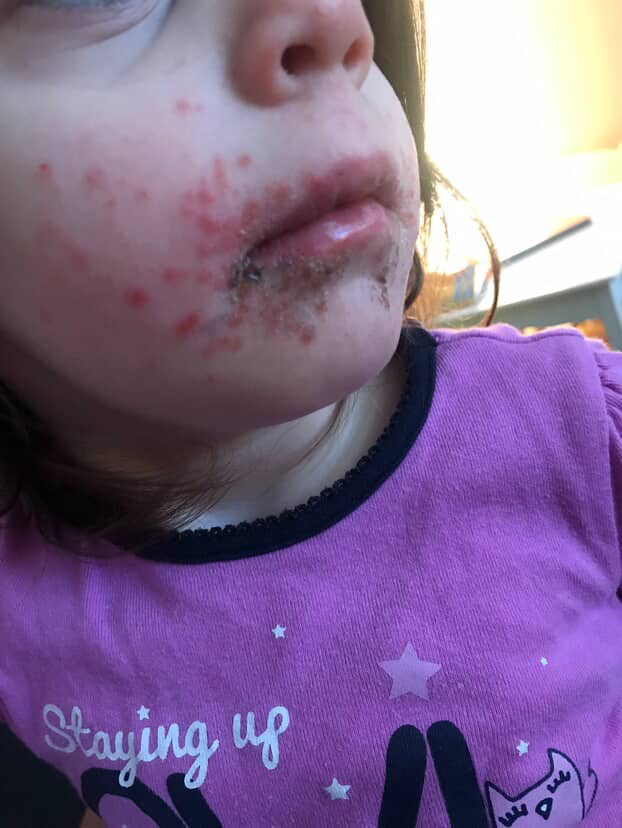
More often than not, the diagnosis is made clinically Dr. Labos added.
“Most cases are probably not going to present to hospital and are probably not going to be recorded,” he explained. “So if cases are mild and people sort of write it out at home, you may not necessarily record these cases.”
Adding that a lot of times one doesn’t actually have absolute confirmation, so an area wouldn’t technically know how many cases are going on at any particular time of the year.
What is the treatment?
The cure, Dr. Papenburg explained that there isn’t anything specific but one can relieve symptoms and prevent dehydration.
“There’s no specific antiviral treatment for hand-foot-and-mouth disease or other enterovirus infections,” he said. “It’s really just supportive care.”
“So trying to stay hydrated when the child is still at home or when an adult is at home is really the only thing that we can do to try and avoid a medical visit,” he added.

As for Cossette, she’s relieved that her daughter is feeling better, and so is she.
“A few of my friends and their children have caught it in the last couple of weeks and they’re sending me pictures and videos of their skin peeling off their hands and their feet and losing their nails,” she said. “So, I’m not really looking forward to the next couple of weeks to see if that happens to me.”