Quebec voter unable to vote by mail wins case against government
Posted August 20, 2025 5:04 pm.
Last Updated August 20, 2025 5:59 pm.
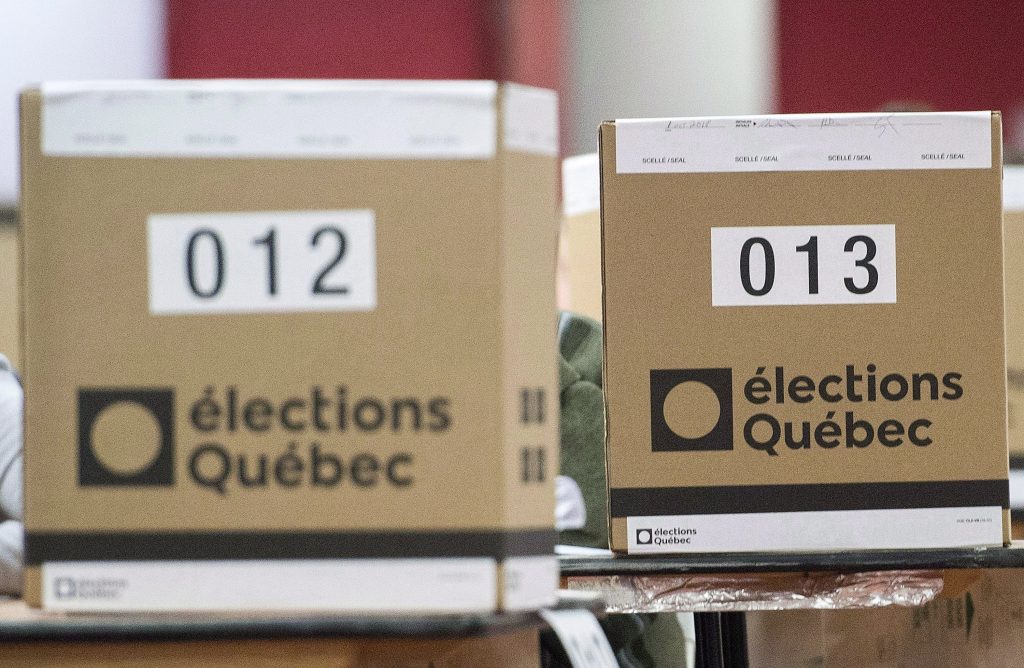
A Quebec voter who was unable to vote by mail in a byelection because he had been living abroad for more than two years won his case against the Quebec government.
Bruno Gélinas-Faucher, an assistant professor at the University of New Brunswick’s faculty of law, challenged section 282 of Quebec’s Election Act, which strips Quebec citizens of their right to vote by mail after more than two years outside the province.
This section was declared invalid and unenforceable by the Quebec Superior Court on Aug. 14, following a trial that took place in early June.
The Quebec government, which will have to change the law, still has the option of appealing the case. The office of Justice Minister Simon Jolin-Barrette said it was “currently reviewing the judgment and will take the time to analyze it.”
“We have no comment at this time,” it added in a written statement.
In practice, people who leave Quebec can vote by mail for two years, but after that, if they want to exercise this right, they must physically return to Quebec, which is a significant obstacle, especially for students. There are exceptions, but they are very specific, particularly for people who work for the Quebec or Canadian government outside the province.
Gélinas-Faucher was studying international law at Cambridge University in England and had been there for more than two years when the byelection in Jean-Talon took place in December 2019. A resident of that riding, he said he was unable to exercise his right to vote because he could not physically be there.
He felt that this infringed on the voting rights of voters who had left the province, “who are thus essentially deprived of their most fundamental democratic right, namely the right to vote.”
The Quebec government argued that this was a restriction of the right to vote and not a deprivation. And even if it was an infringement of that right, Quebec considered it justified “in the context of a free and democratic society during provincial elections.”
However, the court ruled that the two-year limit is “neither reasonably necessary to ensure a sufficient link between the voter and Quebec and to preserve the integrity and fairness of the Quebec electoral system, nor proportionate to the objectives sought.”
The article was therefore declared invalid and inoperative by the court and suspended for a period of 12 months.
“Any legislative provision that ‘effectively hinders’ a citizen’s ability to participate in elections deprives them of a real opportunity to vote and infringes on their right to vote,” reads the ruling signed by Justice Catherine Piché.
“Imposing a two-year limit on the ability to vote by mail from abroad has an unreasonable detrimental effect on the ability of the Quebecers concerned—those who have been living abroad for more than two years—to participate in the Quebec electoral process.”
The court is therefore asking the the Quebec government to adopt a new voting rights rule “that respects the right to vote of Quebec voters.” It will have 12 months to do so, and during that time, section 282 is suspended.
“This decision has a significant impact on the tens of thousands of voters who temporarily leave Quebec for their studies, work, or family or personal reasons,” Gélinas-Faucher said in a statement.
“From now on, their right to participate in provincial elections is protected, even after two years of absence.”
— With files from Pierre Saint-Arnaud in Montreal and Thomas Laberge in Quebec
–This report by La Presse Canadienne was translated by CityNews