Rogers awards youth grants to 6 Quebec organizations
Posted August 21, 2025 11:26 am.
Last Updated August 21, 2025 5:38 pm.
Thirty organizations across Canada, including six in Quebec, are the latest recipients of a Rogers Youth Grant.
The grants, ranging from $5,000 to $25,000, are awarded each year to non-profit and charitable organizations that offer educational and employment programs to youth aged 12 to 29.
Three of the organizations in Quebec received $10,000 each: L’Ancre des Jeunes, Fonds D’Aide à l’Education, and Technovation Montreal.
Three others received $25,000: AlloProf, CyberCap, and La Tablée des Chefs.
“We’re very grateful to be able to receive this grant from Rogers again this year,” said Stéphanie Jecrois, the co-founder and CEO of Technovation Montréal. “For us, it means a lot because all of our programs are offered free of charge for all our participants. We want to give access to the most girls as possible to those type of training.”
Since 2017, Rogers has awarded over $10 million cash and in-kind through youth granting programs.

“This year’s recipients were chosen for their commitment to making a meaningful impact in the lives of youth facing barriers,” said Navdeep Bains, Rogers’ chief corporate affairs officer.
“From homework clubs and coding camps to job readiness and college prep programs, these community organizations will collectively provide critical job and skills training, education, and mentorship programs to help thousands of youth realize their potential.”
Technovation Montréal: developing girls’ technical skills
The Technovation program is an international competition for creating mobile apps that aims to develop technology and entrepreneurship skills for young girls aged eight to 18.
It offers free after-school programs for them to learn all the basics on how to launch a business, create a mobile app, and create a video game.
“I think that’s really what we’re trying to encourage the girls is that you can create something and I think that’s very empowering to them,” said Jecrois.
“What we want is that we want the girls to see themselves as creators, as leaders in their communities and not just as consumers of those technologies.”
Through the Gameable program, teams of two to five participants accompanied by mentors develop an idea that responds to a problem or need identified in their community.
“It’s a lot for a build-up of confidence, but also building a community of women in tech,” said program participant Lorie Ha Foun. “That’s really important because when you’re growing up, and especially me, I just came out from the pandemic, and then I joined this program. It really helped me find a community of minded people.”
“It’s a tangible product that I can show to my parents, I can show to my friends, and that I can be proud of.
“We’re able to express ourselves with enthusiasm and sincerity, that we realize that there’s a lot more people around us that are ready to support us and to help us progress. And that’s what Technovation Montréal really showed me.”
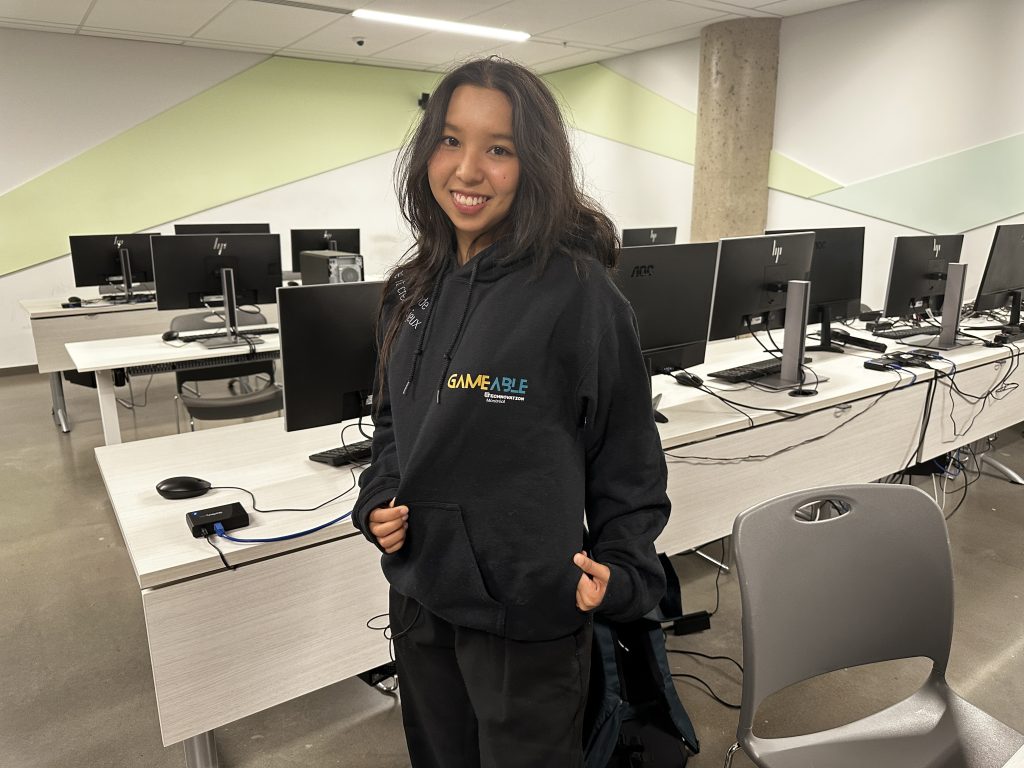
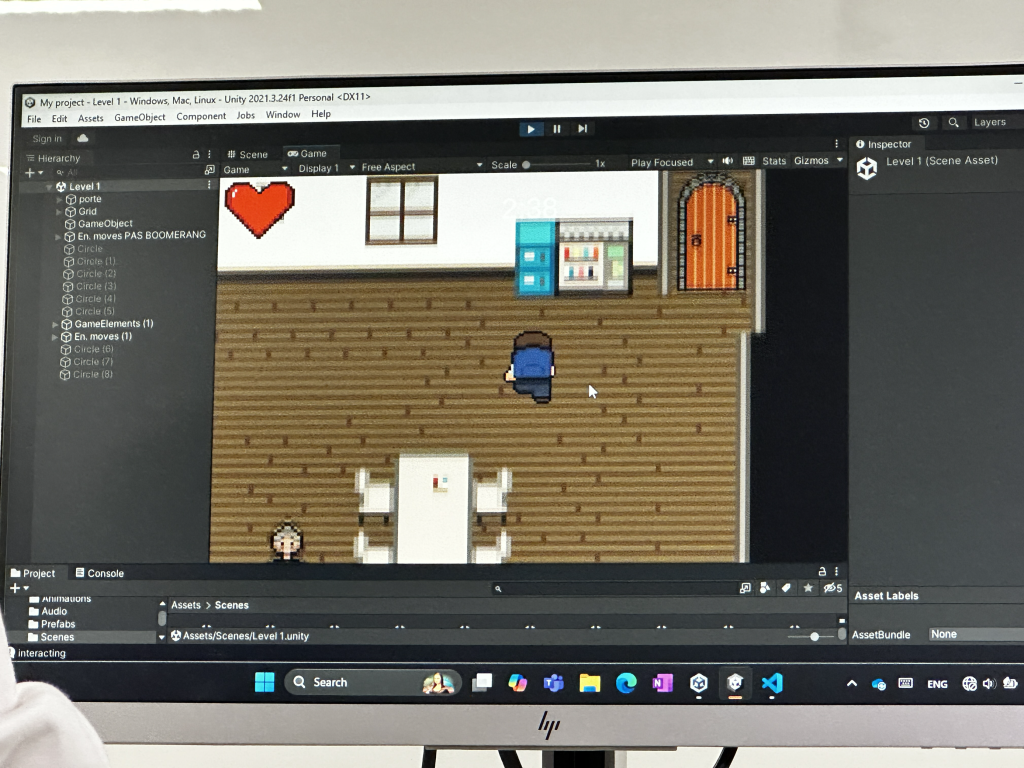
Every year, participants can learn how to create a video game, with teams having a level designer, programmer, and artists — all within five months. Each semester a new video game theme is taught and explored.
“We know what the theme is, that’s what’s exciting,” Ha Foun said. “But we did like an infinity run game, so a bit like a Flappy Bird, we did a top-down game, we also did a platformer game like Mario Bros. And so every year is different, and so we’re always learning new skills that can help us make the next game.”
Program mentor Zoé Ducourau says the gaming sector is more male-dominated, and initiatives like this help highlight women in STEM.
“I think it’s really important that there are awards that showcase these types of initiatives,” said Ducourau, who is also an AI lead at BioEureka. “It helps girls all age see what’s out there, not limit themselves, and empower them.
“STEM is a really large field. You can be pretty much whatever you want. So you don’t have to limit yourself to something else if you feel like you’re not going to be able to fit in. There are women in STEM that are happy in their careers and that are thriving and more and more now. So I think it’s time to shoot your shot.”
Ha Foun says the program can open doors to real-world opportunities in the gaming industry.
“Big companies like Ubisoft or EA, it’s like the games that I used to play as a child, they’re now showing me the behind-the-scenes and how they’re doing it and all the process,” she explained. “And for me, it’s really just feeling like I have a place somewhere and that there’s more opportunities that are like opening up their doors to women in tech.
With cohorts in both Sherbrooke and Montreal, registration is now open for the next season with information available online.
“If there’s a girl who’s hesitating to go into STEM, the goal is not to really learn about the STEM because technology and science advances so fast that it’s impossible in even two or five years to know exactly what we’re going to work on, which program,” Ha Foun said.
“It’s not only the skills, obviously that’s a big part of it, but it’s also how to build a community, how to gain the confidence in asking questions, in exploring and having the trust in yourself.”
–Rogers Communications is the parent company of CityNews.