Port of Montreal Expansion: Environmental group intends to sue federal government
Posted September 11, 2025 3:55 pm.
Last Updated September 11, 2025 3:57 pm.
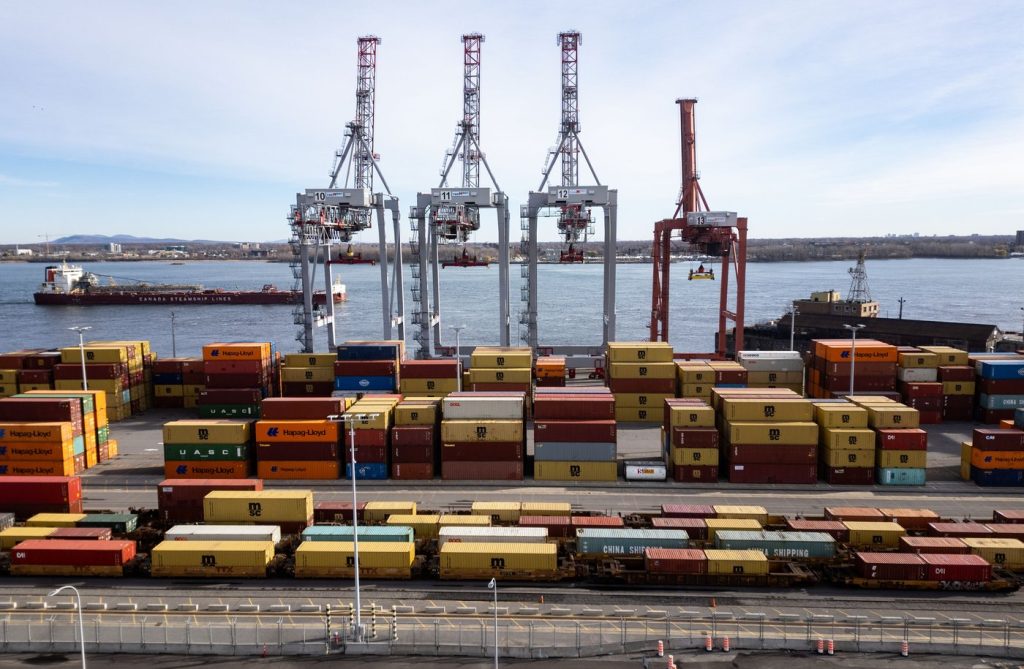
The expansion of the Port of Montreal cannot proceed without violating the Species at Risk Act, according to Société pour la nature et les parcs (SNAP Québec) , which intends to take legal action against the federal government.
The port expansion is one of the first five major projects the Carney government aims to approve under its fast-track legislation for major projects.
However, the courts may be called upon to rule on the legality of the initiative, as the habitat of a threatened species—the copper redhorse—is located precisely where the Port of Montreal plans to expand its Contrecœur terminal.
“It’s absolutely certain that we’ll be part of a legal challenge against the Port of Montreal expansion in Contrecœur,” said Alain Branchaud, biologist and executive director of the Quebec chapter of SNAP Quebec, on Thursday.
A Project at the Heart of the Species’ Global Range
The copper redhorse is found nowhere else on Earth except in a limited stretch of the St. Lawrence River and a few tributaries, such as the Richelieu River, where it reproduces.
“This port expansion project is right in the middle of the species’ global distribution range,” Branchaud explained to La Presse Canadienne.
The copper redhorse, or Moxostoma hubbsi, has been listed under Schedule 1 of the federal Species at Risk registry since 2007. According to Section 58 of the Species at Risk Act, “no person shall destroy any part of the critical habitat of any listed endangered species.”
Section 73 of the same Act states that the “competent minister”—in this case, federal Fisheries Minister Joanne Thompson—may “issue a permit to a person, authorizing the person to engage in an activity affecting a listed wildlife species”.
However, under Section 73, Ottawa may only issue such permits for three purposes: if the project is for scientific research; if “the activity benefits the species or improves its chances of survival”; or if the impact on the species is incidental.
“The Species at Risk Act allows for permits, but only under conditions where there is no harm to the recovery or survival of the species,” Branchaud told La Presse Canadienne.
“In our understanding, it’s impossible for this project to move forward while complying with the Species at Risk Act,” he added, “because the port expansion will destroy parts of the copper redhorse’s critical habitat.”
According to a scientific advisory published by SNAP Quebec in 2021, there are no mitigation measures capable of offsetting the potential destruction of the copper redhorse’s habitat in the Contrecœur area.
“So far, there’s no scientific evidence showing that we can recreate aquatic plant beds in a river ecosystem like this one,” Branchaud said.
“This species exists nowhere else in the world. That gives us a global responsibility to do everything we can to protect it.”
CQDE Keeps All Legal Options Open
The Quebec Environmental Law Centre (CQDE), has opposed the Contrecœur terminal expansion for years, citing its impact on the copper redhorse’s habitat.
“We’re concerned that the permit could be issued illegally—that is, in violation of the Species at Risk Act,” said Geneviève Paul, executive director of CQDE, in an interview with La Presse Canadienne.
On Thursday morning, CQDE filed a motion with Quebec Superior Court challenging the validity of Bill C-5, introduced by the Carney government. The bill allows Ottawa to fast-track industrial projects deemed to be “in the national interest,” such as the Port of Montreal expansion.
According to the legal advocacy group, Bill C-5 “grants excessive powers to the government and threatens both democratic principles and environmental protection.”
Could CQDE also launch a separate legal challenge specifically targeting the port expansion?
To that, Geneviève Paul responded: “Nothing is off the table.”
–This report by La Presse Canadienne was translated by CityNews