Most Lion Electric school buses back on Quebec roads after safety checks
Posted September 17, 2025 3:27 pm.
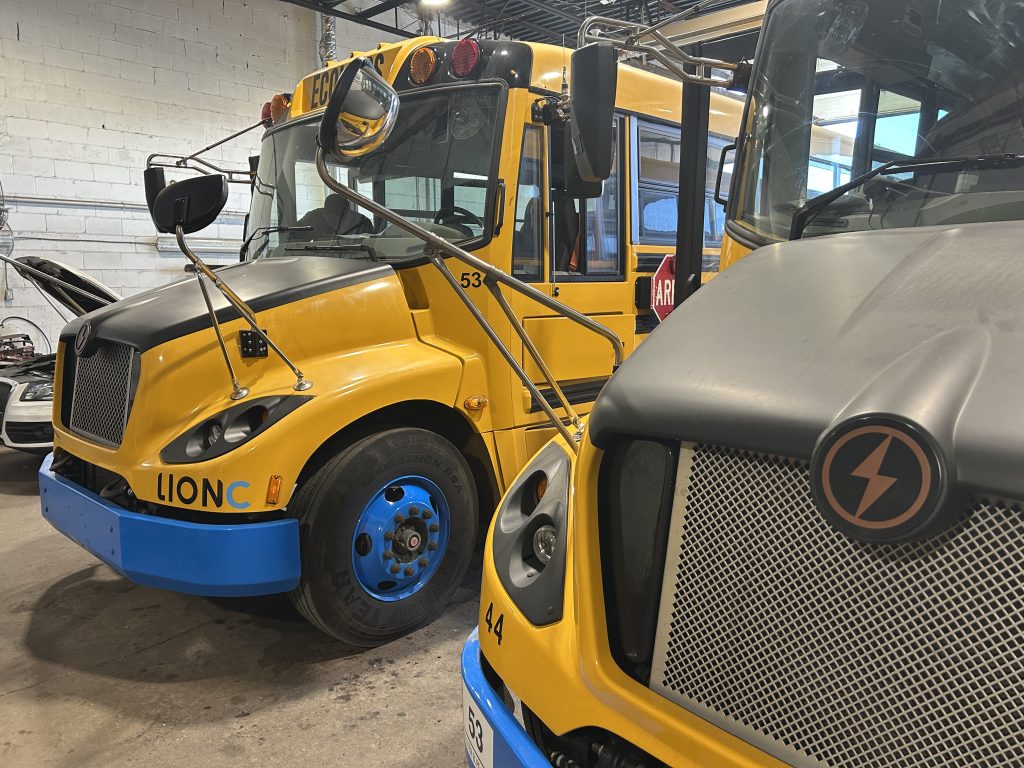
Around 75 per cent of Lion electric school buses were expected back on Quebec roads Wednesday, with full service planned by Friday.
The 1,200 vehicles had been pulled from circulation last week after one caught fire – no one was injured.
Valérie Tremblay, coordinator of the Canadian Electric School Bus Alliance and lead for sustainable mobility with Green Communities Canada, spoke with CityNews about the key takeaways from the incident and what it means for the future of electric school buses in Quebec.
What’s your reaction to the Quebec government’s decision to pull 1,200 Lion electric school buses off the roads after the fire last week?
VT: First off, it’s a very unfortunate event, especially with back-to-school having just started. We also thought about how this would impact parents, guardians, and school transportation staff. Like everyone else, we were surprised to hear that all electric school buses were being removed. But given a similar situation happened a year ago in Quebec, it makes sense to take a precautionary approach.
Can you clarify what we know so far about the cause of the fire, and how does it compare to fire risks in gas-powered buses?
VT: The fire in Montreal last week was caused by wiring related to the HVAC system, which handles heating and defrosting. That’s a component found in all types of school buses, not specifically electric. When comparing electric school bus fires to diesel buses, it’s important to understand that electric buses use the same core technology as other electric transit vehicles.
Globally, since 2010, there have been fewer than 30 battery fires involving electric school buses out of 250,000 in operation. Most of these incidents happened when the buses were not in use. By comparison, fire incidents in gas, diesel, or propane buses are more frequent. Data from the U.S. shows fire rates of 0.9 to 1.2 per 10,000 electric buses versus 7.3 per 10,000 diesel buses, meaning thermal vehicles are six to eight times more likely to catch fire. Overall, electric buses are relatively safe.
These fires may discourage operators from switching to electric. What should the Quebec government do to keep the transition on track?
VT: One positive outcome is that this incident has pushed school districts, bus operators, and Transport Canada to conduct thorough inspections on all electric school buses. This will reinforce safety and help prevent future incidents.
It’s also worth noting that electric buses are generally less prone to fire than thermal buses. If parents are concerned specifically about Lion electric buses, it’s important to know there are other manufacturers, such as IC Bus, Thomas Built Buses, Blue Bird, and Girardin. This was a defect in one model that is being addressed. I hope this incident won’t slow the transition too much, but I understand parents’ concerns about sending their children on electric buses.