Montreal STM maintenance workers to strike Sept. 22–Oct. 5, limiting service
Posted September 19, 2025 9:37 am.
Last Updated September 19, 2025 6:12 pm.
Montrealers who rely on public transit are being urged to plan ahead as the city braces for major service disruptions due to an upcoming strike by maintenance employees at the Société de transport de Montréal (STM).
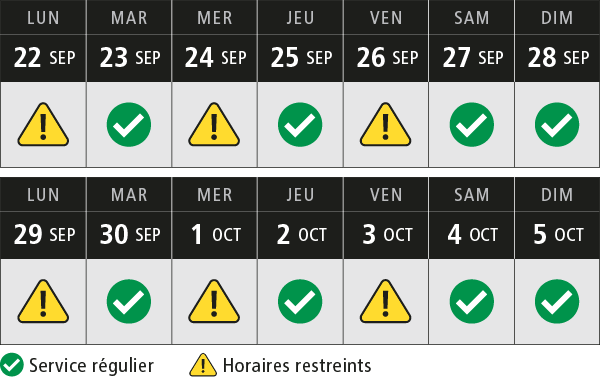
The union representing maintenance workers — the Syndicat du transport de Montréal — has announced a strike from Sept. 22 to Oct. 5, pending a last-minute agreement. If no deal is reached, bus and metro service will be reduced three days a week — Mondays, Wednesdays and Fridays — with limited operating hours.
On those days, metro service will run during three specific time windows:
- 6:30 a.m. to 9:30 a.m.
- 2:45 p.m. to 5:45 p.m.
- 11 p.m. until the usual closing time
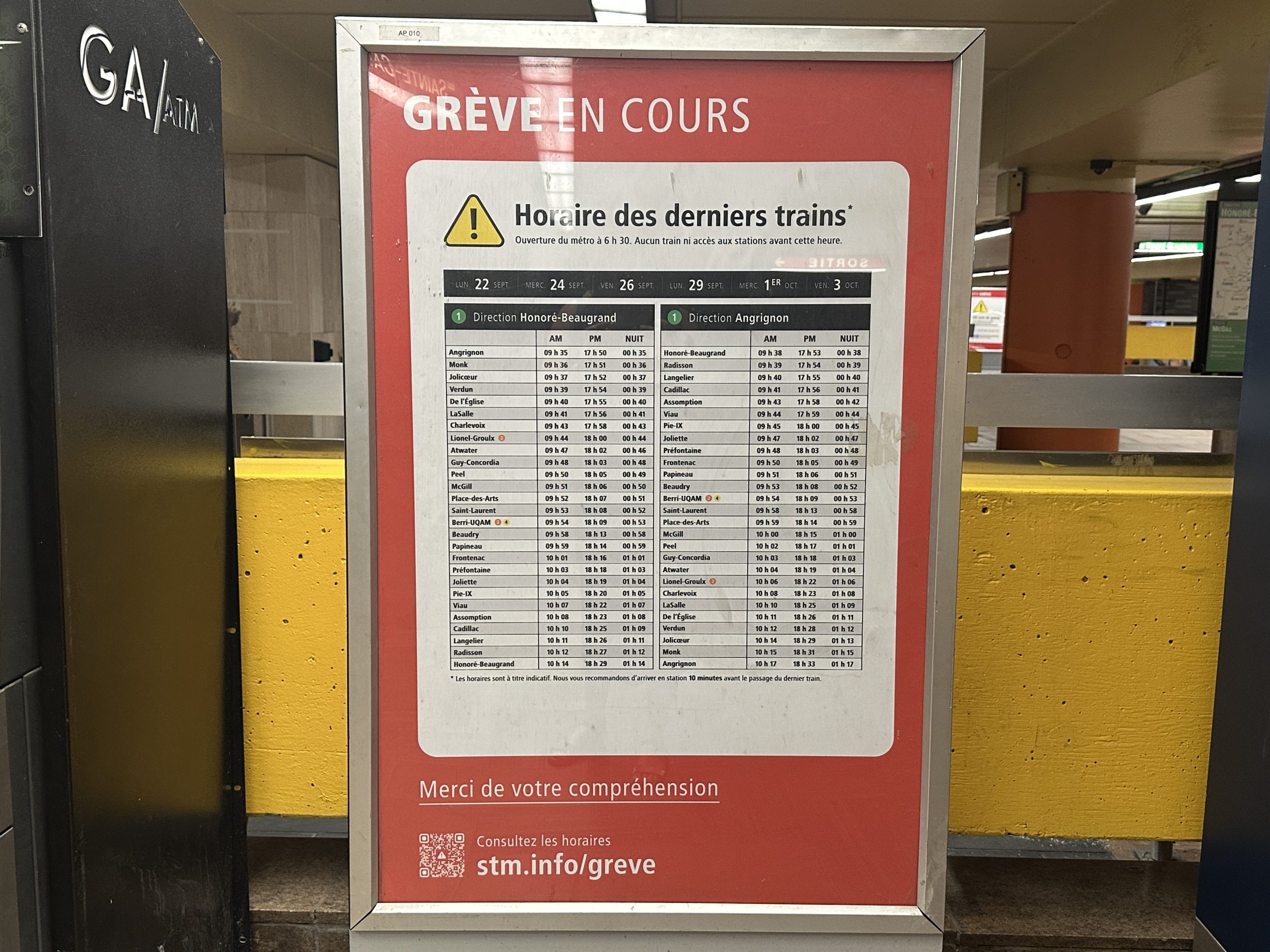
Stations will remain closed outside of those hours. The STM reminds riders that closure begins once the final train has passed and exact times vary by station.
Service will operate normally on Tuesdays, Thursdays, Saturdays and Sundays, but buses will follow the same three-day schedule and run at reduced capacity. Paratransit services will continue uninterrupted.
Passengers are encouraged to consult the reduced schedule available on the STM’s website and plan ahead. Riders are encouraged to check the site regularly, allow extra time, and plan their routes in advance.
STM offer rejected
On Friday, the STM announced it had submitted a comprehensive offer covering most of the normative clauses — provisions related to how work is organized — in an effort to avoid the strike. The union rejected the proposal, but the agency says it remains open to talks with the mediator in the coming days.
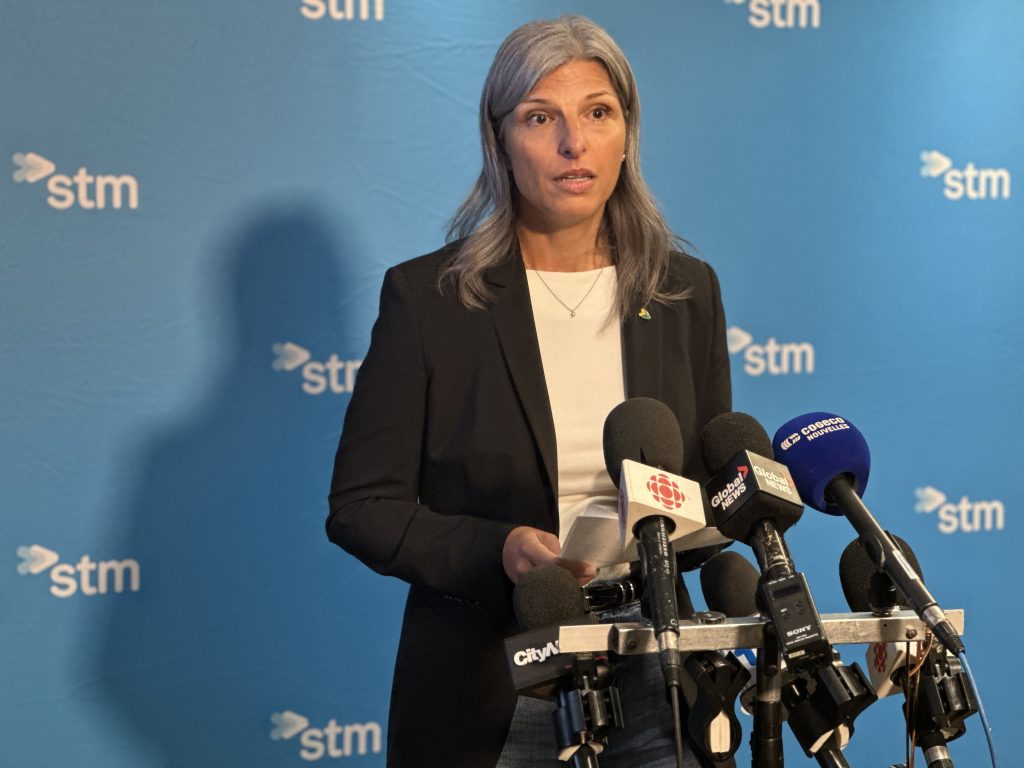
“Yesterday, we reaffirmed our commitment to reach an agreement by submitting an offer on normative clauses,” said STM CEO Marie-Claude Léonard. “This is an important step to finally focus our discussions on salary clauses.”
She said the union’s wage demands — representing roughly $300 million over five years — would require significant cuts to services if accepted.
“STM must respect taxpayers’ ability to pay, without having to cut service offerings,” she said.
The agency has offered a 12.5 per cent wage increase over five years. Léonard said any deal closer to the union’s 25 per cent ask would require “self-financing” through adjustments to working conditions.
Katherine Roux Groleau, STM’s Director of Public Affairs, said the agency has already reached agreement on 20 negotiation points since the mediator joined in June.
“We operate a 24/7 business, seven days a week,” she said. “Status quo is no longer an option. We need flexibility with scheduling to meet our operating model.”
Union points to inflation and outsourcing
Caroline Senneville, president of the Confédération des syndicats nationaux (CSN), said the strike is about protecting workers from job insecurity and inflation, not just wages.
“If we do go on strike on Monday, that would mean that even though we’ve been negotiating till the last minute, we haven’t been able to reach an agreement,” she said. “We’ll be striking every other day for 10 days.”
She said members are frustrated after months of negotiations without a raise, despite rising living costs.
“We signed a seven-year contract with increases way below inflation,” she said. “As we’re speaking now, we have less money in our pockets to pay our rent and the $9 pound of butter we see in grocery stores.”

Senneville said the STM’s offer would allow for more subcontracting and potentially displace workers to far-off locations, such as from Rivière-des-Prairies to Angrignon.
“The contract would mean working themselves out of a job because of subcontracts — even though subcontracts end up costing more,” she said. “And that’s really hard for people who need to drop kids off at daycare.”
She added that in other sectors, such as health care, ending subcontracting saved the province millions. “Last year alone, we saved over $700 million by hiring people back.”
For Senneville, avoiding a strike comes down to three things: “Take into account the cost of living. Don’t make us work ourselves out of a job. And don’t subcontract our jobs to people that will end up costing more.”
Tribunal-approved essential services
Essential services required by law to protect public safety during a strike will be maintained. The STM and union submitted their plan to Quebec’s Administrative Labour Tribunal, which approved the proposal on Sept. 10.
Maintenance staff are responsible for inspections, cleaning, repairs, emergency response and ensuring elevators and other accessibility equipment remain operational. Without them, STM says many buses and metro trains cannot run safely.
Public response and planning
STM says it has launched a communications campaign to inform the public, with information posted in stations, on social media, and on its website.
“We are very concerned,” said Groleau. “We want to make sure that our riders find ways to mitigate what is currently happening.”

Commuters are encouraged to use STM’s online trip planner, where they can uncheck the metro option to explore alternative bus routes. If no transit options are available, alternatives include BIXI bikes, Communauto, taxis, Uber, walking, or carpooling.
“If we are to provide a financial framework for the union that is closer to their ask, which is 25 percent over five years, they will have to self-finance this framework,” Groleau said. “We want to maximize employee retention, but we must manage public funds responsibly.”
What riders are saying
Reaction among commuters has been mixed, with some expressing frustration and others voicing support for the striking workers.
“I don’t take the metro a lot, but I’m obviously going to avoid it during the strike,” said one commuter. “I support the workers and I hope the city gives them what they deserve so we can avoid these strikes in the future. It’s not the workers’ fault — it’s the company.”
Another commuter said delays will be unavoidable for many.
“I need to go to my office on a daily basis. When they strike, I’m always late,” he said. “It has an impact on my daily activities.”
A third rider added: “Montreal is obviously a city that kind of depends on that type of transportation, so obviously a lot of people are going to be affected.”
Looking ahead
As of Friday, no new negotiations were scheduled. STM officials say they are available and willing to meet with the union and mediator over the weekend.
There is no confirmed timeline for an agreement before the strike deadline.