Health and Safety: Bill passed; unions say it’s ‘unacceptable’
Posted October 24, 2025 10:44 am.
Last Updated October 24, 2025 12:37 pm.
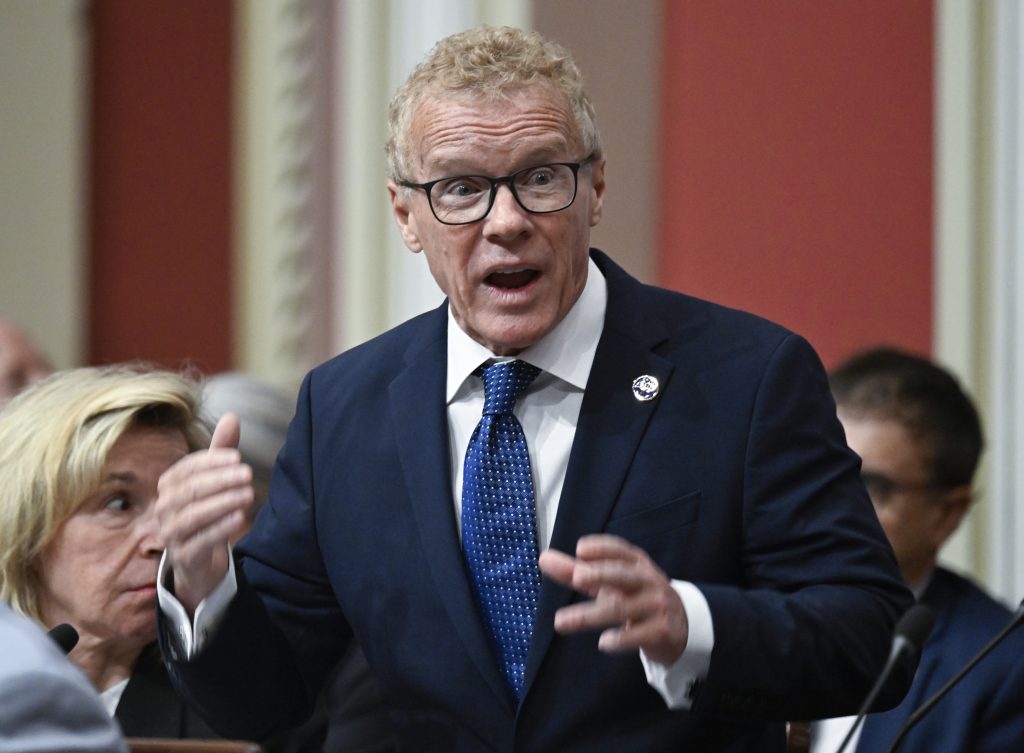
Bill 101, introduced by Labour Minister Jean Boulet, has finally been passed. According to the minister, it represents progress in terms of worker protection, but unions argue that it discriminates against healthcare and education workers—who are primarily women.
The bill also addresses income replacement benefits in the event of an occupational injury and grievance arbitration, in which hearing times are often lengthy.
But it is primarily with regard to prevention mechanisms and worker participation in occupational health and safety that this bill has drawn criticism.
It provides for a separate system for workers in healthcare, education, and social services.
Minister Boulet has already explained this distinction by stating that time must be taken to do things properly.
“In healthcare and then in education, it will be rolled out more gradually to respect organizational capacity and avoid service disruptions,” he previously stated.
But the unions see it as a two-tiered prevention regime.
“It is unacceptable that the government, through the Minister of Labour, is evading, as the employer government, a regulation that will apply to everyone, except education and health at the prevention level,” criticized Éric Gingras, President of the CSQ, in an interview.
The Centrale des syndicats du Québec (CSQ) represents the majority of workers in the education sector.
He explains the concrete effects: “in health and education, it gives them less capacity for prevention, training, fewer hours for occupational health and safety representatives, and fewer areas on which they can intervene. “So what he is doing is creating a two-tier system to the detriment of women in terms of prevention,” Gingras said.
However, there are many psychosocial risks, distress, and mental health issues in these workplaces, which require intervention, he argues.
The Fédération interprofessionnelle de la santé (FIQ), which represents the vast majority of nurses, agrees. “When it comes to occupational health and safety, there’s a double standard: the government grants full protection to certain groups, and less protection to those who provide care. This is unacceptable,” said its president, Julie Bouchard.
The CSN also denounces the situation in health and education. “It is cutting off these vital functions and also plans to only partially implement them in the public health, social services, and education network. More than 75 per cent of the staff in these networks are women, and their employer is the government. And it decides to play with their health and safety at work.”
“It’s absurd!” criticized the president of the CSN, Caroline Senneville.
–This report by La Presse Canadienne was translated by CityNews