A night that defined a generation: 30 years after Quebec’s 1995 referendum vote
Posted October 29, 2025 7:25 am.
Last Updated October 29, 2025 8:12 am.
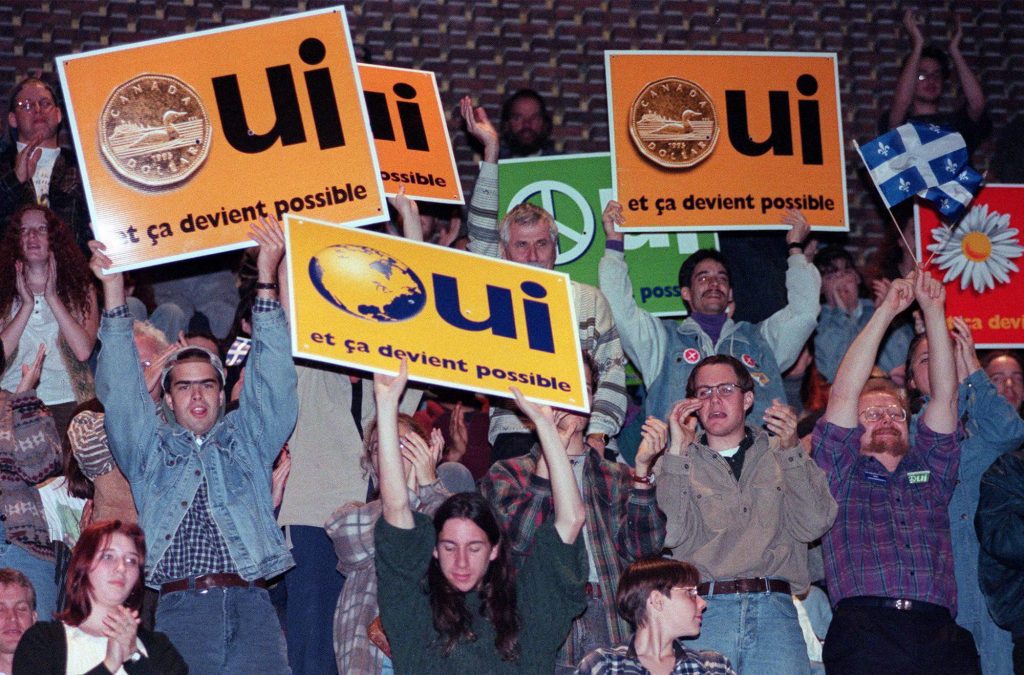
Thirty years after the 1995 referendum, when Quebecers came within a hair’s breadth of voting to leave Canada, those who lived through it still remember the emotion of that time.
They recall the drama of an unpredictable campaign, the fears and frustrations, and the relief — or anguish — when it was all over.
CityNews is looking back on the ’95 referendum with Montreal Gazette journalist Philip Authier, who covered the “yes” campaign.
So let’s start off. What stands out to the most when you look back at covering that 95 referendum?
It was, certainly at the beginning, like covering an election campaign. It was a kind of a debate of ideas and a bazillion numbers about whether Quebec could be viable as a country. Then you had the federalist side and the ‘yes’ and the pro-independence side debating these things. And yeah, it was actually kind of calm at the start. I think about it today, there were no crowds or no hoopla, no people in the streets with posters and banners. It actually sort of felt like an election campaign. And we were debating issues.
Did you have a sense at the time the way the vote was going to go in the end?
Every reporter who was covering that knew that the population was basically split on this issue. There had been another referendum in 1980, which the ‘no’ side won. But in the time between that first referendum and this referendum, the ‘yes’ side had built up a lot more support. But nobody anticipated such, what was it, 50,000 votes? Nobody anticipated such a close score. And it was like a hockey (game), dramatic and in overtime kind of a thing. And I think two things stand out for me from those final days. One was the speech Mr. (Jacques) Parizeau made at the Palais des Congrès, in which he blamed money and ethnic votes for the loss. And the other very dramatic moment was the next day, we were all hauled back to Quebec City, and Mr. Parizeau resigned. And he was all alone in the red room, the salon, what used to be the upper house, the red room with his wife, and all of his staff was nowhere to be seen. And it was a very dramatic moment.
And what lessons do you think coming out of that referendum did politicians and Quebecers learn?
I think politicians learned, and Quebecers learned that it’s a very divisive debate. And in the end, emotions are become a bigger factor than we anticipate. The night of the vote, there were no riots, there were no incidents. But you can find families today that will tell you that this issue divided them and caused them a considerable amount of grief. And I think you also had a generation of ‘yes’ supporters, PQ voters, who became very disillusioned with the party and the option after that for quite a long time. We’re seeing today more of a sort of a resurgence of the idea with youth. But the boomers, the people who like me, everybody got older, and they didn’t see their dream fulfilled. And so if you talk to them, a lot of them became quite disillusioned and didn’t think it would happen ever. But here were others who believed what Mr. Parizeau said that night, that when you lose a vote like that, his line was you rub your hands together and roll up your sleeves and try again. And I think some people also believe that. So it’s a tricky kind of a thing, a referendum. It’s more intense than an election. And it stirs up quite a bit of emotions.