Critical minerals: Quebec, U.K. sign agreement
Posted December 8, 2025 5:09 pm.
Quebec signed an agreement with the United Kingdom on Monday to secure a supply of critical and strategic minerals for its defence industry.
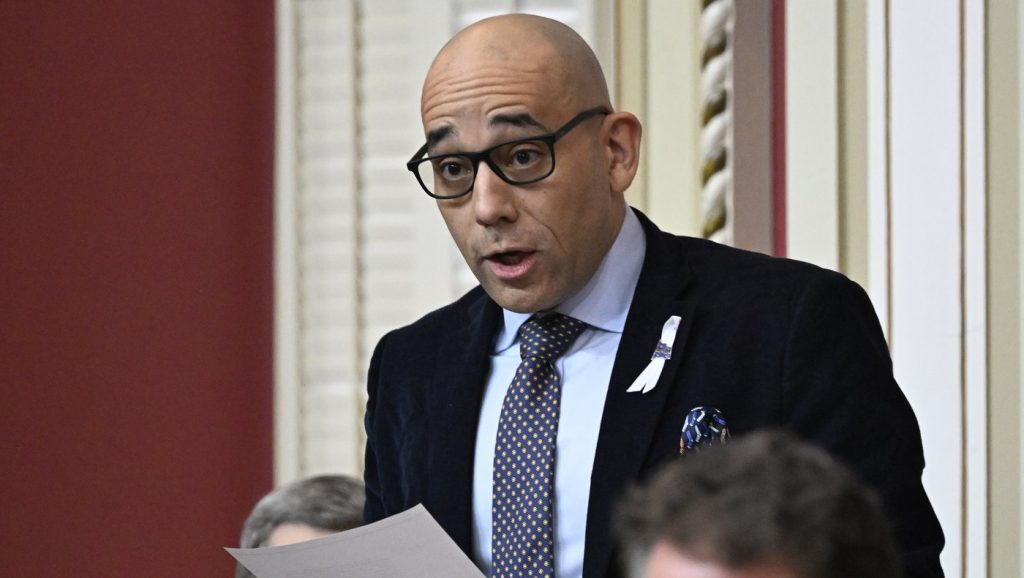
Minister of International Relations Christopher Skeete travelled to London to sign a declaration of intent with British Minister of State for Industry Chris McDonald.
The agreement aims to position Quebec as a trusted partner in the current geopolitical context.
“Europe now sees us differently,” said Minister of Natural Resources Jean-François Simard in an interview with The Canadian Press.
“Rarely in the free world is there such a concentration, such diversity, such quality of critical and strategic minerals in a stable state governed by the rule of law outside of China.”
Western countries are seeking partners to reduce their dependence on China, which controls most of the market for critical and strategic minerals.
The European Union and the United Kingdom have announced an increase in defence spending due to the Russian threat, yet this industry requires large quantities of critical minerals.
“They have $800 billion to spend, there are going to be bottlenecks, and we want to be part of the solution to that problem,” said Skeete.
No fewer than 10 of the 40 critical minerals deemed necessary by the European Union are present in Quebec soil, he pointed out.
Skeete gave the example of titanium. A civilian aircraft requires 10 per cent titanium, but a French Air Force Rafale fighter jet requires 35 per cent titanium in its construction, the minister said.
The metal, which is found here, must be exported to Asia for refining. However, Quebec wants to establish a supply chain with Europe.
France can carry out the final refining stages, but Quebec would like to bridge the gap in titanium processing to offer a value-added product.
In 2024, the United Kingdom was Quebec’s fourth-largest European trading partner, with trade totalling more than $5 billion.
Quebec’s exports to the United Kingdom have increased by 41 per cent over the past five years, making it the province’s second-largest customer in Europe and sixth-largest in the world.
–This report by La Presse Canadienne was translated by CityNews