‘Disastrous’: One of Montreal’s largest pediatric clinics to close due to Quebec’s Bill 2

Posted December 10, 2025 4:30 pm.
Last Updated December 10, 2025 9:37 pm.
Heartbreaking and devastating.
Those are some of the words Montrealers are using to describe the closure of one of the city’s largest pediatric clinics.
Tiny Tots Decarie in Côte Saint-Luc, a staple in child medical services in the city for more than 30 years, is among dozens of clinics that have announced they would be shutting their doors for good following Quebec’s controversial health reform known as Bill 2.
BACKGROUND: ‘It’s going to be chaos’: Montreal clinics warn Bill 2 closures will put patients at risk
“It’s heartbreaking, and it does not make any sense. This is Canada. We take care of each other,” Montreal’s Joséane Brunelle told CityNews.
“I do feel for families, because when your child is sick, it must be terrifying.
“I think it’s outrageous the way our health system is decaying right now.”
Multiple news outlets are reporting the clinic’s parent company, Elna Medical, says Bill 2’s new pay structure would make the operation financially impossible. Bill 2, which comes into effect Jan. 1, would partly tie doctors’ pay to meeting government performance targets.
‘Where are those children going to go?’
Doctors have warned Bill 2 would strain an already fragile primary-care system, and that medical professionals could leave the province as a result.
Sherif Emil, a pediatric surgeon and former director of the Harvey E Beardmore Division of Pediatric Surgery at the Montreal Children’s, says the closure of Tiny Tots would be “disastrous.”
“We’re in a situation where a lot of children have no access to a family doctor or pediatrician,” Emil told CityNews. “I’m being asked almost on a weekly basis to help find a pediatrician or a family doctor for a child. … Where are those children going to go?
“Patients who have multiple problems like diabetes, heart disease, are high-risk patients. And then there’s low-risk patients. … And those, in our understanding, will get the lowest priority in terms of actual access and so on. So, that’s what concerns me very much as somebody who spends my entire day, every single day with children who, yes, may be healthy, but are still prone to presenting with diseases that are not picked up. And then when they’re not picked up by a pediatrician, become advanced and in some cases can severely alter the child’s life.”
Emil says spirits in the Quebec medical community are at rock bottom.
“I came to Quebec in late 2008 from California,” Emil told CityNews. “I was recruited to come to a leadership position here and I’ve loved my practice here. I love the people of Quebec. I love the patients of Quebec. I love the families of Quebec.
“But I can tell you there’s been times over these last 17 years where morale was low for different reasons. I have never, honestly, I have never seen morale as low as it is now within the health-care environment. I’ve just never seen it.”
CityNews also spoke to Montrealers Wednesday who say the closures add to a sense of worry for the future of the province’s health-care system.
“It’s going to be very devastating for the community,” Stephanie Lehrer said.
“There’s definitely an unrest. If the government continues with putting these giant hours on the doctors that are completely unattainable, how are they supposed to maintain the clinic?”
“As more people are getting older… I do everything I can to take care of my health myself, but I also need some help from doctors,” added Hilda Smolash.
Medical students speak out
Meanwhile at the National Assembly in Quebec City, Liberal opposition members are moving to file a petition with 66,000 names urging the Legault government to repeal the law.
“It says a lot, this petition, that people are very worried,” said Marc Tanguay, the Quebec Liberal critic for health.
Alongside him in Quebec City Wednesday were two medical students from the University of Laval.
“My colleagues and I are questioning our career plans in family medicine, especially because of Bill 2,” said fourth-year student Raphaëlle Lauzon.
“It doesn’t take a genius to realize that this law is pushing us toward fast-food medicine, a type of medicine where there is less time for each patient,” added first-year student Édouard Rochefort.


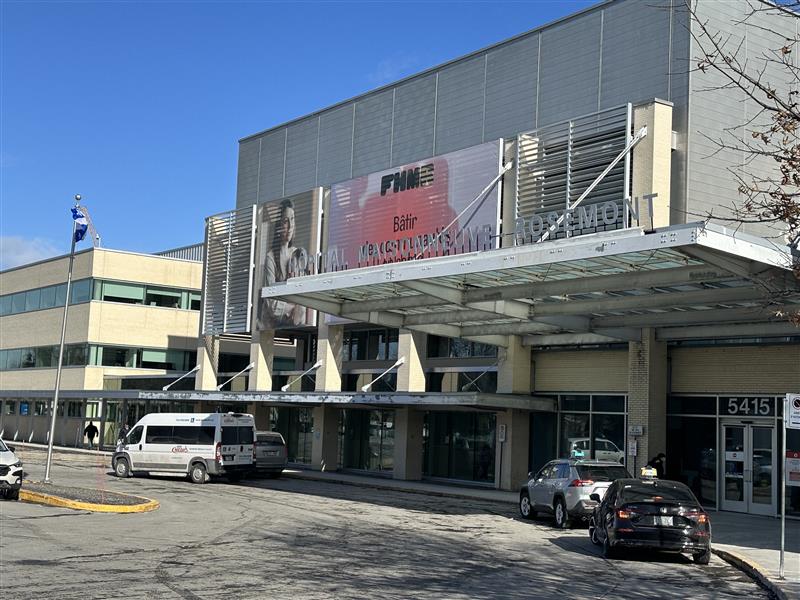

Government negotiations with family doctors have been touch and go, with talks breaking down last Thursday only for them to start up again the day after.
Quebec Premier François Legault on Tuesday emphasized “financial incentives” in exchange for doctors taking on more patients, as his government looks to break the impasse at the negotiating table.
“We want to reach out to both federations to come and discuss this with us,” the premier said.