Quebec emergency rooms overcrowding explained: Q&A with Montreal doctor
Posted January 6, 2026 2:38 pm.
Last Updated January 6, 2026 4:20 pm.
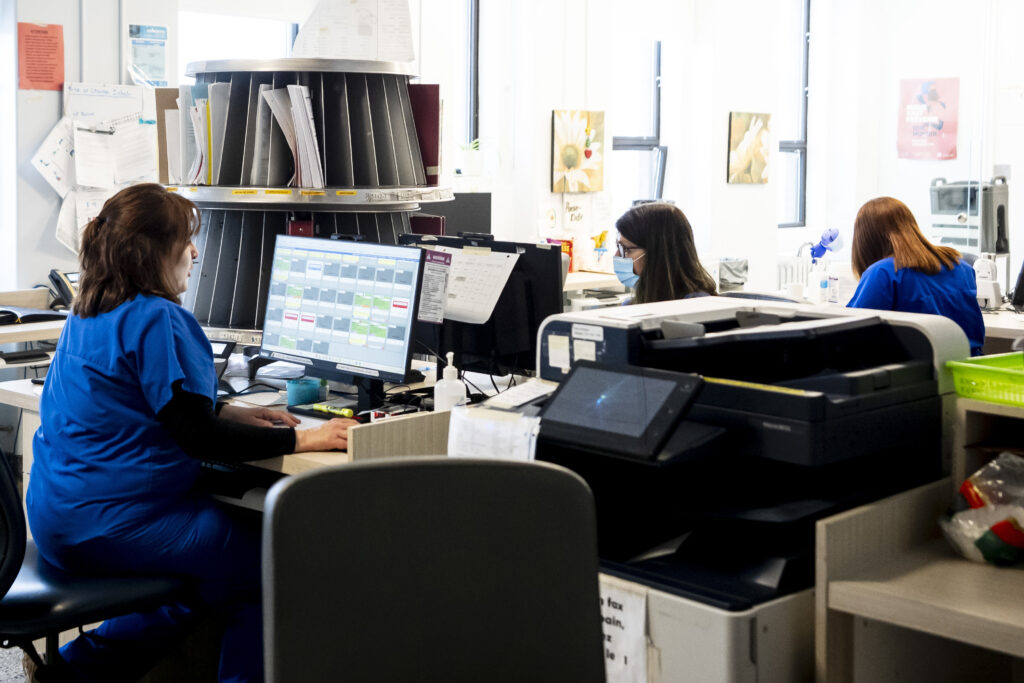
Emergency rooms across Quebec, especially in the Greater Montreal area, are under intense pressure.
Occupancy rates have climbed well above capacity, with some hospitals nearing or even exceeding 200 per cent. A post-holiday spike in influenza cases, combined with staff shortages and a lack of hospital beds, is leaving patients stuck on stretchers for hours, sometimes days.
The occupancy rate of stretchers in Quebec emergency rooms remains high. It stood at 143 per cent Tuesday afternoon, one of the highest levels since Christmas. Monday’s occupancy rate was also very high, averaging 134 per cent, according to Index Santé.
In Montreal, the Royal Victoria Hospital was reporting occupancy at 245 per cent, while the Montreal General Hospital stood at 165 per cent, and Jewish General Hospital is at 257 per cent. The Montreal Children’s Hospital was at 117 per cent, and CHU Sainte-Justine at 69 per cent.
There is some good news for flu season, however: the peak of influenza transmission was reached the week of Dec. 27, when more than 6,500 cases of influenza tested positive, according to respiratory virus detection results from hospital laboratories received by the Quebec Public Health Laboratory. The most recent data (week ending Jan. 3) shows 5,317 positive influenza tests.
Among the regions with the busiest emergency rooms in Quebec hospitals, on Tuesday early afternoon, Montreal had a stretcher occupancy rate of 164; Lanaudière 166 per cent; Chaudière-Appalaches 167 per cent; the Laurentians 182 per cent; and Laval 186 per cent.
The exodus of family doctors that occurred in the context of the adoption of Bill 2 by the Legault government is impacting emergency room visits. Even though an agreement in principle has been reached with general practitioners, some have left to practise medicine in Ontario, which shares part of its border with the Outaouais region.
Montreal doctor Christopher Labos, a cardiologist with a degree in epidemiology, joined CityNews to break down what’s driving this congestion and what it means for patients.
From your perspective, what’s really behind this level of overcrowding right now?
Well there’s a combination of factors. One is increased demand and the other is decreased supply. So we’re seeing increased demand because we are having a pretty bad flu season, not withstanding all the other respiratory viruses that are circulating, COVID, RSV and all the other things that make people sick. Whenever you have snow or freezing rain, people fall, people injure themselves. There’s a lot of reasons why people go to the hospital and there’s always a peak in demand during the winter months because of the respiratory viruses. You couple that with decreased supply. We have less personnel than we once did. We have less resources. There’s a shortage of hospital beds. So that creates a bit of a bottleneck. So you have more people going into the emergency room and fewer people coming out because you can’t find beds for them in the other hospital departments.
Health authorities are urging people to avoid emergency rooms when possible and call 811 instead. In practical terms, who should still go to the ER and who should think twice before showing up?
That’s a tough one because it is a bit of a judgment call. You go to the emergency room if you’re getting worse, not better. If you’re struggling to breathe and need oxygen or if you can’t keep down food or drink and you need to get intravenous fluid and hydration that way because you’re at risk of becoming dehydrated. But it can be hard for most people to know. And so calling 811 is one good way to speak to a medical professional that they can triage you and tell you, ‘yeah, you probably should go to the emergency room or you can go to this clinic the following day if you’re not feeling too bad.’ But it is that bit of a judgment call, which is a little bit hard for some people to always figure out.
We’re hearing about patients spending days on stretchers because there are no beds upstairs. What does that kind of backlog mean in terms of patient safety and quality of care?
Well, it’s obviously not a good thing. I don’t think this is desirable from anybody’s point of view. It is a problem because when you have these types of backlogs, it’s harder to keep track of patients. It’s harder to treat patients properly. We just need more resources to move people out of the emergency rooms, to get them hospital beds, to get them places in long-term care centres. But those things cost money. And until we pour in the resources to open up these extra beds, we do not have avenues to move people out of the emergency rooms. And that is what contributes to the backlog.
—With files from La Presse Canadienne