No link between supervised consumption sites and crime rates in Toronto: study
Posted January 8, 2026 1:37 pm.
Last Updated January 9, 2026 5:28 pm.
The presence of overdose prevention and supervised drug consumption sites in Toronto are not linked to increase in crimes over the long-term, according to McGill University researchers.
The study found that, over a 10-year period, crime reports remained the same or declined in neighbourhoods where consumption sites had been opened.
“Opposition from the public and policymakers has often centred on neighbourhood safety and decline,” said Dimitra Panagiotoglou, lead author of the study. “We wanted to find out whether the data supported those claims.”
In their analysis, researchers looked at crime data from Toronto police near nine consumption sites that opened after 2017 but were closed due to community pressure.
“I think an important finding of the study is that we did not observe consistent results across all nine sites,” said Imen Farhat, a co-author and PhD candidate at McGill University. “For some sites, we did see increases and for others, we saw decreases. Overall, over all the nine sites, we haven’t observed any increases in crime.”
“Because the study in Toronto is across nine sites that are in different neighbourhoods, we can safely think that the results could be transposed to other urban areas in Canada, such as Montreal,” added Farhat.

They found five major crimes, including assault, auto theft, break-in, theft over $5,000 in a 400-metre area around the sites.
“Once the sites opened, there was a jump in break-and-enters in some areas. Over time, those reports declined, as did reports of robberies,” a press release announcing the study said. There were no links between assaults and auto thefts and the opening of these sites.
The finding that crime didn’t increase mirrors results from other cities, the researchers said.
However, why there was a decline after remains unknown, and many factors, such as increased policing and mental health initiatives launched by Toronto police, could be factors.
Nearly a decade after Canada recognized the opioid crisis as a public health emergency, polarized views on harm reduction measures like safe consumption sites could be holding back progress, according to the study’s authors.
“We need both realism and compassion,” said Panagiotoglou. “People’s discomfort is understandable, but the crisis reflects deeper systemic issues, such as housing, employment, and the toxic drug supply.”
Here in Montreal, certain people living near Maison Benoît Labre, a supervised consumption site, have complained about a number of disturbances since it opened in April 2024.
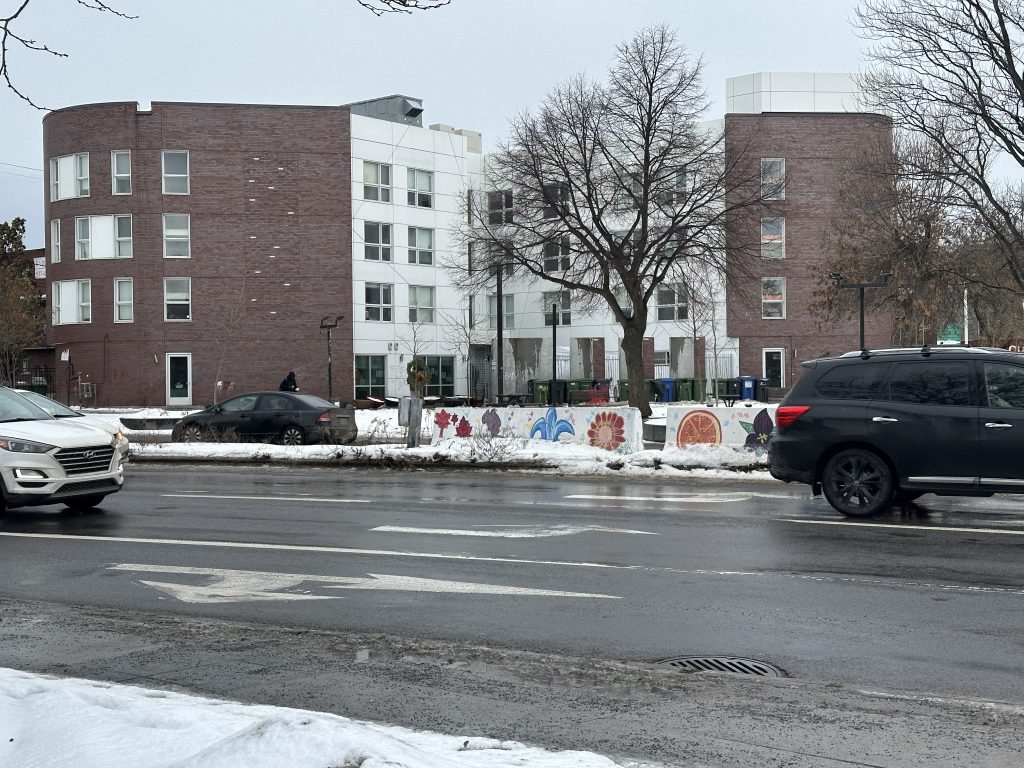
One resident, André Lambert, acquired Montreal police data through a freedom of information request that showed a significant increase in certain crimes and other incidents within 50, 100, and 250 metres of Maison Benoît Labre in the months following its opening.
“Essentially, it shows a massive increase in crime. Incidents are up, up to 475 per cent compared to the baseline data prior to the incident,” said Lambert.
Lambert adds that the Montreal police data corresponds with what certain residents have been experiencing.

“Last year, we had an incident nearby in an alley where a man in distress came in. The children, hopefully, they left the area before this happened, but the man threatened to come back and rape a group of 10 to 12-year-old girls,” said Lambert.
“You talk to any residents around here, they can tell you many stories about break-ins, about aggressions, about assaults, about thefts.”
Farhat added, “It is very understandable to feel uncomfortable with these sites. However, they do provide evidence-based medical needs and direct people to needed services.”
-With files from Gareth Madoc-Jones