‘I feel a sense of urgency’: Montreal police chief speaks to CityNews on growing mental health challenges, public safety
Posted January 9, 2026 1:10 pm.
Last Updated January 9, 2026 4:11 pm.
Thursday morning, a dramatic police intervention near UQAM put public safety in Montreal back in the spotlight.
Police were called to the corner of Ste-Catherine and Berri Streets around 7:45 a.m. for a man armed with two knives. The situation escalated into a standoff in a busy downtown area. Officers used pepper spray, tasers and rubber bullets before the man was eventually subdued and taken to hospital. Three officers were also injured.
The incident has sparked strong reactions online and raised renewed questions about safety in Montreal.
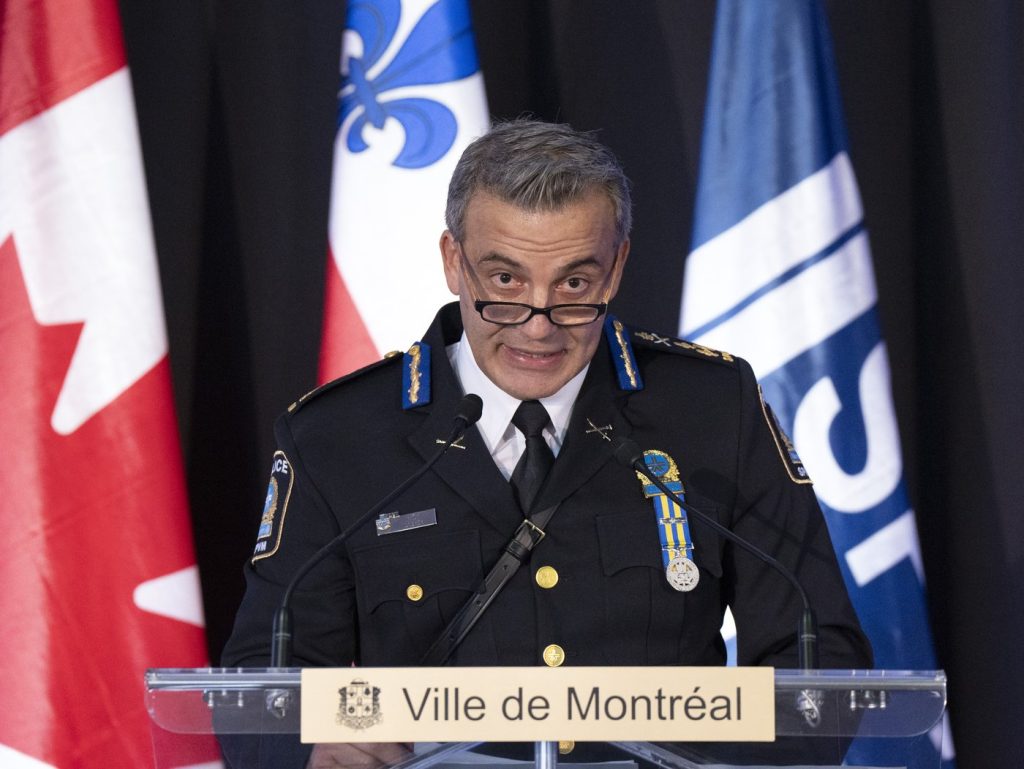
CityNews caught up with Fady Dagher, chief of Montreal police (SPVM) to talk about Thursday’s events, the broader security situation in the city, and how police are adapting.
Lola Kalder, CityNews: Let’s start with what we saw yesterday: This happened in a very busy part of downtown, steps from UQAM and the metro. From your perspective, what made this intervention especially challenging and what do you want the public to understand about how decisions are made in moments like this?
Fady Dagher, SPVM chief: “First of all, it takes us a few seconds to take a decision. It’s very, very fast. It was at 7:45 in the morning — very busy time next to the UQAM and next to the Metro. That person was destabilized mentally and had mental health issues. We have known that person for the last two, three years. We’ve dealt with him maybe four or five times and every time we had to use the special forces to be able to control that person because of his mental health status. And, again, 7:45 in the morning, cops are patrolling on the beat and start talking to that person right away. He raised and took out two knives and threatened them.
“You have to remember we are very close to the university and very close to the metro. And, we didn’t want him to go inside. So that’s why you saw so many police officers trying to surround him. And, you’re right, we used ‘intermediate’ weapon — not to kill the person, but to try to control him. Thank God at the end it went well. It was a positive ending.
“But it was a very, very difficult moment for the police officers, because imagine the scenario if our police officers, the person would be injured himself or injured some innocent victim inside the metro or the university. We don’t know what will happen today. It’s, how you say, it’s a successful operation. Still, we’re going to improve to see what went well. When did it go well, what didn’t go well and how we can improve. But it’s a very, very tough situation for the police officer to try to control somebody like that outside in the public area and try to protect everybody including the suspect.”
Lola Kalder, CityNews: You’ve been very open about the growing number of mental health-related calls police are responding to. Is the situation getting worse in Montreal?
Fady Dagher, SPVM chief: “It is getting worse. The metro has issues. I don’t know if it’s post pandemic, but I know that my police officers I keep answering calls from 911 calls or most of them are coming from mental health issues. Even the criminal code call, let’s say somebody gets stabbed or let’s say somebody gets attacked. There’s very, very often an underlying mental health issue involved.
“So to be honest with you, I feel a sense of urgency that all the partners sit together and work. Right now, we’re doing very well with the City of Montreal, with the Minister of Health in the province and with the committee groups. We are working very well together but, I think, we should go faster, deeper and stronger because it is urgent that everybody get on board and everybody push in the same way to try to find a solution because today is a successful operation because at the end nobody died. But, I don’t know, if you risk what can happen.
“We’ve been dealing with this for very, very often every day on every shift my police officer answering those kind of calls and you know, what? we’re not doctors. We’re never going to be doctors. We try the best we can with the training that we have and that’s why recently — I don’t know if you saw the news — I asked if we can have some psychiatrist on the field to be able to control with us. And, give them education to those people to be able to control them and let’s give them a good path with dignity (so) that they can step outside the streets and avoid crisis like yesterday.”
Note: The transcript was slightly edited for clarity.