Burnout crisis: 4,500 Quebec nurses were on sick leave in November
Posted January 13, 2026 4:40 pm.
Last Updated January 13, 2026 5:38 pm.
More than 4,500 nurses in Quebec’s public health network were sidelined by illness or injury in November.
Unions warn the strain is pushing the system and nurses to a breaking point.
“I was somebody that had burnout on numerous occasions and I had to do something about it,” said Melanie Jade Boulerice, the owner and founder of Nomadic Nurse Network.
“My burnout was no longer allowing me to care for people properly and my body spoke volumes. I was diagnosed with hypertension. I was diagnosed with PCOS (Polycystic Ovary Syndrome). I had fertility problems.
“I was becoming a martyr for a system that was no longer feeding into me.”
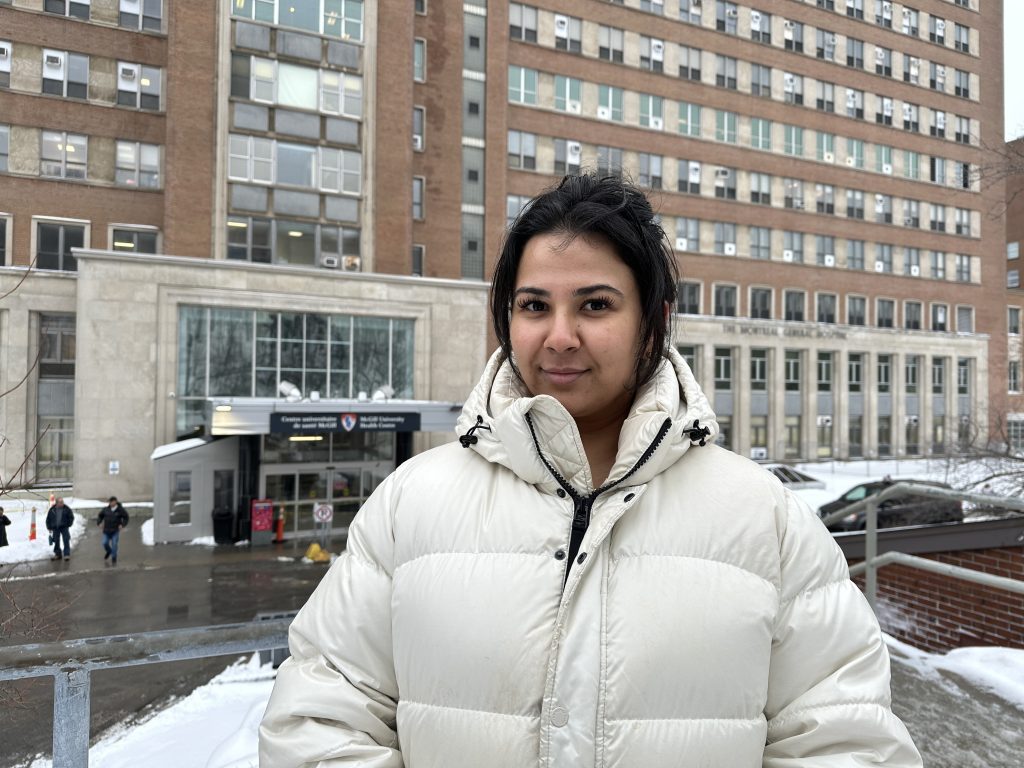
At the McGill University Health Centre (MUHC), nearly seven per cent of nurses were on sick leave in November.
“A lot of us, the health-care professionals, are going home exhausted at the end of the day, wondering, ‘oh my gosh, did I do everything I needed to do?’” said Jennie Rhee, president of the union representing MUHC’s nurses and cardiorespiratory professionals.
“And it’s that added weight, that burden, that fear that we didn’t do everything that we needed to do in a shift that is creating an extra stress on health-care professionals today.”
Lisa Fiset, a spokesperson for Santé Québec, says more than half of leaves are due to mental-health challenges.
“The pressure comes from everywhere. It’s not just work,” Fiset said. “There’s family obligations. There’s financial stressors. There’s other factors at play. And this is why we have action plans in place so that managers are aware and able to easily identify those employees who might be in need of help.”
But health advocates warn burnout doesn’t just affect workers; it can ripple through the entire system. Budget pressures, they say, often delay equipment upgrades and workplace improvements, increasing the risk of injury on the job.
“We’ve been told by Santé Québec that we must cut back, we’re in a deficit of 40 plus million, we have to find the money somewhere,” Rhee said. “So certain things are not being replaced, old beds, old stretchers and things like that are not being replaced, and they do kind of get old with time, so we have a lot of shoulder injuries, we have a lot of back injuries.”
Fiset says it’s a “serious concern” for the health authority.
“We’re following this and addressing this with the utmost attention,” she said. “Of course, our greatest asset within the health-care system is our staff. So we’re really trying to work towards improving this situation right now.”
Union leaders also warn that when nurses are off sick, the remaining staff, including new graduates, are left with fewer supports, creating a cycle that can push even more workers toward burnout.
“You have new graduates who are by themselves, the more experienced ones are retiring or they’re off sick or something is going on and they’re by themselves and they don’t have the experience perhaps,” Rhee explained.
Experts say a five per cent absence rate should be the maximum acceptable in health-care settings. But many regions, including Montreal, are seeing rates well above that.
Despite there being 80,000 nurses across Quebec, the province has struggled with shortages for years. Santé Québec says today, nine per cent of those nurses are on leave.
“What we need is proper ratios,” said Rhee. “We’re going to be launching a project… heading into the next negotiations that is set for 2028.”



Rhee says the staffing ratio model already exists elsewhere, including British Columbia, Australia and California, where nurse assignments are based on patient acuity, ensuring staffing levels match care needs.
“We’ve been treating this issue for the last 30 years as a shortage of nurses rather than a crisis in retention of nurses,” said Natalie Stake-Doucet, a registered nurse and professor at UQAM. “And so once you start looking at it as a crisis in retention, then the solutions change dramatically to the problem.”
Health advocates say reframing the issue as a retention crisis also means recognizing who today’s nurses are.
“The typical demographic profile of a nurse is a woman who’s in her early 40s, has young children at home,” said Stake-Doucet. “So it’s important to understand that women who have young children at home have family responsibilities. So it’s important to offer a work environment that allows them to have work and family balance.
“We deserve to have a quality of life outside of the workplace,” added Boulerice.