New Quebec electoral map: Montreal and Gaspésie lose a riding each
Posted January 14, 2026 7:38 am.
Last Updated January 14, 2026 10:17 am.
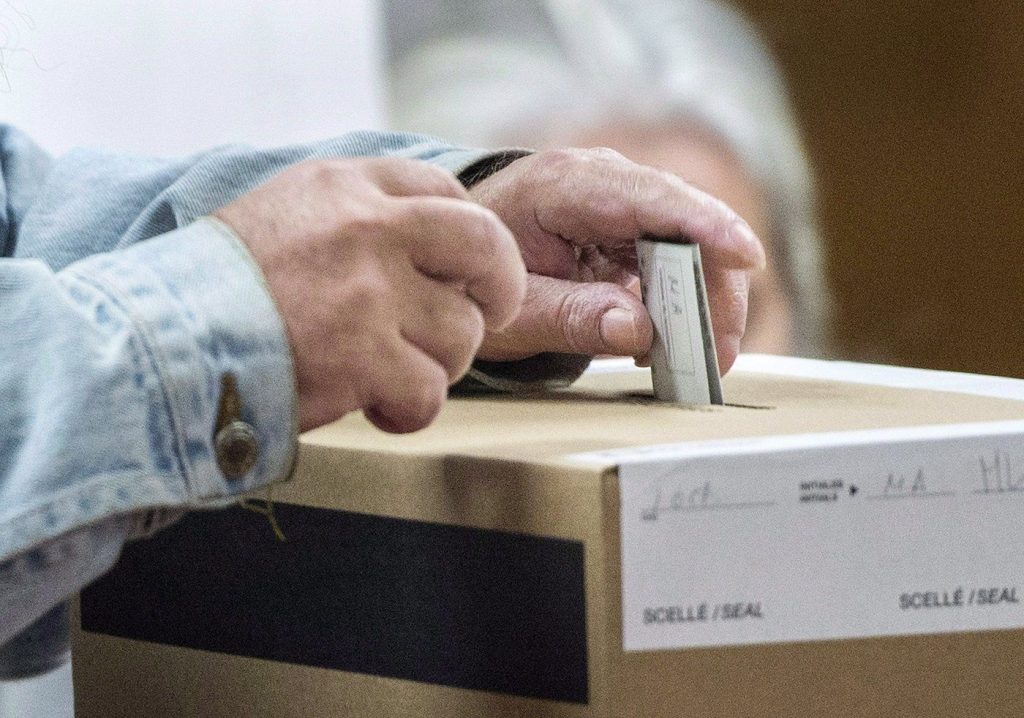
The electoral map used during the Oct. 5 elections will have one less riding in Gaspésie and in Montreal, in favour of two new ones in Laurentides-Lanaudière and in Centre-du-Québec.
The Quebec Electoral Representation Commission (CRE) presented the new electoral map on Wednesday, the objective of which is to “reflect the evolution of the number of voters in the territory”.
The most significant change involves the elimination of one riding in the Gaspé Peninsula and another in East Montreal. The CRE argues that voters from these two regions are currently “overrepresented” in the National Assembly.
Thus, in the Gaspé Peninsula, the ridings of Gaspé and Bonaventure are combined to become Gaspé-Bonaventure. The riding of Matane-Matapédia, for its part, is enlarged to include the La Haute-Gaspésie Regional County Municipality.
The Regional Electoral Commission (CRE) also ruled that the Matane-Matapédia electoral district will retain its current name, even though a law was passed to rename it Matane-Matapédia-Mitis. It emphasized that the changes made to the electoral map mean that the La Mitis Regional County Municipality (MRC) is no longer entirely within the district.
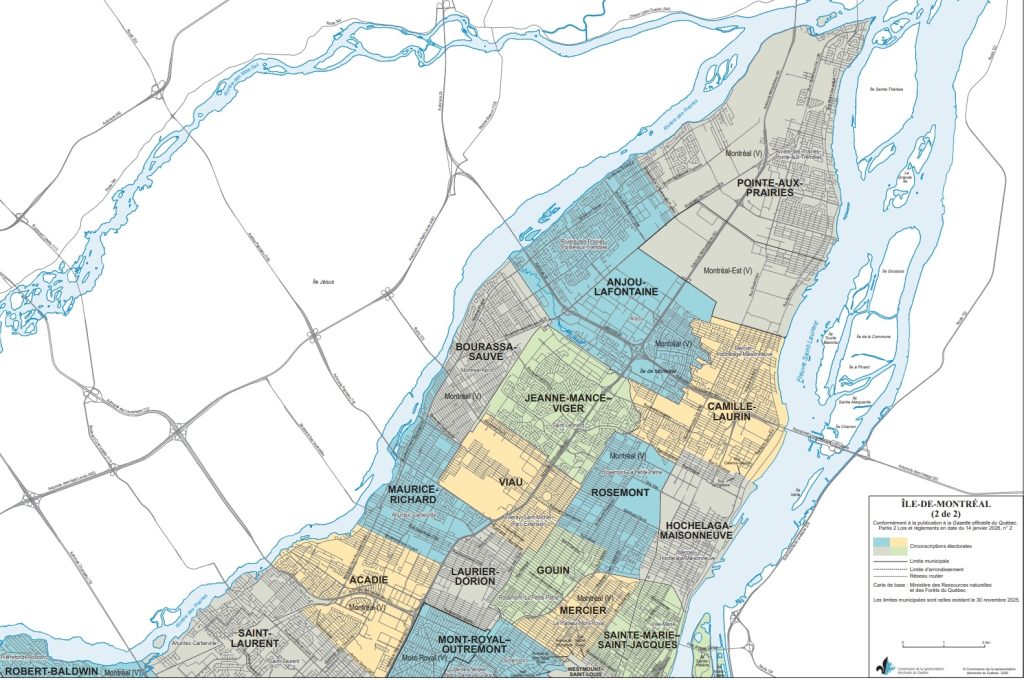
In Montreal’s east end, the LaFontaine riding is split between the Pointe-aux-Trembles and Anjou-Louis-Riel ridings. The new ridings will be named Pointe-aux-Prairies and Anjou-LaFontaine, respectively.

Contestation
The idea of removing a constituency in Gaspésie sparked an outcry in the National Assembly: several members, from all parties, said they had noticed that the region was gradually losing its political weight.
The current PQ member of parliament for Matane-Matapédia, Pascal Bérubé, also argued that the enlarged riding would become “almost impossible for a single elected official to cover” because of its vast territory.
A law was thus unanimously adopted in 2024 to halt the revision of the electoral map. However, the Court of Appeal ruled this law “unconstitutional” and “inoperative,” so the process continues.
Premier François Legault’s government is contesting this decision. In December, it sought leave to appeal to the Supreme Court of Canada. The country’s highest court has not yet indicated whether it will hear the case.
On Wednesday, the chairman of the Electoral Representation Commission and chief electoral officer, Jean-François Blanchet, defended the changes to the electoral map.
“The withdrawal of a constituency always causes a lot of reaction, but it is democratic that the vote of a voter, from one constituency to another, has essentially the same influence on the results of an election,” he argued in a statement.
Many changes
The new map includes the addition of a riding in the greater Laurentians and Lanaudière region, which has seen its number of voters increase by 11.6 per cent since the current map was established. The CRE notes that this is the highest growth rate in Quebec.
The Bellefeuille constituency was thus created. It included part of the cities of Saint-Jérôme and Mirabel, as well as the municipality of Saint-Colomban.
For the greater Estrie and Centre-du-Québec region, the riding of Marie-Lacoste-Gérin-Lajoie is added, north of the territory of the current riding of Johnson – which is also renamed Daniel-Johnson.
In total, 51 of the province’s 125 electoral districts are being modified. In some cases, the boundaries of the districts are being moved, while in others, it involves a change in place names.
From 125 to 127?
The Electoral Law provides for a revision of the electoral map after two general elections, since population movements create inequalities in representation.
This revision is being carried out so that Quebec is divided into 125 constituencies of approximately 51,000 voters who have, as far as possible, common characteristics.
Québec solidaire is proposing, to avoid removing MNAs in the Gaspé Peninsula and in the east end of Montreal, to simply increase the number of elected members of the National Assembly from 125 to 127.
“Going from 125 to 127 MNAs would make it possible to welcome the new ridings in the Laurentians and Centre-du-Québec without sacrificing anyone,” pleaded Solidaire MNA Alexandre Leduc in a statement.
The party is asking other political parties to join it in passing legislation that would confirm the net addition of two ridings to the electoral map
– With information from Caroline Plante
–This report by La Presse Canadienne was translated by CityNews