By 2100, the average temperature in Quebec could increase by 6.6 degrees Celsius in winter
Posted January 20, 2026 5:31 pm.
Last Updated January 21, 2026 10:02 am.
The average winter temperature in Quebec could rise by 6.6 degrees Celsius by the end of the century, according to estimates from Ouranos, a consortium of some 70 climate science and adaptation professionals.
The Paris Agreement, ratified in 2015, aims to limit the increase in the average global temperature to well below two degrees Celsius and, if possible, to 1.5 degrees Celsius.
But experts say that scenario is becoming increasingly unlikely.
During a technical briefing for the media on Tuesday, the Ouranos team presented what a Quebec winter would look like if there were a global warming of 3.5 to four degrees Celsius by the end of the century.
In this scenario, described as “probable,” and we can expect a temperature increase of “five degrees Celsius in the southern part of the province” to “nine degrees in northern Quebec,” explained researcher Angelica Alberti-Dufort, specifying that the average temperature in the province would increase by 6.6 degrees.
“The increase is more pronounced in the north of the province, due to the Arctic amplification effect,” which means that “the northernmost regions are warming three times faster than the global average.”
Global warming of 3.5 to four degrees by the end of the century means the duration of snow cover could decrease by 16 to 25 days across Quebec.
Snow cover could begin 10 days later and end approximately 10 days earlier, and across Quebec, the frost-free season could lengthen by 29 days.
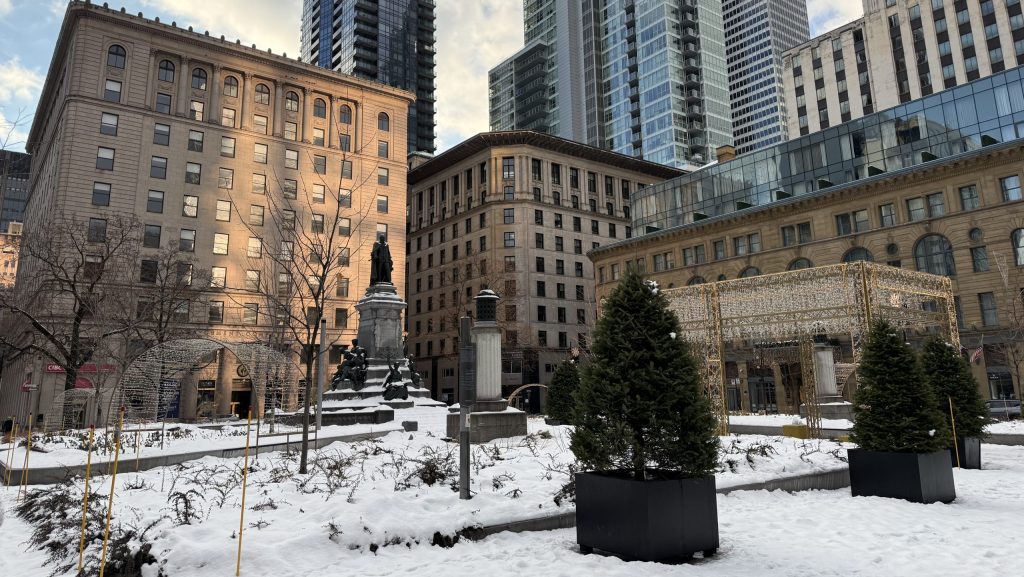
“People in Quebec City are going to experience more and more Montreal-like winters, and people in Montreal are going to experience more and more Toronto-like winters,” summarized Alain Bourque, executive director of Ouranos.
More frequent thaws
Winters will be warmer, and in the southern part of the province, “this also translates into a shift in freeze-thaw cycles,” indicated Alberti-Dufort.
Thaws — that is, events where the minimum temperature is below 0 degrees Celsius and above 0 degrees Celsius in the same day — will not necessarily be more frequent, but they will occur more closely together throughout the season.
In the southern part of the province, “where the majority of roads and infrastructure are located,” historically “freeze-thaw cycles occurred from October to December and from March to May,” but in the future, “we see that they will become significantly closer together,” explained the researcher, specifying that there will be more and more of them from November to January and from February to April.
“If we combine this with an increase in liquid precipitation during these periods, meaning more rain in winter, it can create a combination of events that could be detrimental to several infrastructures,” added Alberti-Dufort, giving the example of roads.
After heavy precipitation during a thaw, “there is a lot of liquid absorption in the pavement,” and if a freeze subsequently occurs, the water solidifies and the ice cracks the pavement.
“The freeze-thaw cycle concentrated over a shorter period, the increase in winter rainfall, the loss of snow cover, and freezing rain are all phenomena that will affect the integrity of our infrastructure, whether it be roads, buildings, or, of course, all hydroelectric infrastructure,” she emphasized.
To adapt to changing winters and address climate change, the members of the Expert Group on Adaptation to Climate Change (EGC), including Ouranos, submitted a list of 20 recommendations to the Quebec government in the spring of 2024.
The EGC notably recommends accelerating the protection of 30 per cent of land and water, aiming for zero net land take by 2035, requiring compensation for the destruction of natural infrastructure, implementing a national ecological corridor strategy to promote ecosystem connectivity, and ensuring a rapid update of the Quebec Construction Code.
These recommendations are structured around five strategic areas:
- Ensuring proactive management of natural ecosystems and ecosystem services;
- Protecting the health, safety, and well-being of everyone;
- Adapting buildings and infrastructure and ensuring the resilience of essential systems;
- To promote the adaptation of economic activities and the financial system to risks;
- To support the adaptability and action of all stakeholders.
–This report by La Presse Canadienne was translated by CityNews.