McGill launches Pandemic and Emergency Readiness Lab
Posted February 3, 2026 11:28 am.
Last Updated February 3, 2026 4:50 pm.
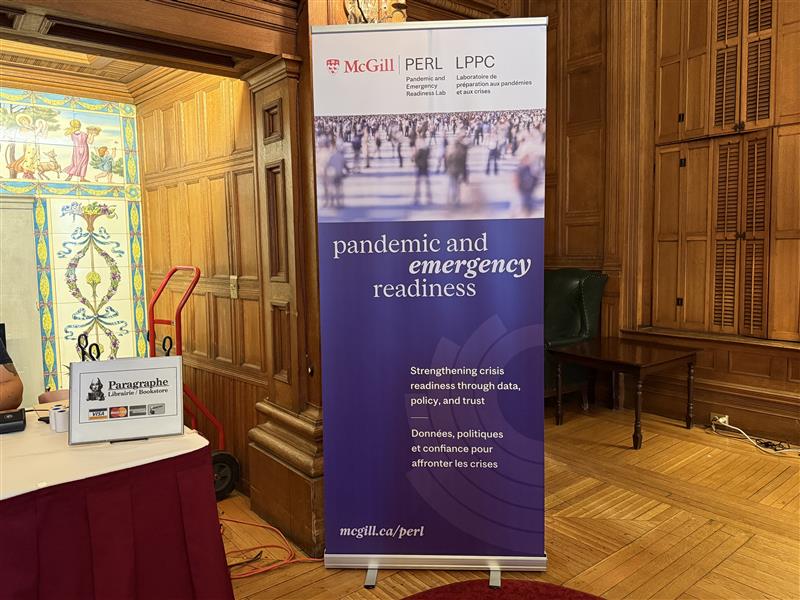
McGill University officially launched a new Pandemic and Emergency Readiness Lab on Tuesday aimed at helping societies, governments, and organizations better prepare for and respond to future health emergencies.
The Pandemic and Emergency Readiness Lab, known as PERL, brings together experts in science, public policy and leadership to strengthen readiness at both the global and local levels.
“The purpose of this lab is to look at all hazard risks,” said Prativa Baral, deputy director of PERL. “We’re not just talking about pandemics. We’re talking about climate emergencies, wildfires, and how we as societies can be better prepared for the next emergency.”
PERL was created on the premise that the next crisis will not wait for us to be ready and that we must identify best practices, said Dr. Joanne Liu, director of PERL, to an audience at the launch at McGill University. “I’m convinced that we need to have much more practical, hands-on research,” Liu added.

Several experts agree that the COVID-19 pandemic was child’s play compared to the devastating effects a future pandemic could have.
“Of course, we don’t want to be alarmist because there’s such trauma in the population, but the reality is that it’s true that [for COVID-19], the lethality wasn’t that high; lethality means deaths. It was contagious, but not super contagious like measles, for example. So, we weren’t in the worst-case scenario,” Dr. Liu mentioned in an interview with The Canadian Press.
The laboratory will pay particular attention to preparing for health crises, but not only that. The climate crisis and wars could equally benefit from the preparations that scientists are putting in place.
“This really applies to all crises. What we see is that these crises, which often overlap, create a real ripple effect and multiplier on the impact of healthcare systems and society,” explains Dr. Liu. “In the case of the environmental crisis, it fuels pandemics because we know that the pressure we have on the environment leads to species jumps. That’s how Ebola arrived in 2014.” A species jump occurs when an animal virus is transmitted to a human and causes the emergence of a human disease.

Researchers at the new laboratory have already begun their work, particularly with regard to anticipating risks and innovating in data and systems.
“There is definitely a key area of focus that will be on disinformation and misinformation,” said Dr. Liu. “We know that today, probably one of the biggest threats to keeping a population together is this current of disinformation and misinformation. So, we are going to work on that.”
“We have a project on measles,” she adds, “because currently, we see it with the fact that it is said that measles vaccines cause autism, and we also had, post-COVID, a dip in vaccination rates.”
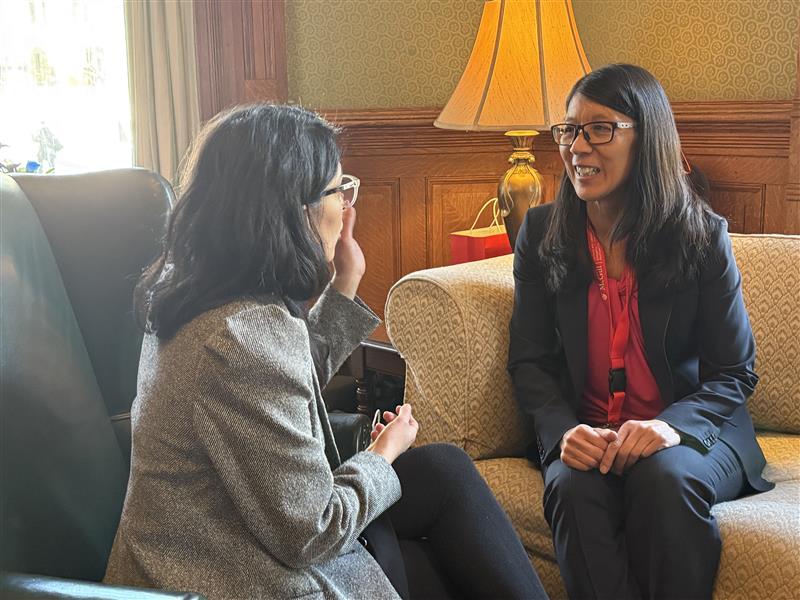
Dr. Liu, who is also a professor in the Department of Global and Public Health at McGill University, points out that more than 94 per cent of people need to be vaccinated for the population to be protected against measles. “We’re far from that, we’re nowhere near enough,” she says.
The interdisciplinary initiative focuses on research, crisis leadership and collaboration across sectors and borders.

McGill said the lab is being created in response to the growing certainty of future global health crises and the need for more coordinated, evidence-based responses.
The launch included a full day of panel discussions examining challenges related to governance and public policy, including the impact of autocratic regimes, humanitarian crises, migration, and the growing threat of mis- and disinformation during emergencies.
McGill hopes their new lab will bring more momentum, visibility, and discussion, all while strengthening both local and global readiness. “The long term is to make a difference in people’s lives,” Liu added.
According to McGill, a number of projects are already in the works to be launched.
–This report by La Presse Canadienne was translated by CityNews