Montreal multidisciplinary artist invents instrument, earns international recognition

Posted March 7, 2026 10:31 am.
Last Updated March 7, 2026 1:04 pm.
Montreal multidisciplinary artist Lateef Martin is turning bike parts into music — and earning international attention for it.
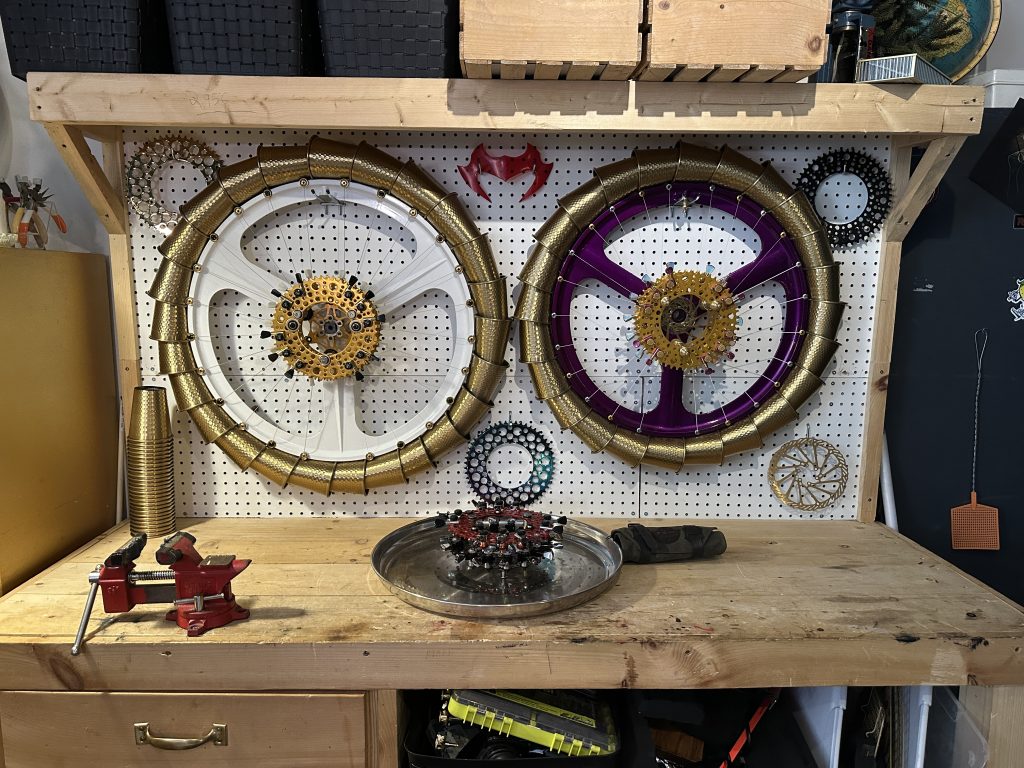
Martin, the CEO and creative director of Miscellaneous Studios, has invented the Lethelium, a one-of-a-kind instrument built from bicycle components and other materials. The creation has landed him a finalist spot in the prestigious Guthman Musical Instrument Competition in Atlanta.
But the idea for the instrument didn’t begin in a studio or laboratory.
It started in a bike workshop.
A melody from a bike wheel
Martin recalls the moment the idea first sparked while at a co-operative bike shop, when a volunteer named Bettina made a suggestion.
“I was at Right to Move, which is a co-op bike shop behind Concordia, and I was truing a bike wheel, fixing the spokes,” he said. “I started plucking them and coming up with a little melody, and one of the volunteers was like, ‘oh wow, that would sound cool if you put the guitar strings on there,’ and I was like, ‘whoa.’”
“Thus began the journey many, many, many moons ago to create this instrument,” he said.
Over time, the concept evolved through different creative projects and collaborations until the Lethelium took its current form.
Built from many parts
Designing the instrument was a long process shaped by experimentation and community feedback.
“Being humble and being open to critique is really a very important part of the process,” Martin said.
The Lethelium itself is made from a mix of materials including bike parts, guitar components, household items and brass pieces — a combination that created technical challenges during development.
“Getting all these disparate pieces to fit together to create this cohesive thing was really a challenge,” he said.
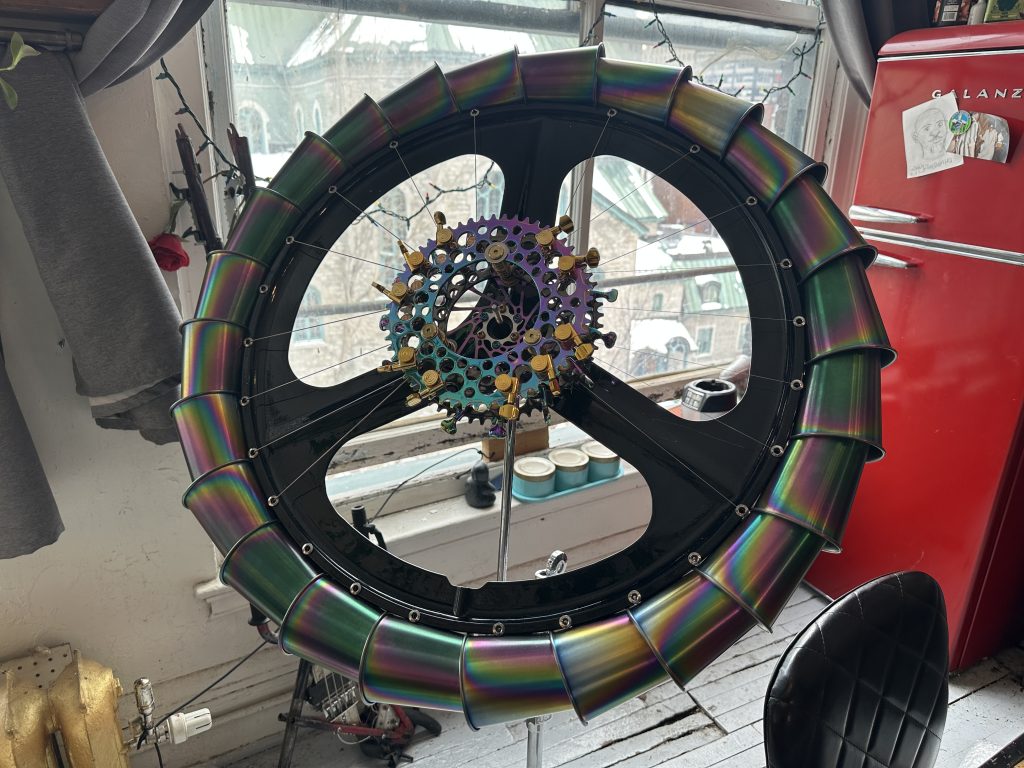
Martin said finding the right parts and figuring out how they should be tuned and positioned took years of trial and error.
“It takes the teamwork to make the dream work,” he said.
His brother, Blair Martin, also helped troubleshoot mechanical aspects of the design.
A hybrid sound
The Lethelium produces a sound Martin describes as a blend of two traditional instruments.
“It’s like the lovechild between a dulcimer and a harp,” he said.
The instrument features 24 strings arranged across two octaves and can be played in multiple ways — plucked with fingers, struck with sticks, bowed or played with picks.

Andrea Cochrane, a music consultant on the project, helped shape its musical layout.
“She helped develop the idea of making it a 24 string, two octave chromatic instrument,” Martin said.
The layout mirrors the structure of a piano keyboard.
“Basically it’s based on the format of a piano and there are two gears on the Lethelium. The top gears represent the black keys on the piano and the bottom gears, the tuners on them represent the white keys,” he explained.
“If you know how to play a piano you can get your way around the Lethelium pretty quickly.”
A second chance at international recognition
Martin’s invention recently earned him a spot as a finalist in the Guthman Musical Instrument Competition, hosted by the Georgia Tech School of Music in Atlanta.
The opportunity came after an earlier rejection.
“I applied one time, didn’t get it. I was really frustrated,” he said.
But encouragement from another instrument creator helped him keep going.
“I reached out to one of the winners, the creator of the Electro Spit, and he said, ‘hey man, just keep working on your thing. Keep trying, keep applying.’”
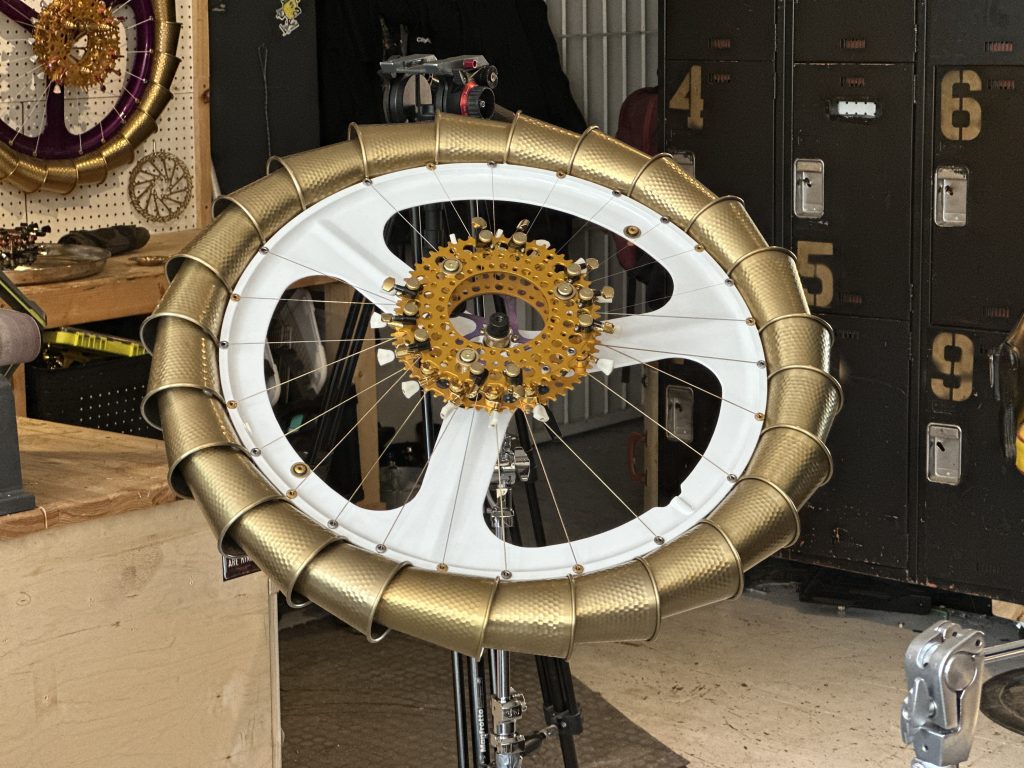
When Martin applied again after further refining the instrument, he made the finalist list.
“Now there’s a lot more about it that makes it interesting and unique,” he said.
Martin said he’s excited to be among the finalists and to travel to Atlanta for the competition.
“There’s nine other finalists and the instruments they have created are incredible. I’m a fan of all the instruments. So just to be in that group is just already a lot of respect and it’s humbling. And to be going to Atlanta, which for me is a fabled place of music and culture that I’m really excited to check out. And one of my childhood friends lives there, so I’m looking forward to catching up with her.”
Sharing the instrument with the world
The Lethelium is also part of a larger creative universe Martin has built around his storytelling projects.
The instrument went on to help shape the soundtrack for Z’Isle, a comic book series set years after a zombie apocalypse in Montreal, where bicycles are central to the world’s tools and technology. The series was co-created with Dan Buller and Isabelle Duguay.
“I always wanted to create a soundtrack to the stories I create, and I was like, ‘wait a minute, I have the perfect instrument,’” Martin said.
The universe has since expanded to include music performances and a video game called Distraction Machine.

Inspiring the next generation
Looking ahead, Martin hopes others will experiment with the instrument in ways he never imagined.
“I really want people to explore and create music in ways I would never,” he said. “I’ve been studying the Lethelium for years. I’m technically the best Lethelium player in the world, but I don’t want to be. I want to see how other people interpret it.”
He recently shipped several orders of the instrument and is eager to hear what new owners create with it.
“For me, it’s really about, hey, it’s a new instrument. There’s new ways to explore music and soundscapes,” Martin said. “And I just really wanted to create a legacy with it.”
For Martin, the project is about more than building an instrument. As a multidisciplinary artist and a Canadian of African descent, he says representation and mentorship are important parts of his work.
“When you see yourself reflected in a certain industry, whether it be in video games or acting or television, it shows that you have a place there,” he said.
He regularly speaks at schools and community centres, encouraging young people to explore creative possibilities.
“For me, it’s really about showing, hey, there’s more than just what you’ve been taught is possible,” Martin said. “Anything is possible.”