Montreal Canadiens captain Nick Suzuki holds golf tournament for service dog foundation
Posted August 27, 2026 5:09 pm.
Last Updated August 27, 2026 3:31 pm.
Montreal Canadiens captain Nick Suzuki knows what it means to carry pressure into a game. But when he gets home, he has a much simpler way of putting a difficult night behind him: a service dog named Ruby.
“Now that I have a service dog, I get to see her every time I come home from a bad game and just, you know, brings a smile to my face,” he said.
That personal experience has helped shape Suzuki’s connection to the Asista Foundation, an organization that rescues dogs from shelters and trains them as service dogs for people and organizations with mental-health needs, including PTSD, autism and anxiety.
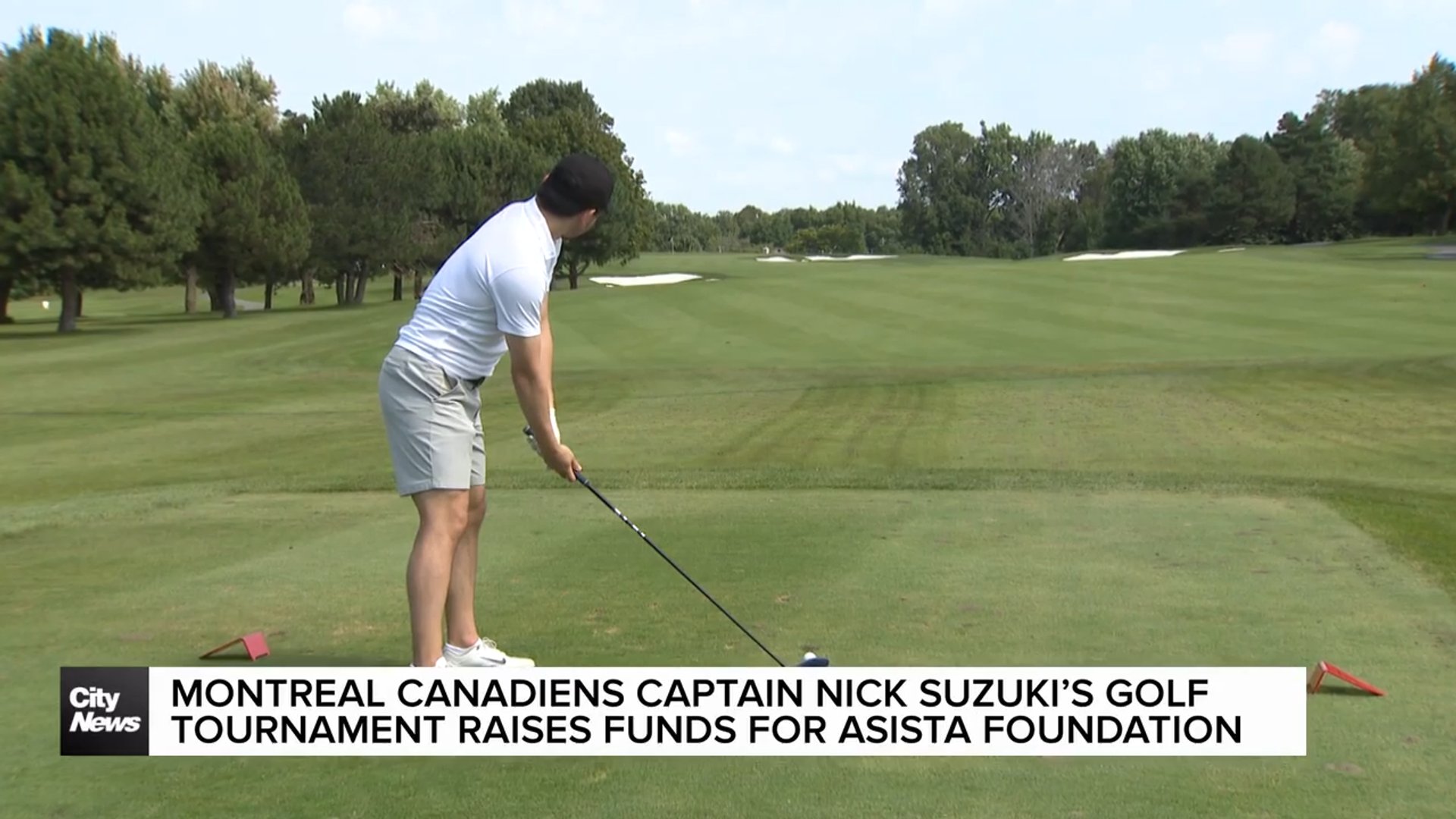
On Thursday, Suzuki brought that mission to the golf course for the annual Nick Suzuki Heroes Golf Tournament, held to benefit the foundation.

For Suzuki, the tournament is about more than raising money.
“With having a service dog myself, I see the benefits, and I see people going through tough times getting to meet these dogs, and it makes a huge difference for them,” he said. “So that’s really cool to be a part of, and we’re going to continue to grow and raise more awareness.”
A dog can open a door
Suzuki and his wife have taken part in the foundation’s work firsthand, going through the process of becoming a foster family and participating in training.
Ruby, whom Suzuki spoke about at the tournament, has since received her certification as a mobile facility service dog. She can work in different facilities and alongside an intervention team to help mitigate crisis situations.
But the foundation’s reach goes far beyond one dog.
At L.I.N.K.S. High School, facility service dog Flavie has been working with students for nearly three years. Student coordinator Myriam Farley said Flavie’s work includes crisis intervention, speech-language pathology support and helping students develop gross- and fine-motor skills.
For some students, the dog provides a different way to communicate.
“Pet therapy is a different way to reach our students, especially our students who are nonverbal,” Farley said. “It’s a different way to connect with them. Pets are not threatening. They’re easy to connect with and bond with. And so it’s an easier way for us to teach.”
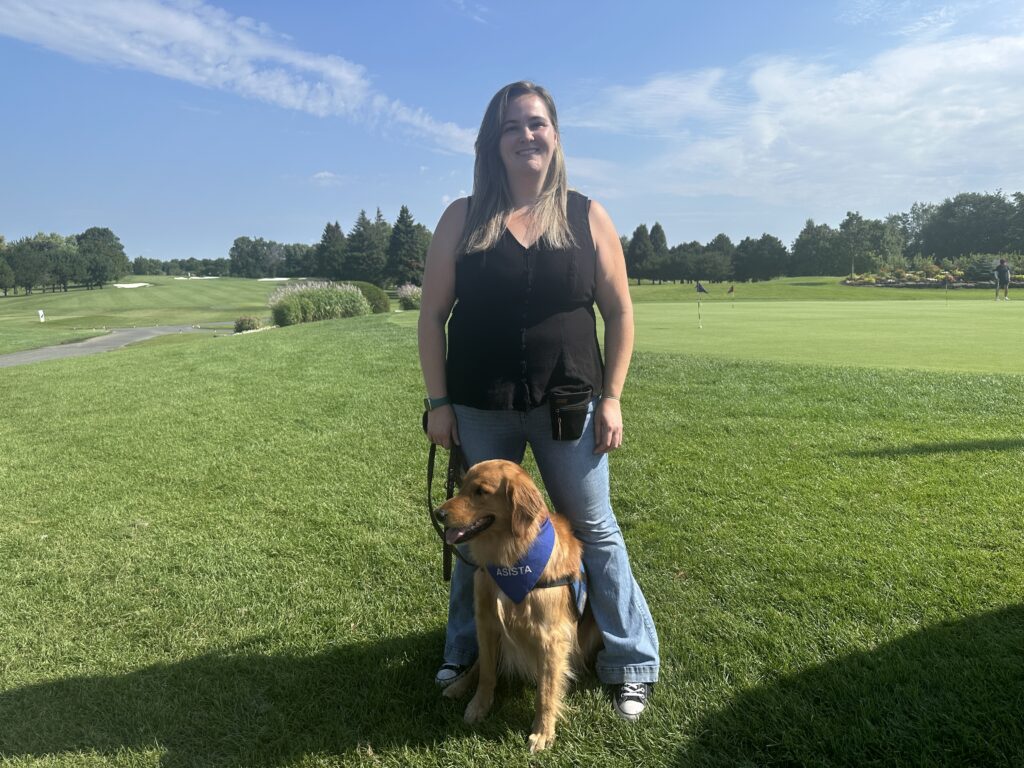
Farley said the tournament’s fundraising helps make that work possible.
“This tournament makes it possible to do what we do,” she said. “Honestly, it makes it possible for us to have Flavie and other dogs within our schools and to support our students with special needs. It’s what keeps us going.”

Suzuki has seen the connection himself.
“The kids just absolutely love to see the dogs,” he said. “They seem to bring calm. Kids are going through different things in life, and when they see these dogs, they just light up. They’re able to pet them and give comfort.”
The foundation is working toward getting more dogs into different facilities, including schools.
A helicopter, a message
The mental health message was hard to miss Thursday.
Suzuki arrived at the tournament in a military helicopter, continuing a tradition that has been part of the event for the past three years.
For John Agionicolaitis, vice-president of public affairs and communications for the Asista Foundation, the arrival is about more than spectacle.
“It’s a symbolic gesture really for all those who are suffering in silence that there is help out there,” Agionicolaitis said. “There are resources.”
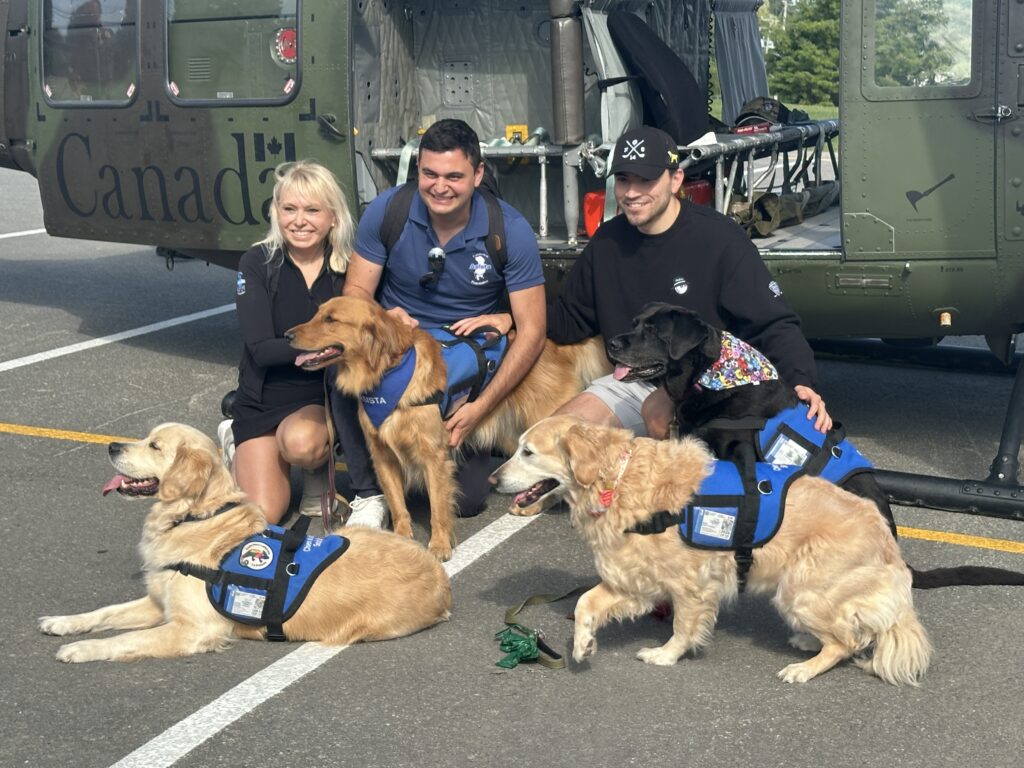
He said the mental-health challenges faced by people in uniform can often remain unseen — whether they are military members, police officers or professional athletes.
“Keep the conversation going,” Agionicolaitis said. “Because we never know what happens behind closed doors and we never know what happens behind that uniform and behind that person.”
The helicopter’s arrival is part of the foundation’s broader effort to keep that conversation alive.
The tournament is also tied to its “A Hero Within All of Us” campaign, a message that the people who make a difference are not always the ones wearing a uniform or standing in the spotlight.
Redefining a hero
For Suzuki, the word hero has little to do with fame.
“I think a hero is someone who’s a leader, someone who gives back to the community and leads by example,” he said.

That definition fits the people and organizations the Asista Foundation serves, from veterans and children to others dealing with mental-health challenges.
Suzuki said professional athletes also understand what it means to live with pressure.
“Guys put a lot of pressure on themselves to perform,” he said. “Every player wants to do their best, but sometimes when the pressure builds up, things can start going wrong, and it’s way better when you’re talking about it and being open and helping your teammates out when you can, just be someone there to listen to them.”
He said that support does not have to come from someone with a title or special training.
“For people struggling through mental health and just finding someone — whether it’s a friend or family or even a stranger — you can just open up and kind of relieve some of the stress off your life.”
For a tournament built around the idea that there is a hero within all of us, Suzuki’s definition is perhaps the most fitting one.
“A hero can be anyone, to be honest.”