Treating unhoused people should count for ‘specific medical activity’ requirement, Quebec doctors say
Posted September 30, 2026 1:04 pm.
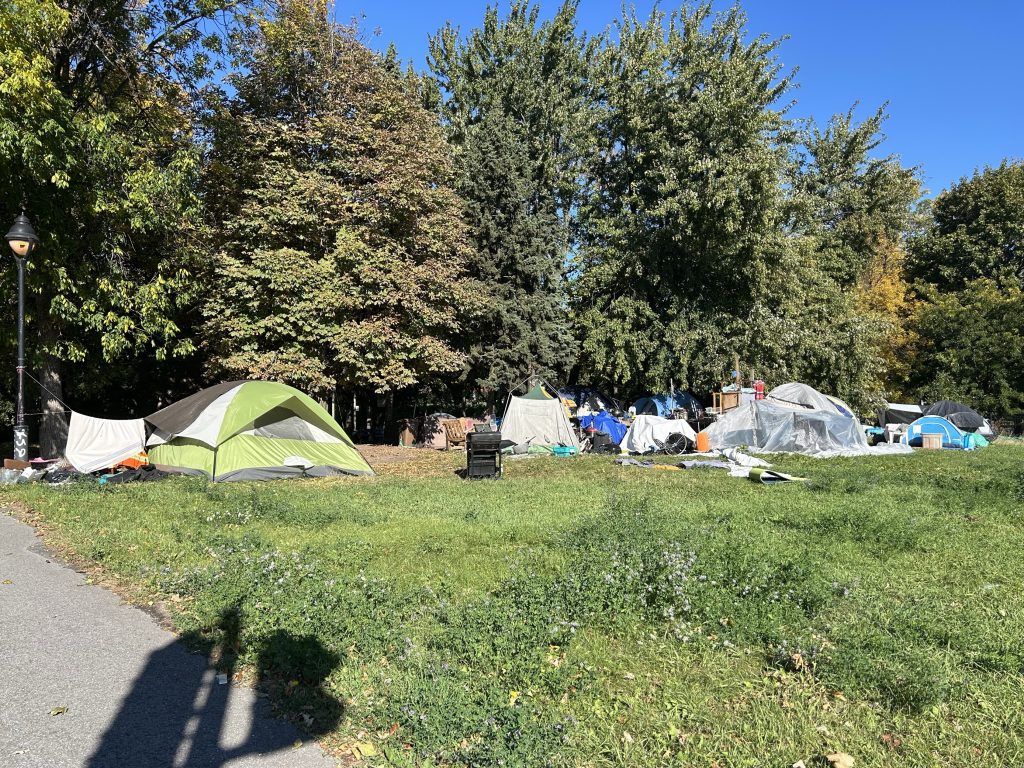
In response to the rising number of homeless people, the Collège des médecins du Québec (CMQ) has established a task force on homelessness. Several potential solutions are outlined in its report, released on Wednesday, including designating the care of unhoused individuals as a specific medical activity (AMP).
In Quebec, family physicians are required to devote part of their practice to specific medical activities (AMP), such as care in long-term care facilities (CHSLDs), obstetrics, or emergency care. The College would like to add care for homeless populations to this list.
The think tank on homelessness, which was created in February, has met six times. On June 8, it held a day of reflection during which about 20 stakeholders working with this population were heard, including people who have experienced homelessness.
“Be careful of paternalism. Be aware of your own biases and prejudices,” said one of them, as quoted in the report. Another quote states: “We live in the present; tomorrow doesn’t exist—we have no future.”
The number of homeless people has increased by 20 per cent since 2022, according to the most recent count, which dates from 2025. At that time, there were 12,077 people experiencing visible homelessness in the province, 40 per cent of whom were in Montreal.
Living on the streets has serious health consequences. First, many health problems may go undetected. Homeless people also experience premature aging and a significantly reduced life expectancy—which ranges from 40 to 50 years, compared to over 80 years for the rest of the population.
The professional order believes that the medical community can take proactive steps by better identifying individuals at risk of experiencing homelessness. The CMQ recommends that physicians include questions about housing in their basic assessment questionnaire (medical history). “For example: Does the person in front of me have secure housing? Are they afraid of losing it?” the report states.
It is also suggested that the emergency room triage protocol be revised to better accommodate the realities of people experiencing homelessness. “Given the high prevalence of mental health and substance use issues among [people experiencing homelessness], the establishment of priority pathways for accessing mental health care should be considered to better meet their needs,” the report states.
Recommendations are also directed at Santé Québec and the government, including recognizing housing as a social determinant of health.
There are also calls for specific training and community-based internships as part of medical curricula to strengthen doctors’ knowledge and skills regarding homelessness.
—
The Canadian Press’s health coverage is supported by a partnership with the Canadian Medical Association. The Canadian Press is solely responsible for this journalistic content.
–This report by La Presse Canadienne was translated by CityNews