Sherbrooke University developing new test for bladder cancer
Posted May 2, 2023 10:00 pm.
Last Updated May 2, 2023 11:45 pm.
What if you could use the same method of a pregnancy test – urinating on the stick and in minutes it will tell you if you’re pregnant or not – to find out if you have bladder cancer?
That’s what Quebec researchers have developed and it could be in doctors’ offices in Quebec soon.
“It’s a test based on the detection of proteins and that can be done just like a pregnancy test or where the very familiar nowadays with the COVID rapid test as well, it’s the same concept. It’s essentially putting the sample to a small plate and it will move up and then it will show some bands and what are the bands are present or not that will tell us if the test is positive or not,” explained François-Michel Boisvert, director at the Institut de Recherche sur le Cancer de l’Université de Sherbrooke.
“Bladder cancer is the fifth most common cancer in Canada, but it’s also the most costly to treat.”
Bladder cancer is more common in men than in women. Approximately 12,000 people are diagnosed each year in Canada. With a recurrence rate of 60 to 70 per cent.
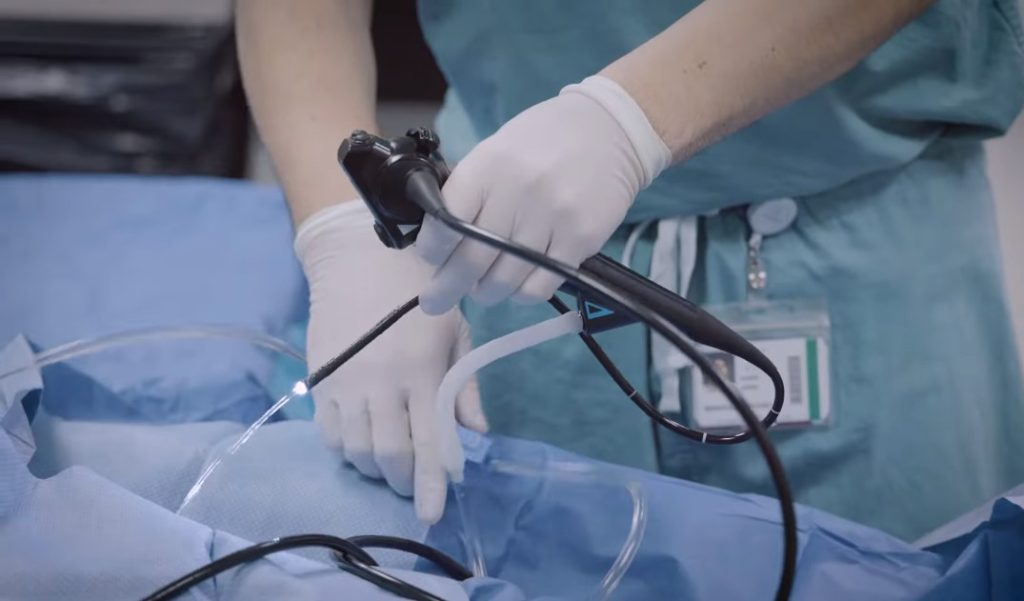
Experts say results for cystoscopies are not a 100 per cent accurate. The screening has a 72 per cent accuracy rate for bladder cancer and is also quite expensive – costing around $600 per test.
“It’s a very invasive test. It also involves a urologist and an operation room. So it’s also very costly. And it’s because of the delays in the health system right now,” explained Boisvert.
Boisvert predicts the new test would cost just a fraction of that cost — around $35. So, essentially would not only be cheaper but also easier to perform, more accurate, and less invasive.
“It’s very hard right now for cystoscopy to be applied for the population in general. For example, a certain age to do a large population screening. So essentially that patients that will be seen will be the patient that they have symptoms. Most of the time it’s blood in the urine,” said Boisvert.
“Whereas with the development of a test that’s based on urine biomarker, I think one of the advantage of that would be that we can test the population in general and so catch the cancer earlier, making it, making it easier to treat as well.”
The test is so promising. The World Health Organization (W.H.O.) offering to collaborate with the Sherbrooke University Institute for Cancer Research in the hope of developing one that can be used by all populations.
“Being able to develop and apply a test that’s cheap and readily available would be a big plus for for countries, poorer countries. So I think that’s part of the mandate of the W.H.O. to try to make available cancer treatment to the whole world.”