Breast cancer: INESSS recommends screening at age 45, but not right away
Posted September 29, 2025 2:35 pm.
Last Updated September 29, 2025 3:47 pm.
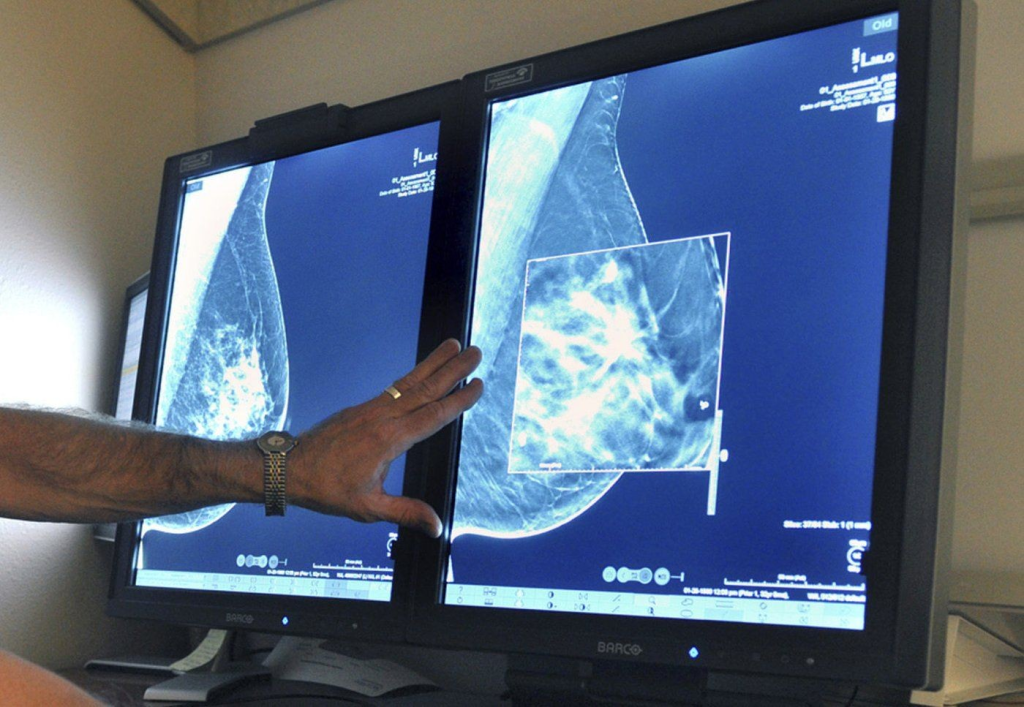
INESSS recommends including women aged 45 to 49 in the Quebec Breast Cancer Screening Program, but not immediately. Because this would place an excessive burden on the healthcare system, experts recommend first reducing the recall rate—which is the highest in Canada—and upgrading the program’s computer system.
Health Minister Christian Dubé commissioned the Institut national d’excellence en santé et en services sociaux (INESSS) to analyze a possible expansion of the screening program in Quebec. The INESSS’s opinion was published on Monday afternoon.
“At the end of the deliberations, the committee members unanimously agreed on a main recommendation to reduce recall rates and examination delays and to modernize the program’s computer system before proceeding with the systematic addition of an additional cohort. Once these steps have been completed, they believe that a gradual integration approach could be considered, initially targeting women aged 45 to 49,” the opinion states.
INESSS specifies that its work was not intended to take a position for or against breast cancer screening in women under the age of 50.
“We identify issues and problems that we will have to address. It is quite possible that lowering the age for breast cancer screening in Quebec will have some impact on resources, but what we are proposing in our recommendations is the scenario that we believe is most realistic in our context,” explained Catherine Truchon, Director of Health Services at INESSS, in an interview with The Canadian Press.
High recall rate, a major obstacle
The members who worked on the report emphasized the impact that adding a large number of women to the Quebec Breast Cancer Screening Program would have, “considering the difficulties already present in several regions with regard to timely access to screening tests, but also to follow-up tests.”
This would increase wait times for all clients requiring imaging, pathology, and surgical services, not just for breast cancer. The high recall rate is a major obstacle to efficient screening, the authors of the opinion write.
“The recall rate is when a woman goes for her mammogram and then gets called back a few days or a week later. […] The woman returns and undergoes another type of exam, such as an MRI or ultrasound. Sometimes she will even be called back for a second additional exam,” explains Truchon.
“Generally speaking, these additional tests appear normal, meaning that no cancer is detected in the end. All these tests, which are ultimately irrelevant, tend to bog down the system a bit,” she says.
Truchon points out that it is normal to have a certain recall rate and that it is prudent to confirm certain things, but in Quebec, the rate is particularly high and further analysis is needed to find out why.
For the first mammogram, 22 per cent of women were called back, more than three times the target of 7 per cent set by the Institut national de santé publique du Québec. For subsequent mammograms, 8.5 per cent of women were called back, which is also higher than the target of 5 per cent.
Since 2017, Quebec has been the province with the highest recall rate in Canada. To reduce recall rates, an annual review of recall rates is currently provided to each radiologist as feedback.
The idea of having a second radiologist read mammograms is seen as a “promising intervention,” but due to a lack of manpower, this measure is difficult to implement in Quebec in the short term, the opinion states.
Mammography invitations by email or text message?
Concerns have been raised about the capacity of current computer systems to support an increase in data volume with the addition of new patients undergoing screening. It is unclear exactly what the required update will entail, but already, the addition of the 70-74 age group (in January 2024) required work on the program platform.
As part of the IT system upgrade, INESSS suggests making it possible to send invitations by email or text message. Currently, women aged 50 to 74 receive a letter in the mail inviting them to have a mammogram every two years.
“Since most other provinces and territories already offer screening starting at age 40 or 45, committee members recognized the importance of avoiding the creation of inequalities between Quebec and the rest of Canada,” the INESSS advisory states.
However, INESSS points out that expanding screening to women under 50 “would cost several hundred million dollars” and that “the health and social services network is facing enormous budget constraints.”
When will screening begin at age 40?
The Institute has not yet decided whether to extend screening to women aged 40 to 44 in a second phase. “We will monitor epidemiological data and cancer incidence. It is true that cancer incidence has increased in age groups under 50, particularly among 45- to 49-year-olds. We will see how this evolves among women aged 40 to 44. Perhaps we will conduct a further study at a later date, but we have not included this in our recommendations,” explains Truchon.
Breast cancer is the second leading cause of cancer death among Canadian women. One in six cancers is detected in women under the age of 50, according to the Quebec Breast Cancer Foundation.
In Canada, for every 1,000 patients screened, seven lives will be saved if screening is done between the ages of 50 and 69. If screening is also done between the ages of 40 and 49, nine lives will be saved.
At this time, it is not known when the expansion of screening to age 45 could come into effect in Quebec or what the Minister of Health’s targets would be for implementing it. The Minister of Health’s office has indicated that the Minister will announce whether he will proceed with the advisory in the coming weeks.
–This report by La Presse Canadienne was translated by CityNews