Metal detectors, panic buttons and wooden utensils added to Montreal Notre-Dame Hospital ER amid unionized staff safety concerns
Posted January 9, 2026 4:21 pm.
Last Updated January 9, 2026 5:23 pm.
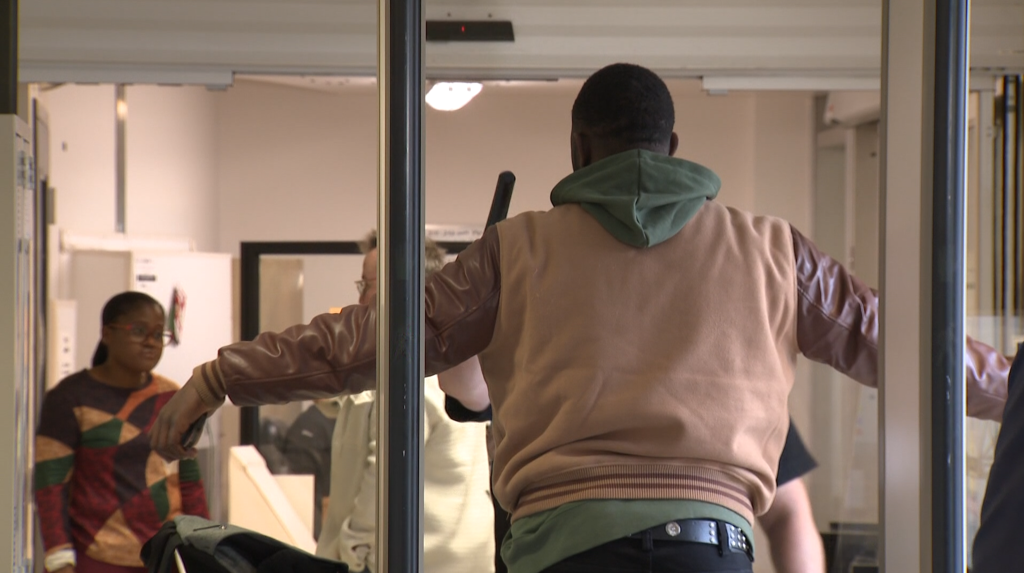
Montreal’s Notre-Dame Hospital has rolled out a series of new security measures inside its emergency room following years of safety concerns raised by unionized frontline staff about incidents linked to mental health issues.
Reusable wooden utensils, panic buttons for staff, reinforced waiting areas and fixed walk-through metal detectors have all been installed in recent months.
“There is a big difference,” said union wellness and prevention officer Loudwige Joseph. “There have been fewer reports of risky situations.”
Both union officials and hospital management say emergency room staff are often caring for patients in critical condition when they are interrupted by people experiencing mental health crises or substance-use issues, situations that can escalate quickly without adequate security. The added measures, they say, are meant to protect patients, visitors and workers alike.
“These are not temporary measures, they are permanent measures,” said Isabelle Allaire, interim director of nursing at the CIUSSS du Centre-Sud-de-l’Île-de-Montréal.
Allaire added that instances of violence in the ER room had been rising since 2022.
One turning point came in November 2023, when an altercation broke out between two patients in the emergency room waiting area. While Allaire said that “psychological measures were quickly taken” for the patients who witnessed the incident and for staff who were present, ER employees still raised concerns about security.
“(It) was not enough,” she said. “It was also necessary to secure the premises and prevent such attacks from happening again.”

These incidents prompted hospital management to strengthen security inside the ER. A permanent walk-through metal detector was installed on Christmas Eve, replacing the portable detectors that had already been in use for around a year and half.
“Those who have witnessed violent incidents may feel threatened,” Allaire said. “That is why we also have secured a more sensitive area where patients can wait to be examined or admitted into hospital.”
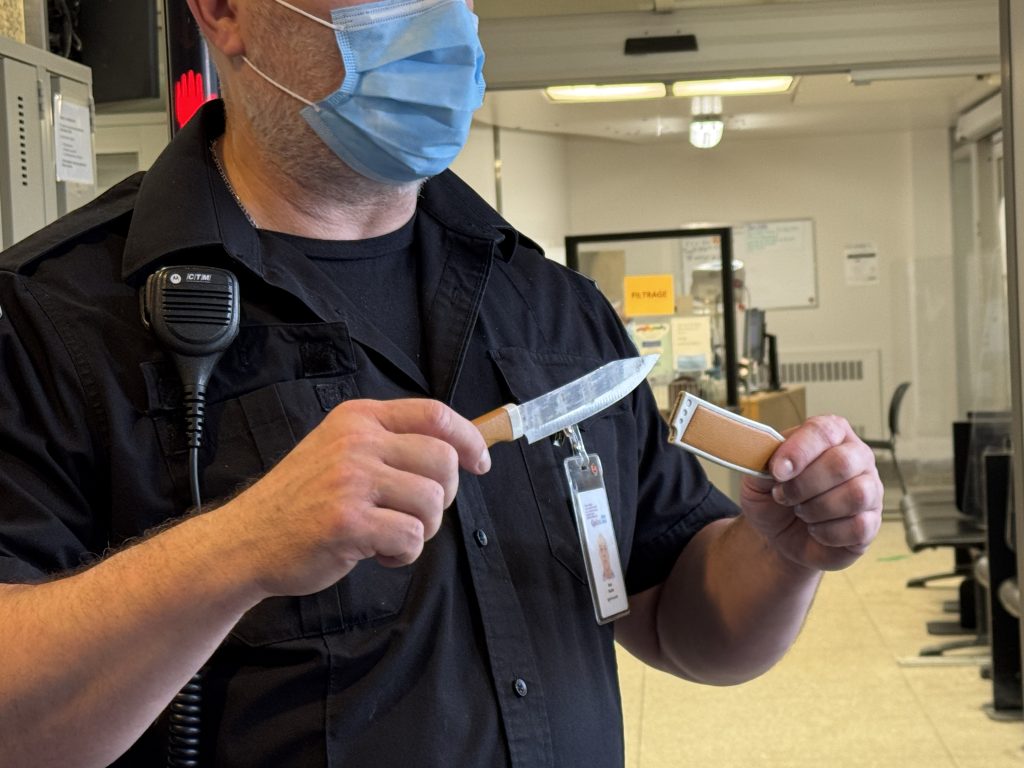
The union representing CIUSSS du Centre-Sud workers said that they also demanded new security measures after sharp objects, including knives, were discovered in the possession of patients and visitors in the past.
“We are asking that security guards be replaced by ISPS officers (Intervenants spécialisés en pacification et sécurité),” Joseph said. “ISPS officers are our members; they are specialists in de-escalation and security. They are trained to deal with these situations.”
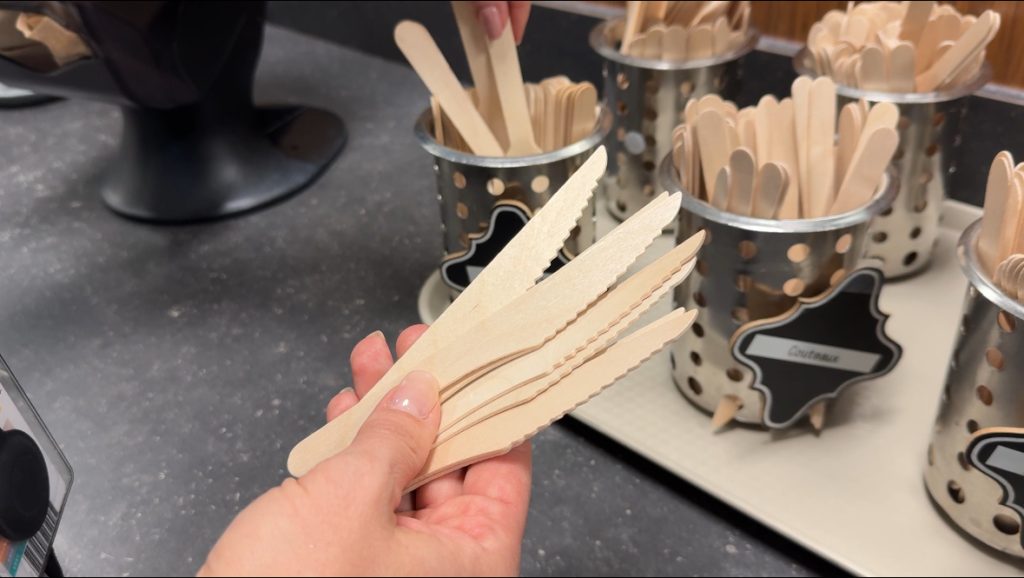
Beyond metal detectors, other changes include replacing standard cafeteria cutlery with wooden utensils, bolting trash cans to walls so they cannot be used as weapons and equipping staff working in the mental health unit with panic buttons they can activate if they feel unsafe.
Panic buttons are also installed behind cafeteria counters for the same reason.
“Plates are also disposable because they have also been used to hit workers,” Joseph said.
Hospital officials estimate the measures cost only a few thousand dollars, a relatively low price tag given the scope of the changes, they say. The walk-through metal detector, they add, was already owned by the institution and repurposed for use in the ER.
“Our priority at the CIUSS Centre-Sud is the safety of employees, users and visitors,” Allaire said. “Therefore, all of these measures are here to stay.”