Quebec’s political parties are invited to prioritize water infrastructure
Posted March 22, 2026 2:43 pm.
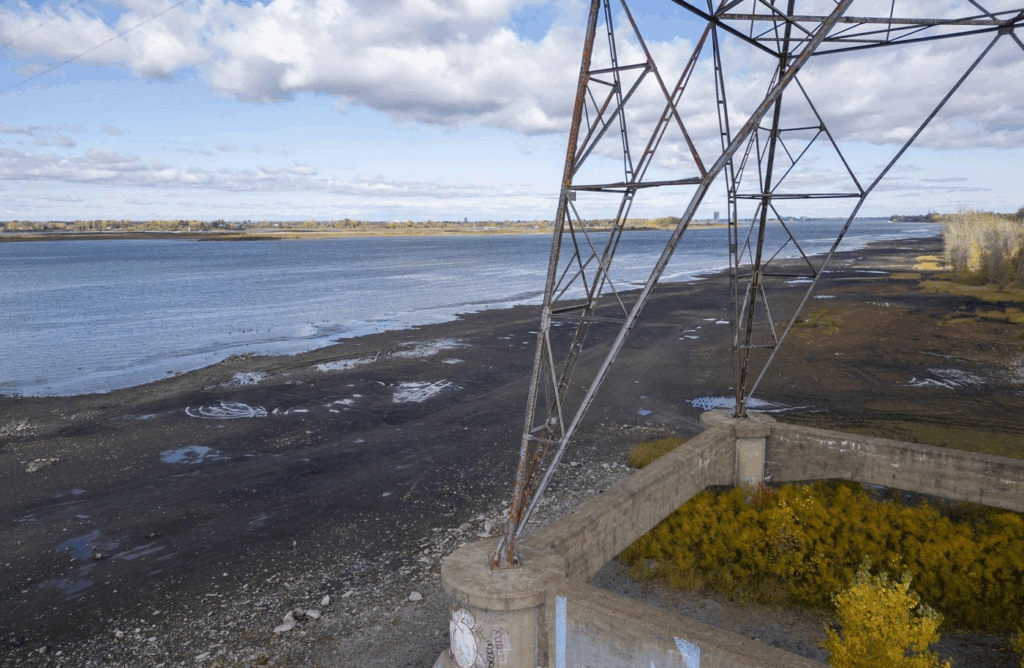
Quebec’s political parties are encouraged to put the financing of municipal water infrastructure forward in their platforms for the next provincial election.
On the occasion of World Water Day, representatives from Montreal, Quebec City, the Federation of Quebec Municipalities (FMQ) and Réseau Environnement urged the government to act at a press conference in Montreal on Sunday.
Saying he wanted to address a subject of concern for Quebec, the president and CEO of Réseau Environnement, Mathieu Laneuville, said that the five main political parties were invited to “urgently address the issue of the underfunding of water services” and to integrate “concrete actions and investment strategies in this regard into their electoral platforms.”
Laneuville mentioned that Quebec was not spared by the global water bankruptcy noted by the United Nations.
“Ten per cent of the estimated total replacement value of water infrastructure of $200 billion is considered to be at high or very high risk of failure,” said Laneuville. This translates into an active maintenance deficit of about twenty billion dollars and what we currently invest in Quebec covers about forty per cent of the costs related to water management.”
“We are at a breaking point in Quebec,” he added. It is imperative to act, to absorb our asset maintenance deficit, to set up self-financing for active maintenance and to gradually upgrade our infrastructure.”
According to Laneuville, Quebec has relied for too long on a feeling of abundance and that it is now necessary to act to ensure the survival of communities. In particular, he mentioned the impossibility of performing dialysis if a hospital were to run out of water or polluted waterways that could have an impact on the fishing industry.
“We built our society, Quebec, on this precious resource, our ‘blue gold,'” he observed. Now is the time to preserve it. More than just an environmental issue, the financing of water services is now a public safety issue.”
Act before it’s too late
The second vice-president of the Union des municipalités du Québec (UMQ), Julie Bourdon, asked that the next government put municipal water infrastructure forward and act preventively.
“Today, March 22, everyone stands up. We are hitting a wall,” she said. Can we please do something to say that this is a priority?”
Bourdon insisted on the fact that this aging and lack of water infrastructure is of course an issue for populations and municipalities, but also a concrete economic issue in terms of housing.
She said that in Quebec, in recent years, nearly 30,000 housing units could not be built because of water infrastructure that was already operating at full capacity.
“The chronic underfunding of municipal infrastructure compromises the ability of municipalities to support Quebec’s development. The maintenance deficit is $45 billion, Bourdon said in a statement. Without major reinvestment and stable financial levers, municipalities will no longer be able to build housing, support the local economy, or maintain essential infrastructure.”
Quebec City Mayor Bruno Marchand said that a delegation from his city recently visited Calgary and was able to observe the measures put in place to reduce water consumption over the past 18 months because of the lack of water infrastructure.
“Here is what we are asking citizens to do right now: you take showers of a maximum of three minutes, you limit the flushing,” said Marchand. ” That’s the reality of the people of Calgary right now, not for one day, not for yesterday, but for the last two weeks and for two more weeks.”
However, he pointed out that in Quebec, we don’t expect to have to live through this situation, because when you turn on your tap in the morning and the water flows, you expect it to last forever.
According to Marchand, there are two solutions available to Quebec. There is the choice to wait, to tell yourself that, when it no longer works, there will be restrictions for months, weeks, even years, or to act before it is too late.
“Becoming aware of a problem, becoming aware of a crisis, is obviously very distressing, very anxiety-provoking,” Marchand acknowledged. I have a lot of hope and confidence in our collective ability, in our genius. I am confident in the ability to build something for the common good that will allow us to adapt, repair and adapt to changes.”
Jacques Demers, President of the FMQ, recalled that Quebec has nearly 100,000 kilometres of drinking water and sewer pipes. These infrastructures constitute an essential heritage, but one that is ageing.
“Today, the observation is unequivocal. The need for renewal is constantly increasing in this area, said Demers. Costs are exploding and the pressure on municipalities is becoming more and more difficult to sustain.”
“We have to be clear, investing in water infrastructure is not an option, it’s a collective obligation,” he added. We call for concrete action, more flexibility, local realities and mechanisms for critical emergency projects.”
–This report by La Presse Canadienne was translated by CityNews