Are non-French-speaking musicians part of Quebecois culture, new documentary explores
Posted June 21, 2022 12:18 pm.
Last Updated June 21, 2022 12:23 pm.
A new Montreal documentary film explores what it looks like – and sounds like – to be a musician singing in a language other than French in Quebec.
CALLIARI, QC explores what it means to be Quebecois, and who’s allowed to belong in the age of restrictive language laws like Bill 96.
Those were some of the questions – among many others – that intrigued filmmaker Anita Aloisio.
“The artists, music, musicians, authors, composers… how have the linguistic policies in Quebec affected their artistic production? And in particular, how did does it inform it? What happens, how is identity then defined? Is it valued as such?” wonders Aloisio.
“We don’t see how lucky, how beautiful, how unique our citizens or the citizenry is. And what makes it unique? It makes it unique because there is the French factor, of course.”
WATCH: Excerpt from Montreal documentary CALLIARI, QC
In Montreal, many people speak two languages – usually French and English. But knowing a third language like Italian, Arabic or Punjabi is not that unusual in such a multicultural city.
“I started to look at, wow, this is so unique to Montreal. This artistic production is like a phenomenon really that happens only in this unique context of Montreal within Quebec, within a North American anglophone context,” said Aloisio.
“Do we value that as it being Quebecois patrimony? Do we value it? Do we consider it as such? And unfortunately, I found out that there is so much debate regarding that.
“Even just the definition of what is a true Quebecois, or do you have to express your artistic talent through the French language only? Or can you represent it via various cultures and identities that are very particular to oneself.”
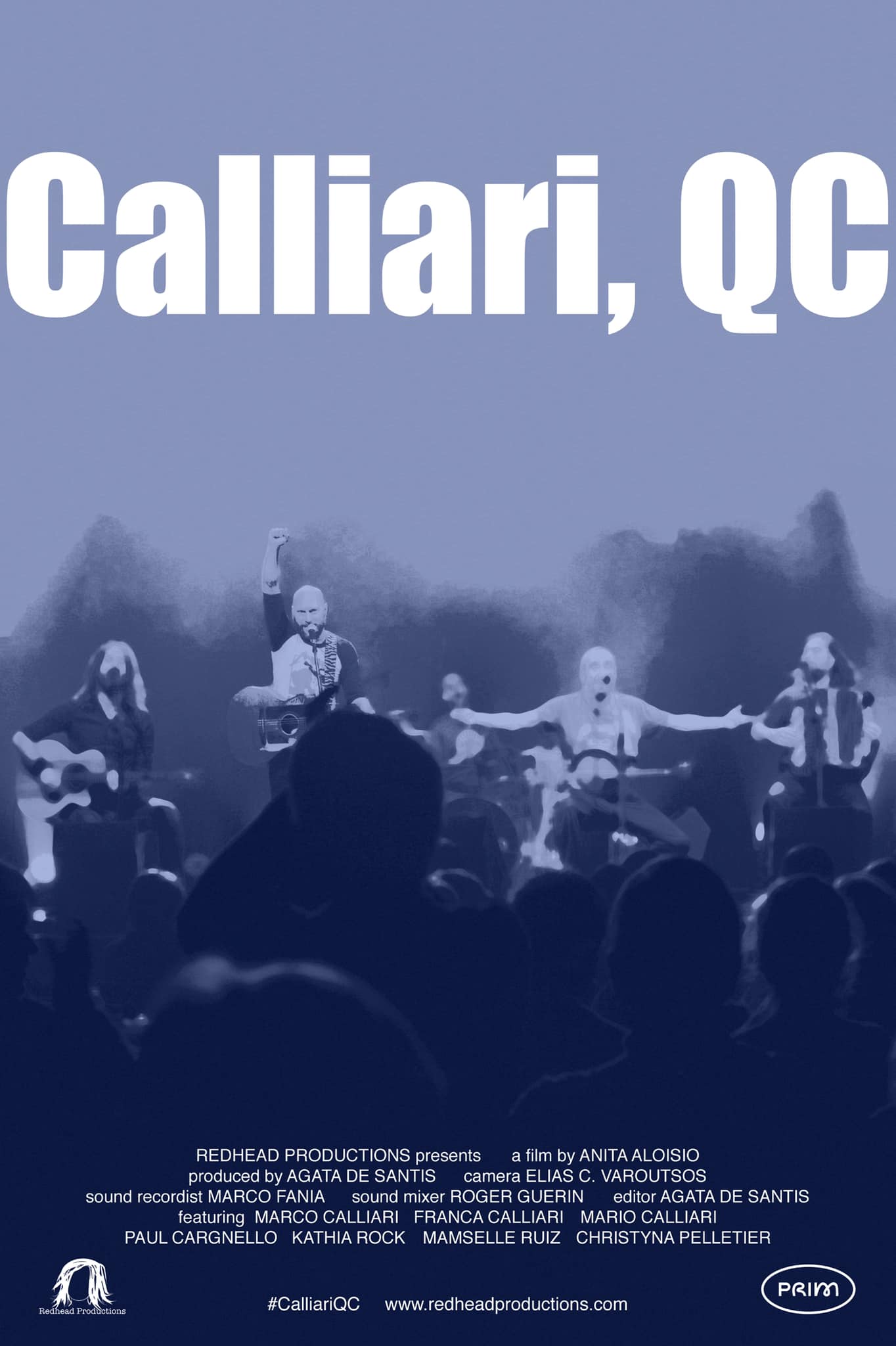
CALLIARI QC, poster. (Credit: Redhead Productions/Anita Aloisio/handout)
The film speaks to Quebec Italian, Innu, Spanish and English language singers and how their experiences in the music industry have been difficult and not supported or recognized as a part of Quebec culture as much as French artists.
“This is what the artists in the documentary maintain, that when you are born here – and you don’t have to be born – you have been living here for several, several years and you have made this place, Montreal or the outskirts, your home, and you contribute as a citizen, this should be enough. And that you learn French, of course. This should be enough.”
Aloisio says Quebec’s updated language law Bill 96 and the narratives around it – which some critics have denounced as immigrant-blaming – is only going to make identity and language conflicts worse.
“What is Quebecois culture? Because on one hand, we look at Quebecois culture as something that might be to preserve and that is stagnant and there’s a very certain thing that is passed by uniquely through or is expressed uniquely through the French language. Whereas what we find is that Quebecois culture is something that moves, it evolves,” said Aloisio.
“Through Quebecois culture as we see it, through maintaining French as we see it, we also feel the freedom and the need to express ourselves in our mother tongues and different languages.”