Quebec removing a barrier to access abortion pills
Posted July 5, 2022 4:37 pm.
Last Updated July 5, 2022 6:48 pm.
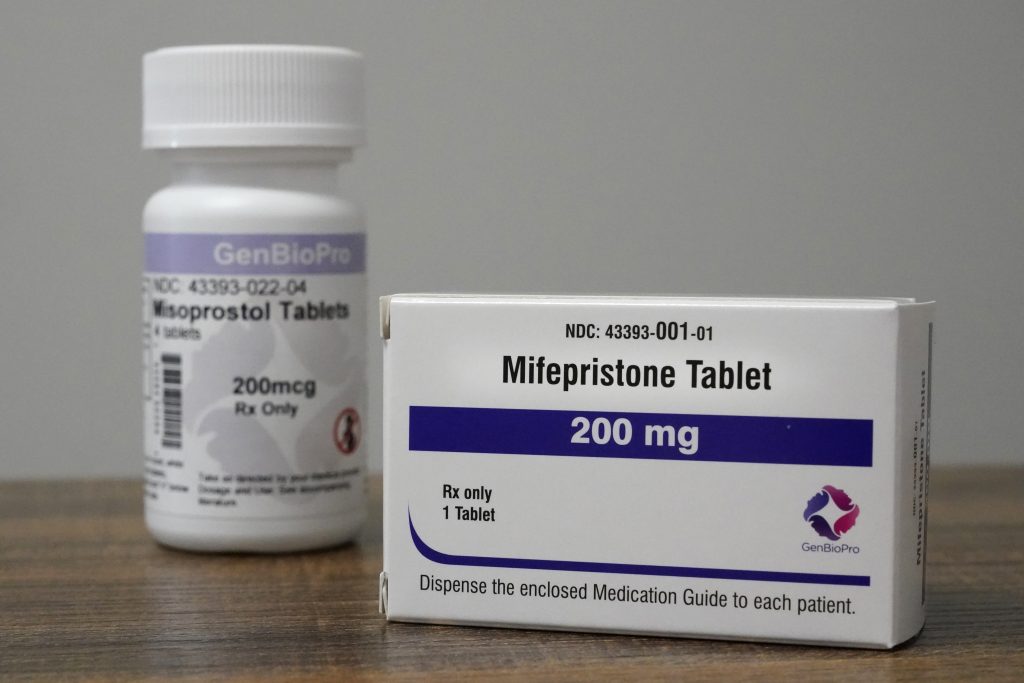
Quebec doctors will no longer have to perform ultrasounds before prescribing the two-pill regimen that induces abortions.
A group of Quebec doctors had recently been pushing for a change on how abortions are given in the province – writing an open letter.
Now, the Quebec College of Physicians confirms they’re widening access to abortions by medication.
“We want to thank the College to be moving forward on something that we were studying for a long time. You know, medical abortion in Canada was, the pill, the medication was accepted in 2017 by the Canadian government. Since then, in the beginning, there were so many restrictions, neither on the English side as in Quebec. The rest of the country has removed those restrictions,” explained Dr. Dario Garcia, president of Quebec’s association for obstetricians and gynecologists.
Quebec was the last to follow in other provinces’ footsteps.
“What we’re seeing is not so much the removal of the restriction, but that they’re sort of allowing for people to work around. And that to me is not satisfying. It’s not acknowledging that the restrictions should not be in place, to begin with,” said Jess Legault, co-director, Fédération du Québec pour le planning des naissances.
Experts say the ultrasound requirement made it tough for people to be eligible for the pill mifepristone because of the delays in consulting with a doctor in time.
“There is a specific time to be done, which is 63 days from the last menses, the first days of the last menses. That’s what is approved for the whole country, Canada and Quebec,” said Dr. Garcia.
RELATED:
- What is the legal status of abortion in Canada and do we need a law? Experts weigh in
- A ‘sucker punch’: Some women fear setback to hard-won rights
- Roe v. Wade: U.S. ruling sparks protests around abortion access
But even now, there remain hurdles.
“It’s not a family physician who could prescribe the medication just like this. You need to get access to one trained family practitioner and then it will be able to you know, we just remove one obstacle, which is getting the ultrasound before getting the prescription, but it will make it easier,” explained Dr. Garcia.
Legault adding, “If there is a restriction in terms of who’s allowed to prescribe it and we see that in certain parts of Canada it’s up to 50 per cent of abortions are done by medication, which is that we’re nowhere close to that in Quebec. And that’s because so few people have been trained to give it. And there shouldn’t be this sort of extra step of training.
In a statement to CityNews, Quebec’s College of Physicians who set the rules around medical abortions say:
“Several months ago, the College established a working group to review the current guidelines. The work will be finalized within weeks. The College confirms that ultrasound is no longer mandatory as it has been since the pandemic.
“The College will issue an opinion on the required training as soon as possible. The College is also working with the MSSS to improve accessibility, particularly in the regions. For the College, it is important that Quebec women have access to quality abortion services and make an informed choice when it comes to abortion, whether surgical or medical.”
Legault saying, “I am hopeful that this is like an opening of the dialogue or an opening of the issue with the College of Physicians. I think that that is a positive step and that there’s been this reaction fairly quickly.”
Dr. Garcia says while the removal of ultrasounds is a step in the right direction, “it’s not enough. We have to be removing other barriers like who could prescribe the drug or who can’t.”