‘Centralized monitoring’, ‘tolerance zones’: Montreal, Longueuil release new protocols for homeless encampments
Posted February 20, 2026 11:44 am.
Last Updated February 20, 2026 9:12 pm.
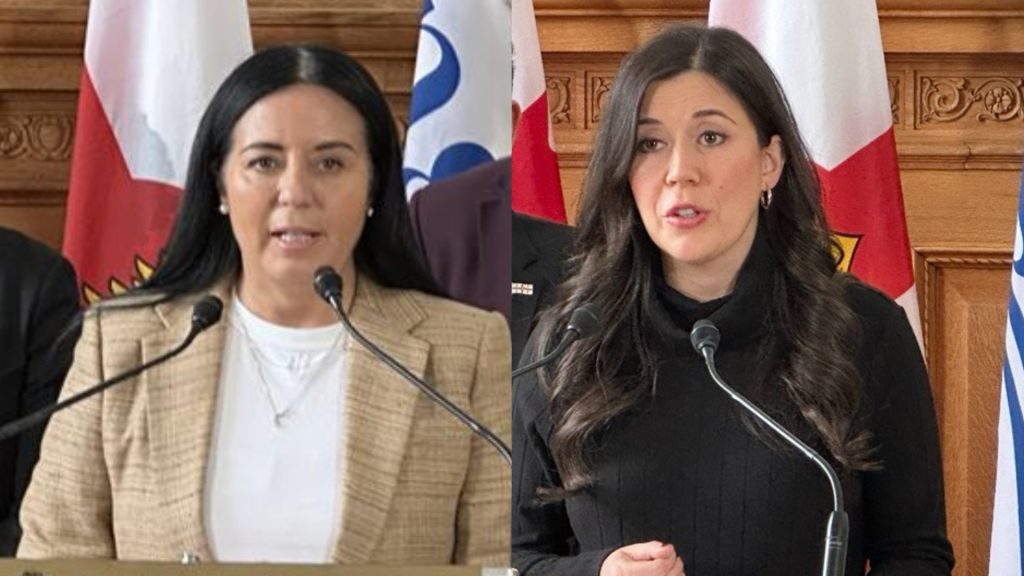
Montreal Mayor Soraya Martinez Ferrada and Longueuil Mayor Catherine Fournier announced new protocols for intervention in homeless encampments including centralized monitoring, tolerance zones, perimeters and restrictions on belongings.
At a press conference Friday, the mayors said the new rules was aimed to balance rights of unhoused individuals with public safety.
“Let’s be clear, we are not going to make the camps permanent,” Martinez Ferrada said. “Our goal is to get Montrealers who are homeless off the streets in a sustainable way.”
Martinez Ferrada added that the protocol, which was developed after wide consultations, brings a new approach for intervention even as the City worked on increasing housing, psychosocial and other services for those experiencing homelessness.

Fournier said Longueuil had been informally applying the approach for several years, but with the announcement the City was formalizing it.
“Making these guidelines public is essential: it allows everyone to know the rules and roles of each party, builds trust, and promotes harmonious coexistence,” Fournier added.
The new protocols do not rule out dismantlement of encampments even though the City’s public consultation body (OCPM) had recommended against them last year.
“(The new protocols) establish that forced displacement must remain a measure of last resort, in cases of imminent threat to public safety,” the statement said.
The dismantling operations are traumatic for these vulnerable people, but above all, they do not solve anything, acknowledged Martinez Ferrada. “Dismantling as we have seen in the past does not work. When you dismantle, the tents go elsewhere. You are not creating a path or a roadmap out of homelessness.”
The protocols rely on close collaboration among several agencies: “municipal services, community organizations, police and fire departments, public health authorities, CISSS/CIUSSS, and various institutional partners.”
Monitoring tool, tolerance zones in Montreal
Under the new protocol, Montreal will create a “centralized monitoring tool” for coordinating interventions by City officials, something Martinez Ferrada had promised on the campaign trail last fall.
It may also designate tolerance zones in boroughs and downtown where encampments would be allowed.
“We have no choice but to be tolerant,” Martinez Ferrada said. “What is the alternative? As citizens, what is the alternative to being tolerant? Are you going to close your eyes and turn a blind eye to human misery?”
“We have a humanitarian crisis on our hands. We must be tolerant, but we must be tolerant within a framework that also respects the real security concerns of local residents (editor’s note: citizens living around the camps) and the real concerns about perceived insecurity. Then we need to give ourselves time to resolve an issue for which we have no magic wand,” she added.
The city of Montreal is leaving it up to each of its 19 boroughs to define the tolerance zones.
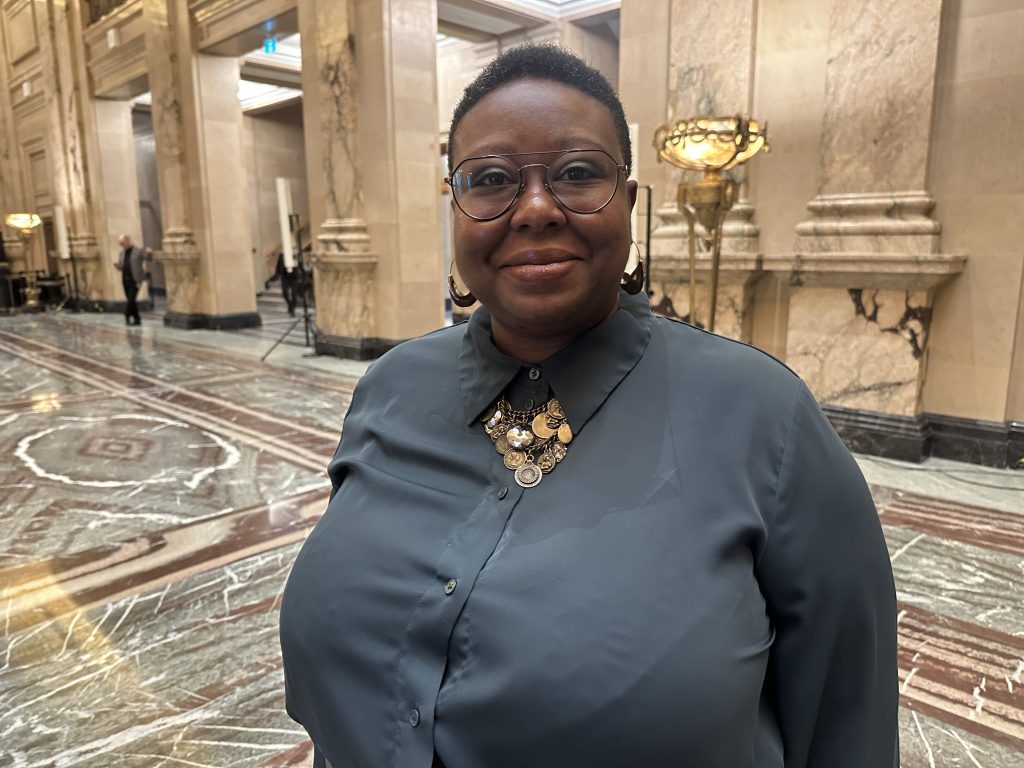
“It’s a question that belongs to the mayors of boroughs because we don’t have the same realities. I’m in Rosemont–La Petite-Patrie, my dear colleague, Martine Musau Muele, that is in charge of homelessness for the opposition, has another reality in Villeray,” said Ericka Alneus, the chief, official opposition and interim leader of Projet Montréal.
According to the protocol, relocation of a camp will only be done under exceptional circumstances and as a last resort for personal safety reasons.
“We don’t want to perpetuate the camps, I’ll start with that. What we want is a roadmap that breaks the cycle of homelessness,” Martinez Ferrada said.
The City will also assess encampment sites and develop a plan with health and community partners and will focus on harm reduction and voluntary participation.
“What we are saying today is that we are going to treat people who live in tents with dignity. (…) Ultimately, we agree that the roadmap is to get people out of the camps,” Martinez Ferrada said. “But building transitional housing and emergency shelters takes time, and in the meantime, we need to establish a framework for managing the camps that will ensure safe cohabitation.”
The protocol, however, is not a bylaw and the City will have discretion to enforce regulations.
Perimeters, restrictions on size in Longueuil
In Longueuil, encampments cannot be setup within 250 metres of schools, daycares, women’s shelters or senior residences.
Only five tents or five people can be part of an encampment site located on public land.
An individual will only be allowed one tent and one bicycle “to prevent the accumulation of belongings” and tents cannot be sublet.
Fournier also spoke of an approach based on defending rights and respecting human dignity. “Camps are a new reality here. They have always existed, but in a more scattered way. But visible, slightly more organized camps are new,” she explained.
The goal is “to take an approach that focuses above all on social coexistence with a view to providing support, because camps are clearly not the solution. It’s not that we accept the fact that they exist; it’s that we don’t turn a blind eye to them.”
For Montreal, their protocol must be readopted each year with the approach to make changes to it as the reality of homelessness issues evolve in the city.
— With files from La Presse Canadienne