Public sector negotiations: Common Front to hold important meeting
Posted December 18, 2023 4:28 pm.
Last Updated December 18, 2023 4:30 pm.
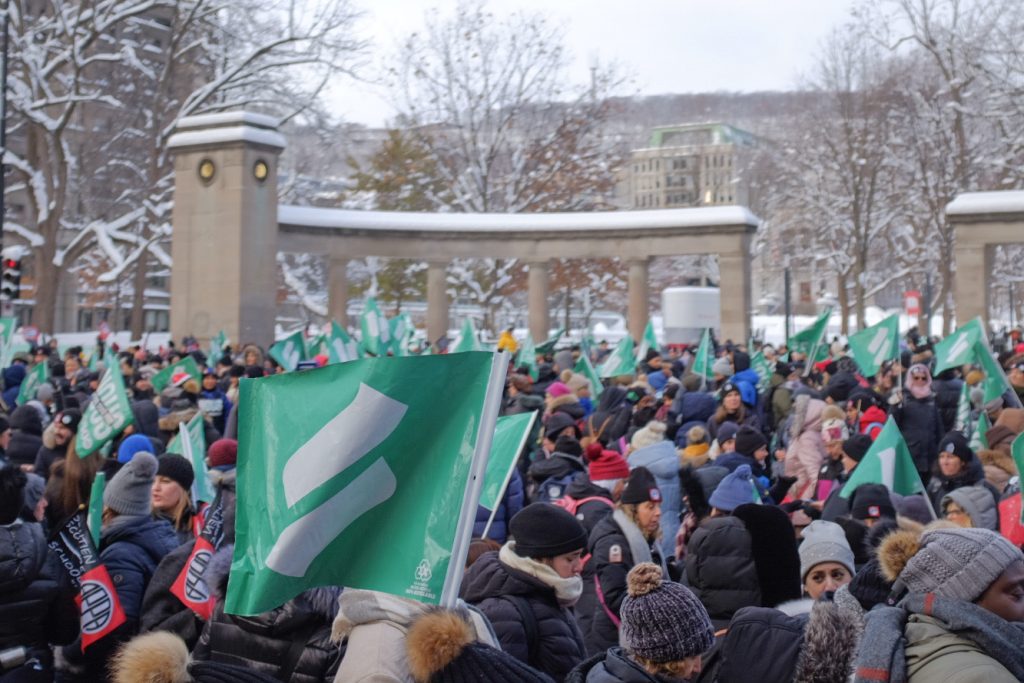
The four union groups of the Common Front will meet on Tuesday to discuss the progress of collective bargaining and decide on the next steps in strike action. The CSN, CSQ, APTS, and FTQ say they’ll make their decisions public on Wednesday morning.
The Common Front already has a mandate at 95 per cent approval for an unlimited general strike, but it’s unclear if they’ll announce a January date for initiating that. On Monday, the group said that it would depend on the circumstances, member mobilization, and the state of negotiations. As of right now, all options are on the table, as negotiations with Quebec have intensified.
The Common Front said their seven-day strike from Dec. 8 to Dec. 14 would be the last one before considering an unlimited strike. It remains to be seen if the recent evolution of the negotiation has led to a change in their approach.
The Common Front hopes to reach a deal before the end of the year, even before the holidays – which means there’s only days left. The group has said it’s prepared to negotiate between Christmas and New Year’s Day, if necessary.
The Common Front denies having made a counter-proposal on wages. However, they admit to initiating an “opening” and participating in “discussions” regarding five-year collective agreements, as proposed by the Quebec government since December 2022, instead of the three-year duration originally demanded.
The group insists on protecting the purchasing power of its 420,000 members. Their demands, from the beginning, have been tied to the Consumer Price Index. Therefore, they request CPI plus a two percent increase in the first year, CPI plus three percent for the second year, and CPI plus four percent for the third year.
During the four meetings on Tuesday, the Common Front will also discuss negotiations at the sectoral tables, where working conditions such as work hours and task burdens are negotiated. For teachers, this involves proposed measures to make class structures more manageable. In the healthcare sector, it means reimbursing contributions to professional orders and addressing issues like overtime pay, for example.
Quebec Premier François Legault recently stated that negotiations in healthcare are not progressing as smoothly as those in education, to the extent that he does not anticipate a resolution for the health sector before January.
Additionally, the Fédération interprofessionnelle de la santé (FIQ) is also set to provide an update on its negotiation and strike mandate on Wednesday.
As for the Fédération autonome de l’enseignement (FAE), it is the only organization still on strike. Its 66,000 members at the primary and secondary levels have been on strike since November 23.
This report by The Canadian Press was first published in French on Dec. 18, 2023, and translated by CityNews.