Twice as many registrations for summer school in Montreal area
Posted July 23, 2024 10:51 am.
Last Updated July 23, 2024 7:00 pm.
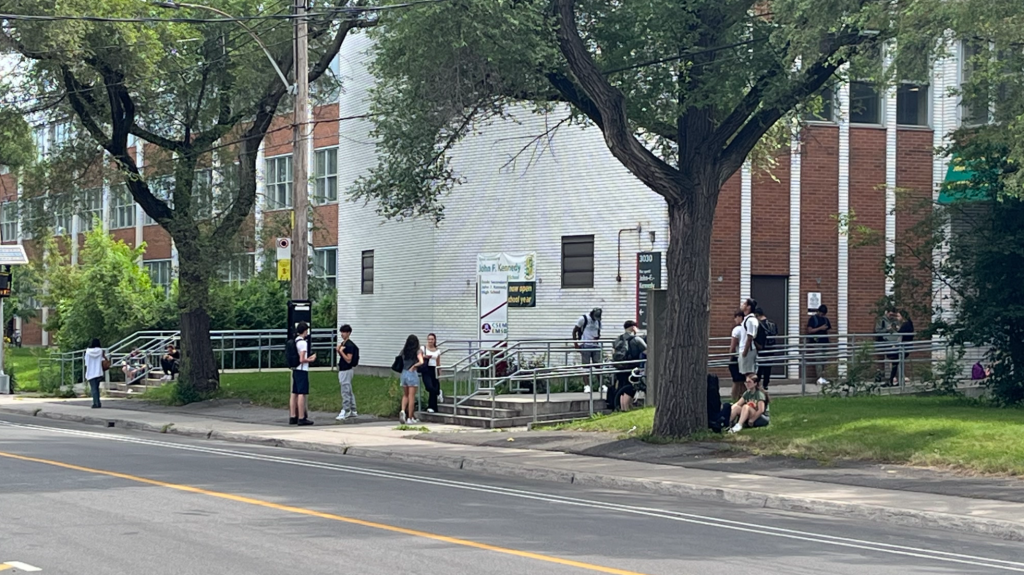
School service centres in the Montreal area are experiencing a significant increase in summer school registrations this year.
Some school centres on the Island and on the South Shore are reporting substantial increases including at St-Hyacinthe School Service Centre reporting a 114 per cent increase in registrations, the Marie-Victorin School Service Centre a 46 per cent increase, and the Montreal School Service Centre a 48 per cent increase.
Marion Miller, a high school teacher in Montreal says some students who need that extra help might not even be qualified to attend summer school.
“Only students between the range, the mark range of 45 and 59 can access the summer courses and I’m sure that’s because there’s not enough space for everybody,” said Miller. “It could maybe be advantageous for a student who’s in the really low 60s to go and work on and strengthen their marks in certain areas and that’s not possible, unfortunately for them.”
Miller says a lot of students failed many of their classes.
“It was evident to us at the end of the year when we were looking overall at the students’ results and the report cards that students are still lacking so much in terms of academic resources throughout the school year.”
Remedial classes free this year
The Quebec government has made the summer courses offered this year by the school service centres free as part of the province’s academic catch-up plan, announced by the education minister earlier this year following the teachers’ strike.
School service centres have had to scramble to find additional teachers to meet the high demand for remedial classes.
“The worrying that we hear about and when parents reach out, it’s always regarding, they’re teacher’s missing or there’s not enough resources in the classroom or not enough resources at school level,” said Katherine Korakakis, president of the English Parents’ Committee Association of Quebec.
Educators say that for some young people, a month’s break is equivalent to two weeks of setback and for some students even more, making summer school necessary for many Quebec children.
For those who failed and don’t have access to summer courses due to high demand, they will still be able to continue their studies next year, while taking remedial classes in the subject they failed in.
Students catch-up post teachers’ strike
On Nov. 23, around 66,000 teachers went on strike for 22 days leading to the closure of about 800 public schools, all or mainly in the French sector.
The Fédération autonome de l’enseignement (FAE), which is the union representing teachers in the French sector, narrowly came to an agreement with the province in February.
When students returned to classrooms after the winter break, the province unveiled a $300 million academic catch-up plan for students to make up for lost time.
Despite the teachers’ strike impacting the academic school year, Miller believes the problem lies in the lack of resources for teachers and students that have accumulated over the years.
“I don’t think that that’s a big enough factor to justify how many students are in need of extra support in summer school. I think the underlying problem, which is why teachers were on strike, is the years of just lack of investment, lack of resources in schools.”
Adding, “I’m worried going into the next school year because we’re still kind of in the same context.”
Some 40 per cent of teachers in the province’s school system are represented by the FAE.