Montrealers coming forward after complaints with Police Ethics Commissioner dismissed
Posted October 25, 2024 3:39 pm.
Last Updated October 25, 2024 4:55 pm.
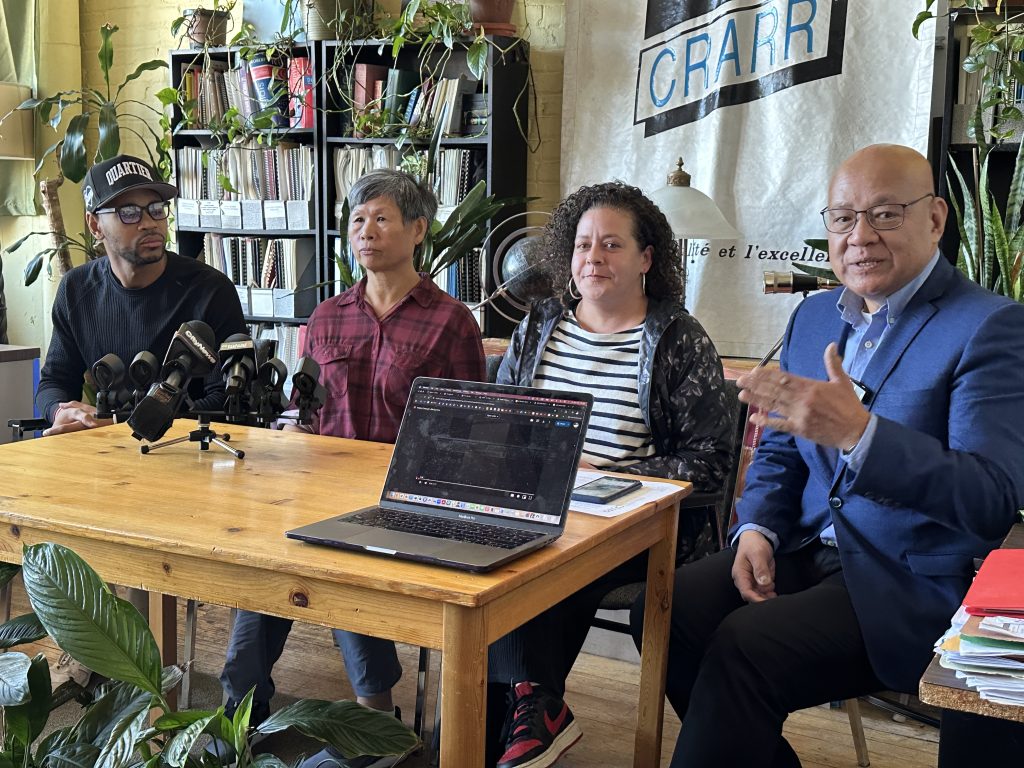
Four Montrealers are coming forward about three cases where they were stopped by police and allege racial discrimination.
All four took their cases to Quebec’s Police Ethics Commissioner and it went to conciliation and because they couldn’t agree on what exactly took place, the cases were dismissed without an investigation. They’re now sounding the alarm and calling for their cases to be taken seriously.
“My husband, daughter, and myself, we were shopping at Carrefour-en-Rignon before her first day of high school. It was a moment that was supposed to be fun, exciting. And next thing you know, we come out of the changing room, and he’s in handcuffs being taken away, paraded, embarrassed. With no explanation, he was falsely accused,” explained Ourida Kara.
Nesean Dayle was arrested last year and police took him into a store that was looking for a man, only for it to be a case of mistaken identity.
“To experience it was a bit shocking, you know? To know that in this time and age, 2023, we’re still being judged by the way we look,” Dayle explained.
Last March, Brandon, who did not want to give his full name, says he was playing with his five-year-old son in his apartment when police barged in for a noise complaint, allegedly shoving and elbowing him.
“It’s quite upsetting that you feel as a citizen already when police show up that you’re less than and your rights are subpar to theirs and that they have all the power. And when they do wrong and they’re not held accountable, it just doesn’t make citizens, especially racialized citizens, feel safe or respected,” he explained.
#WATCH: Four Montrealers are sharing their story about police interventions in the last year they allege involved discrimination. They’re speaking out after their complaints at the police ethics commission were dismissed.
For more news, visit https://t.co/BjkEfuME1C pic.twitter.com/NikHD8HFwK
— CityNews Montreal (@CityNewsMTL) October 25, 2024
In March 2023, Nay Ir was told by police to leave the McDonald’s where she went to use the washrooms because the manager reported her to 911 as someone begging for money.
She says she was upset at the way she was treated, she feels, due to discrimination.
“Just because I’m Asian. And the way I dress, I dress in casual, does not mean I’m a beggar,” said Ir.
The Police Ethics Commissioner tells CityNews in a statement: “Without commenting specifically on these files, the majority of complaints deemed admissible are referred to conciliation. This approach is an important step in the ethics process since it allows the parties to explain their respective perceptions of the event in a structured and respectful environment with the support of a conciliator.”
The cases went through conciliation, but they refused to settle, for various reasons that can’t be disclosed publicly.
“For them to give the police the green light to do what they do, continue to do what they did in the future, I feel that they don’t protect me. They don’t protect the citizen,” said Ir.
In some of the letters sent to the complainants, the commissioner says the police’s actions were not a breach of ethics.
“The concern we all have is if the commissioner raises the bar very high to decide when a case should be sent to an investigation, then a lot of the situations that can inflict pain and other negative consequences of ordinary citizens will just basically be water under the bridge,” said Fo Niemi, the executive director at the Centre for Research-Action on Race Relations (CRARR).
The Commissioner says “It is important to mention that all files submitted to the Commissioner are analyzed rigorously and in compliance with the legal frameworks to which they are subject. The Commissioner is very sensitive and concerned about racial profiling and discrimination in all its forms and does not hesitate to take the necessary actions to mitigate these problems.”
Commissioner data shows that 67 per cent of cases are dismissed, 29 per cent end up in conciliation, and only four per cent end up investigated.
Meanwhile, the three cases will be submitted to the Human Rights Commission
“We’re very disappointed with the decision and we really hope that the human rights hears us out. So this could be avoided,” said Kara.
Brandon adding, “It’s very frustrating when you make a complaint, when you have the evidence to support your complaint. And it’s just you’re not taking it seriously.”