Wave of violence against women in Quebec raises alarms
Posted May 20, 2025 12:19 pm.
Last Updated May 20, 2025 6:25 pm.
A recent wave of violence against women in Quebec is raising serious concerns.
Three major cases happened in just one week, and all were related to domestic violence.
On Wednesday in Châteauguay, a mother of three was allegedly killed by her husband. He was charged with second-degree murder the next day.

The incident occurred in a neighbourhood where many residents knew the family, including Roberto D’Arco.
“Shock. I’m really affected. I never thought it could happen,” D’Arco said.
“It’s a quiet street. There’s not a lot of activity. This couple here, the Marcellins—when we got here, I built their room, their kids’ room, downstairs. I painted so it would be ready, and lately they were making new purchases. I don’t understand how this could have happened.”
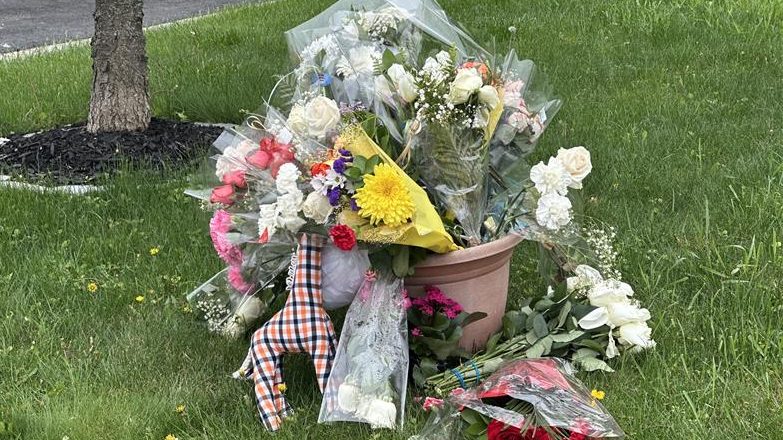
D’Arco described the emotional impact the tragedy has had on the neighbourhood.
“All of us here, we’re closer, we have deep feelings. And we don’t know what to think, why this happened—it’s hard, really hard for us,” he said.
“For us, it’s very difficult—we don’t know what to expect. We always think things happen elsewhere, not close to home. But it happened.”
In the aftermath, he says residents are leaning on each other for support and trying to make sense of what occurred.
“We’re sticking closer together now. We’re having more meetings to try to understand what happened so it doesn’t happen again,” D’Arco added.
But what happened in Châteauguay wasn’t an isolated case.
On Friday, a woman in Lachute was reportedly killed by her fiancé.

Then on Sunday, a woman in Longueuil was badly hurt in a domestic attack.
Claudine Thibaudeau, a social worker and clinical coordinator at SOS Violence Conjugale, says this shows the problem is still very serious.
“Well, it tells us something that we already knew, which is that the issue is still very prevalent,” Thibaudeau said.
“There’s still many people that are living in situations where there is intimate partner violence. Unfortunately, some of these situations end up as femicides. But even all the other ones are still extremely serious too.”
Thibaudeau said SOS Violence Conjugale received 60,000 calls for help between April 1, 2024 and March 31, 2025 — a very high number for the province and one of their biggest years ever.
Home should be safe — but often isn’t
Thibaudeau says women are most often hurt by people they know — in their own homes.
“Well, that’s one of the main differences between violence undergone or suffered by women and violence suffered by men is that women suffer violence and danger from people that they know, mostly family members, friends or partners,” she said.
“And that violence is exercised mostly in their home. So if the violence is in your home, then where is your safe place?”
Root causes, growing concerns
She explains that this is deeply tied to a larger issue of sexism in society. “It’s the root cause,” Thibaudeau said.
“It gives some individuals a sense of entitlement, a sense of right to assert control over somebody else — mostly in their intimate partner relationships.
“Some people might appear to be relatively respectful or equalitarians in their daily life, but in their intimate partner relationship, that’s where it’ll come out the most. And that’s what we need to tackle in order to make a difference in the very high rates of intimate partner violence and femicides. It’s sexism, and that sense of entitlement that some people still have — that sense of a right that some people still have to take power in their intimate partner relationship.
“Even though some strides have been made, some changes of course have been made in the past 50 years or so, there’s still quite a lot of work to do.”
She also expressed worry that some young people are being influenced by harmful ideas.
“We’re concerned that there seems to be some youth that are buying into those ideas,” she said.
“We need to work at prevention and we need to work with our youth to teach them, you know, what is an equal relationship and how do you deal with conflict in a relationship?”
More people asking for help, but not enough support
As more people speak out, Thibaudeau says her organization is struggling to keep up with the need.
“What’s the biggest challenge for us is that there’s more demand, but there’s not more resources or there’s not enough resources,” she said.
“Some victims actually tell us on the phone, you know, you tell us to call, but then we call and you say, we’re sorry, we can’t help you, we don’t have shelter right now available.”
Training frontline workers
Thibaudeau said police and health-care workers are getting better training, but more awareness is needed.
“When you’re a policeman, you can be sure that every day you’ll see two or three women that are victims of intimate partner violence,” she said.
“It’s an issue that everybody should be aware of, of course, and also know how to work with victims… because women often face misunderstanding in many different realms.”
Fear and safety
One of the biggest reasons people don’t ask for help is fear.
“Most victims are hesitant to reach out because of the fear of what their partner might do,” Thibaudeau said.
“Most femicides happen at the time where a victim wanted to leave the relationship or after they left.”
She said victims need strong support systems to stay safe.
“The partners… will use anything they can to do that. Sometimes it’s an increase in physical violence. Sometimes it’s an increase in manipulation or psychological violence.”
A message to those at risk
For anyone who feels they might be in danger, Thibaudeau has a clear message: don’t stay silent.
“Call us, don’t stay alone with those doubts,” she said.
“You don’t need to be sure that you’re going through intimate partner violence to ask for help. We have tools on our website… our phone service is always available 24/7 to give access to services throughout Quebec. The message that we have is that we’re here and don’t hesitate to call.”
If you need help, reach out. Call SOS violence conjugal 24/7 at 1-800-363-9010.
If you fear you may become violent towards your partner, call PRO-GAM for an appointment at 514-270-8462.