Play, connect, thrive: Highlighting inclusive play in Montreal
Posted May 24, 2025 4:04 pm.
Last Updated May 24, 2025 5:29 pm.
What if a playground were more than just a place to run, swing, and slide? What if it were a space where every child, including those on the autism spectrum, could feel seen and supported?
That idea was at the heart of Play, connect, thrive, an event held Saturday at the Giant Steps Centre in Montreal, focused on making outdoor play spaces more inclusive for autistic children.
Experts, families, and community members gathered to discuss ways to reduce barriers in outdoor play areas, especially for children with sensory sensitivities. The goal was to share practical ideas to help every child enjoy and feel comfortable in outdoor play.
The event featured bilingual discussions in English and French.
The importance of outdoor play for autistic children
Seiun Thomas Henderson, director of research and innovation at Giant Steps, emphasized the foundational role of play.
“We’re bringing together researchers, community people, autistic folks and Indigenous elders around the question of outdoor play and forest and nature-based play activities for autistic kids. We’re thinking about neuro-inclusion outside and doing design thinking about that.”
He added, “Play and outdoor play are foundational to what we do here, so we strongly believe in a child’s rights to play, you know, that it’s an opportunity for them to grow, to lead, to be creative, to be fully themselves.”

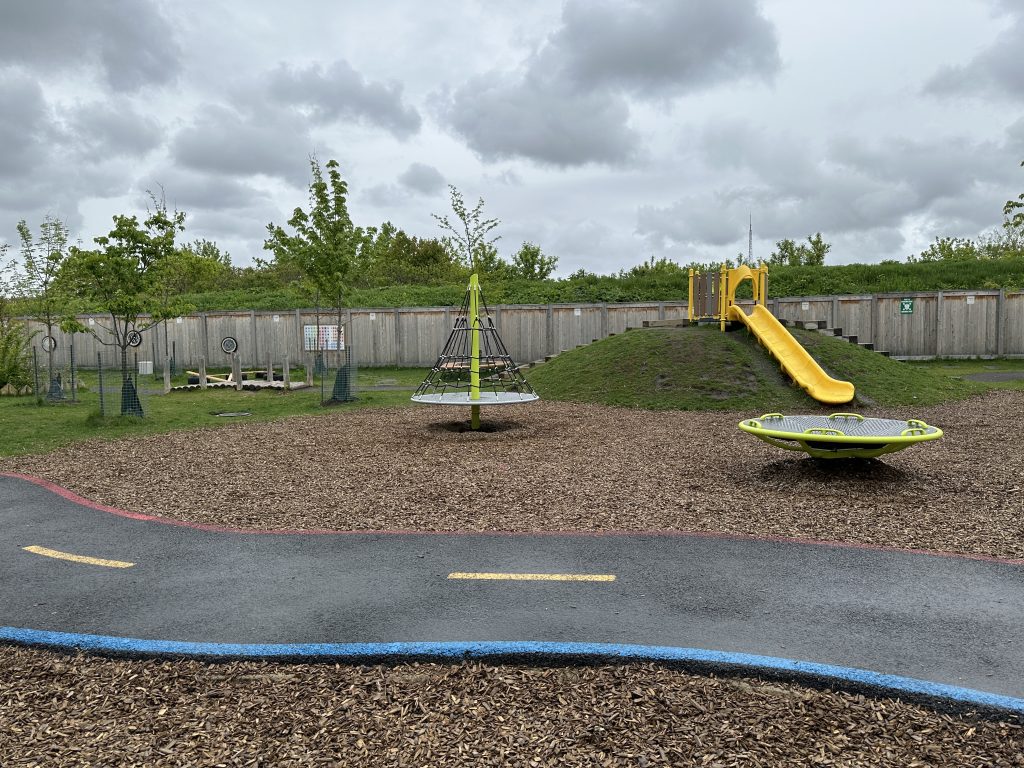
Henderson explained that outdoor play means more than playgrounds alone.
“It’s also about parks, it’s about forest spaces, so it’s about thinking about providing opportunities across different types of spaces for play.”
Breaking down barriers
Martine Habra, partnerships and knowledge mobilization lead at the Transforming Autism Care Consortium, highlighted the many obstacles autistic children and their families face.
“There’s definitely lots of barriers for autistic kids and their families to getting out there and being able to play in outdoor spaces. There can be sensory challenges, noise, echoes, textures that interfere with accessing playgrounds. The social aspect can sometimes be a challenge, so interacting with other kids. But this is actually why it’s so important for them to be out there, so that they get that connection and that experience.”

Habra stressed the value of combining research with lived experience.
“We’re actually bringing not just a research perspective on outdoor play, but also a personal lived experience perspective. We’re bringing a landscape architect who’s contributing to making greener spaces. We’ve got a person who works on developing inclusive spaces. So, by bringing all these people together and speaking on the same topic, we’re really enriching the conversation. And this is how we promote inclusion from our research network perspective.”
Joy and freedom in play
Kelly Bron Johnson, founder of Complètement Inclusif and mother of 15-year-old Ronan McGuire-Johnson, shared her thoughts on the importance of play.
“I really value, and I’ll say when it comes specifically to autistic play, the immense joy that can be had. And that sometimes that joy is not accepted by greater society.”

She described how her son expresses joy in ways that may be misunderstood.
“He still skips and hums and flaps down the street and he’s happy. But when people see somebody who’s almost six feet tall and 15 years old doing that, it scares them. And I would like people to see the joy and not be scared.”
Johnson spoke about the need for children to experience “dangerous play” in controlled ways to build independence.
“We start small. It’s not that right away we go and say, ‘Hey, have some knives and some fire and go wild.’ We start small so that they’re able to start to make their own decisions and that when they get older, they become more responsible and they feel more confident being able to make harder decisions. And so it’s slowly building that independence and that confidence in themselves and we do this all through play.”

The voice of experience
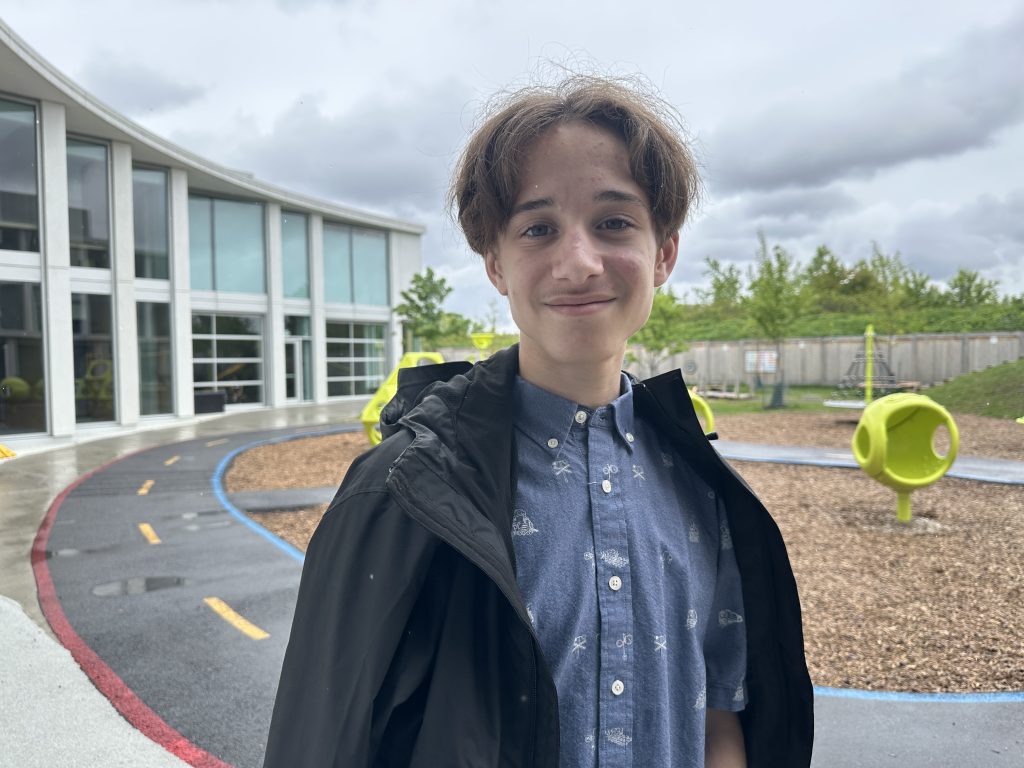
At 15, Ronan shared his own love for outdoor play and what it means to him.
“I used to play outside a lot when I was younger. Yeah, it’s pretty cool. I enjoy doing it.”
When asked about playgrounds designed for autistic children, he said, “It’s very important. There should be more playgrounds around for more kids to play.”
Inclusive playground design
Alain Beaudoin, director general of Giant Steps, spoke about the centre’s mission and environment.
“I think this heaven is just a common sense about our mission. Although playing for kids and for all the people is very integrative part of the mission and the needs and the values for kids, for families, and we want to reinforce and integrate these practices to everyone, for everyone here.”

He explained how the outdoor playground is designed to respect each child’s unique needs.
“You can see that every child here, every person has his own space. So we build different station, but many stations for each space, so they can just be themselves, they can do things in their own rhythm and respect themselves.”
Beaudoin added that sports like soccer or basketball aren’t the focus. “We don’t play soccer, we don’t play basketball games, of course, but there are so many different spots to just be themselves and to go at their own beat.”