Can Quebec deprive expats right to vote after they’ve been gone 2 years?
Posted May 26, 2025 2:44 pm.
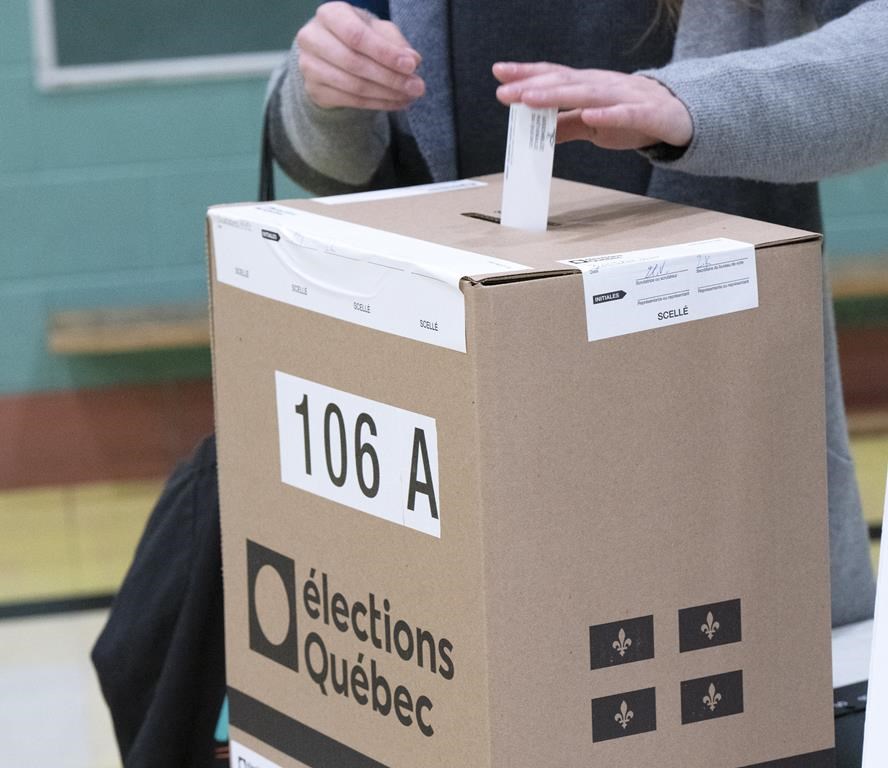
Does Quebec have the right to deprive its citizens of the right to vote if they have been outside the province for more than two years?
After a three-year wait, the Quebec Superior Court will finally hear next week the application for judicial review filed by lawyer Bruno Gélinas-Faucher, who is seeking to have section 282 of the Quebec Election Act declared unconstitutional.
This section removes the right to vote from Quebec citizens after two years outside the province, except in two exceptional cases: those who work for the Quebec or Canadian government outside the province and their spouses, or those who work for an international organization funded by Ottawa or Quebec and their spouses as well.
In practice, people who leave Quebec can vote by mail for two years, but after that, if they wish to exercise this right, they must physically return to Quebec – a major obstacle, especially for students.
Unconstitutional at federal level
In 2019, Bruno Gélinas-Faucher was studying international law at Cambridge University in England, and had been there for over two years when the by-election in Jean-Talon took place in December 2019. Eleven months earlier, in January of the same year, the Supreme Court’s Frank decision had invalidated the provision of Canadian law that withdrew the right to vote after more than five years outside the country. According to the highest court, this was an unconstitutional infringement of section 3 of the Canadian Charter of Rights, which stipulates that “every Canadian citizen has the right to vote and to be eligible for election to any federal or provincial legislature”.
“In early 2019, the Court rendered this judgment,” says Gélinas-Faucher. “I’m not necessarily a constitutionalist, but I keep abreast of Court rulings that have an impact on me. And then I arrive to vote in the Quebec provincial election and they say no, sorry, you’ve been abroad for over two years. And then I think, well, the Supreme Court has just ruled that five years is an unconstitutional limit. It seems completely illogical to me, and just as unconstitutional. But I wasn’t able to vote in the by-election in Jean-Talon, which was (the riding) where I lived, and that’s what led me to launch this appeal.”
Inconsistency and discrimination
Quebec decided to contest this action, and the case will be heard by the court from June 2 to 6, in Montreal.
Beyond the infringement of the right to vote protected by the Charter, Gélinas-Faucher argues that the case is incoherent. “The Quebec government has social programs and provisions that ensure that it maintains a link and demonstrates that it wants to maintain a link, particularly with its students,” he asserts.
He points out that while he was a student at Cambridge, he received student loans from the Quebec government and was still covered by the Régie de l’assurance-maladie du Québec. “RAMQ has an exception for students who are abroad as part of their studies. So I continued to be covered by RAMQ, I received a loan from the Quebec government in the case of the student financial assistance program, but I lost my right to vote. It seems completely inconsistent to me. And that’s what we’re putting forward here, to show that it’s not a reasonable limit because it’s arbitrary and inconsistent.”
Also, he says, the fact that people working outside Quebec for the provincial or federal government or for an international organization retain the right to vote by mail is nothing short of discrimination. “That’s another argument we’re making. There’s no basis for differentiating between these people. For example, if I take the second category, people who are assigned to an international organization to which Canada contributes financially. A person who works for UNESCO in the Central African Republic for 20 years, for example, has no more connection with Quebec than a student who is temporarily abroad for his or her studies, even if it’s been more than two years.”
The Terrebonne example
Now that the case is finally before the Superior Court, the lawyer hopes to win his case before the fall of 2026, when Quebec’s next provincial election is scheduled to take place. Gélinas-Faucher is currently an assistant professor at the University of New Brunswick in Fredericton, and if nothing changes, he won’t be able to vote.
He reminds us, for the record, that no matter how far away, every vote counts. “It’s in the air of the times, let’s say, electoral issues, with Terrebonne and all that,” he says, referring to the federal election in which the final result gave this riding to Liberal candidate Tatiana Auguste by one vote ahead of her Bloc rival Nathalie Sinclair-Desgagné, while at least one Bloc vote confirmed by correspondence was not counted. This result is being challenged in court by the Bloc Québécois, which will no doubt also invoke, for other reasons, section 3 of the Charter guaranteeing every citizen’s right to vote.
–This report by La Presse Canadienne was translated by CityNews