Policy on police stops: SPVM will have to inform citizens they aren’t detained, free to leave

Posted May 26, 2025 2:40 pm.
Last Updated May 26, 2025 5:53 pm.
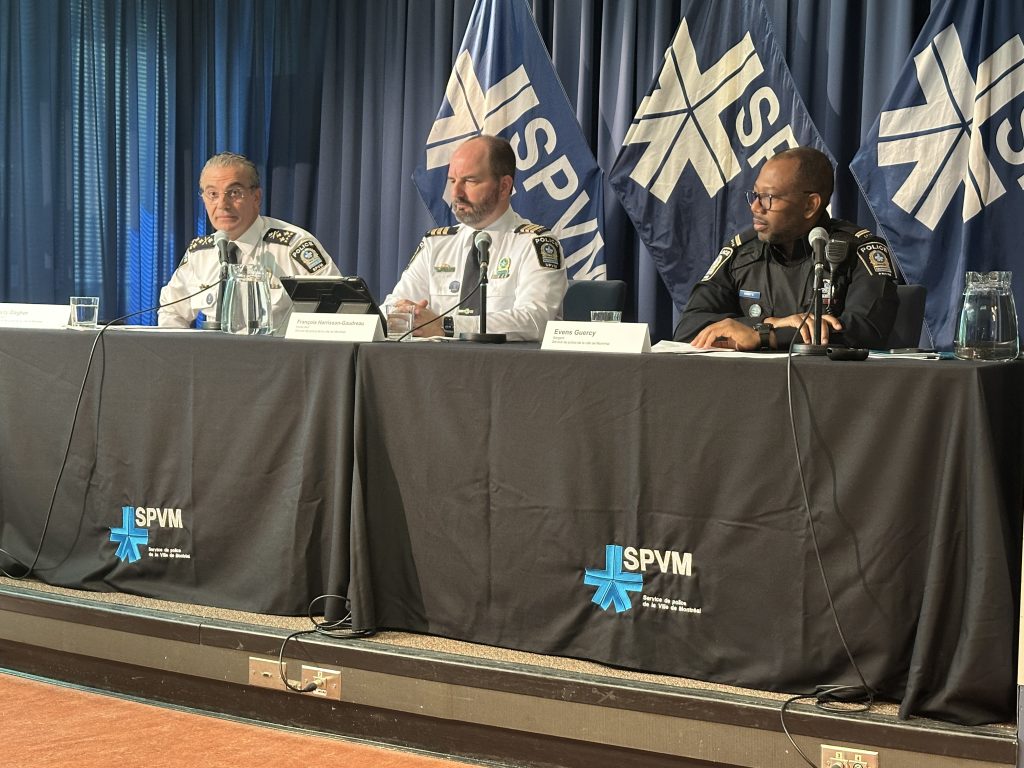
Montreal police unveiled an update to their policy on police stops on Monday.
SPVM officers clarified the definition of a police stop, which is an “interaction initiated by a police officer with a person in order to collect or attempt to collect information about them, including identifying information.”
The policy was adopted in the summer of 2020 and since then, officers have had to let people know exactly why they are being stopped. The formula for a stop is rooted in observable facts, which will inform the reason and lead to the stop.
“We have to observe some facts and there have to be some context,” SPVM chief Fady Dagher said, adding that policy checks cannot happen “just randomly.”
What’s new is that officers, on top of telling citizens why they have been stopped, will have to inform them that they are free to leave and that they are not detained.
“We want to make sure that they bring those words from the beginning,” said Dagher at the conference. “They can leave right away if they want to.”
Dagher explained that in the past, people “had the perception that they were detained psychologically when the police approached them.”
From this point, the officer and individual can leave the scene and the officer will have to document the stop with notes.
Dagher told police officers today, “You tell the person why, you tell them that they are free to leave, and I’m expecting you to write it down.”
The SPVM says on Monday morning, they instructed its police officers to inform the person, at the beginning of the intervention, of the reason for their stop and the fact that he or she is free to leave. The directive takes effect immediately.
The police force says the revised police will provide “clarification on the contexts in which the use of stop is permitted and will ensure that communication between the officer and the person stopped is improved. It will also introduce new organizational expectations for this policing practice.”
“This is just a start, we have a lot of work to do but we’re on the right path,” Dagher concluded.
The police force has put together a team of coaches to help train officers on the policy. The update to the policy will be effective in the fall of 2025, once the computer systems used by police personnel to document stops are upgraded.
The police chief says the measures are aiming to build trust and confidence within society, “one interaction at a time,” and to respect people’s rights and dignity.
“The public wants the police to continue doing their job of ensuring public safety, but they also want to be sure that police practices are respectful and free of discrimination,” Dagher said in a press release. “They also want to be able to better understand the police officer’s actions.”
The policy outlines that “police officers may conduct police stops when it is consistent with the SPVM’s mission and the police officer complies with the conditions set out in this policy.”
It specifies that any police stop that is “unfounded, random, based on a discriminatory motive, or uses an oblique motive is prohibited.”
The policy is being presented at Montreal’s public security commission on Wednesday evening.
SPVM made sure to differentiate between a police stop and a traffic stop, which involves officers intervening with motorists.
The Supreme Court of Canada has agreed to hear a case about whether it’s constitutional for police to make a random traffic stop without reasonable suspicion the driver has committed an offence.
Canada’s highest court announced earlier this month it granted the Quebec government leave to appeal a lower court decision that that banned police officers from pulling drivers over for no reason and said random stops lead to racial profiling.