LaSalle College hit with $30M fine from Quebec for surpassing English-speaking student limit
Posted July 11, 2025 11:21 am.
Last Updated July 19, 2025 4:10 pm.
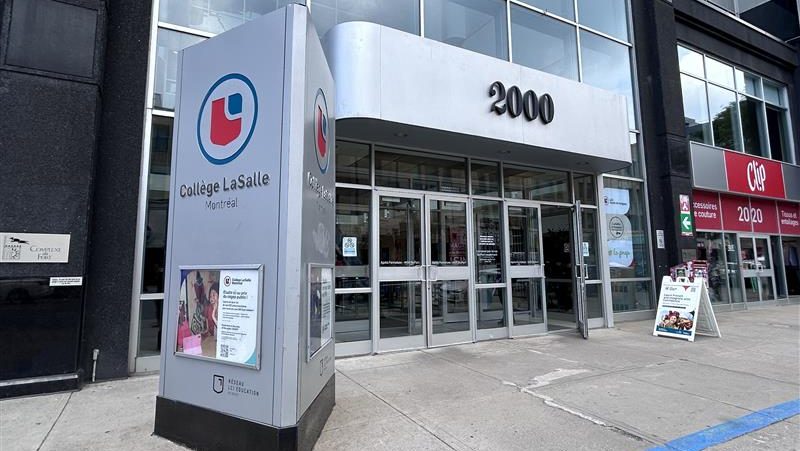
Montreal’s LaSalle College is facing a $30 million fine from the Quebec government for accepting more English-speaking students than allowed over the past two years.
The fine says the College broke language rules under Bill 96. This law, which strengthens Quebec’s French Language Charter (Bill 101), limits how many students can enroll in English-language programs at CEGEPs, or junior colleges.
A letter from Quebec’s Higher Education Ministry, dated June 28, 2024, says LaSalle College went over its English-speaking student limit by 716 students during the 2023–2024 school year.
For this, the Ministry is asking the college to pay back $8,781,740.
“The Ministry of Higher Education must recover the amount of subsidies paid in excess and collect the adjustment,” the letter stated.
In the 2024–2025 year, the college reportedly went over by 1,066 students.
Here, the government is demanding another $21,113,864, bringing the total to nearly $30 million.
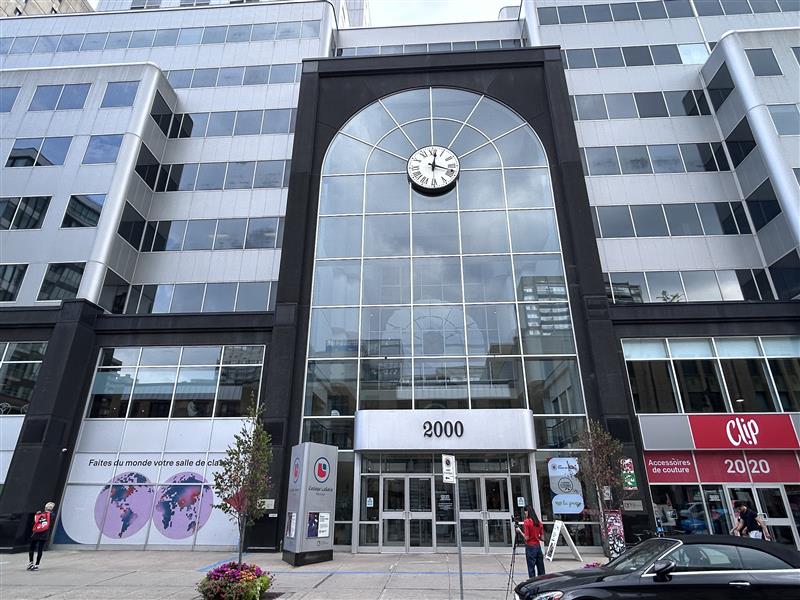
Back in December 2024, LaSalle College President Claude Marchand responded in a letter to Quebec officials, saying the school acknowledged that they have been unable to comply with the conditions imposed by the new legislative framework regarding quotas for English-speaking students, but that the school was never given a fair chance to talk with the government about the issue.
“The Government of Quebec is imposing an unprecedented $30 million penalty on LaSalle College, claiming we exceeded the number of anglophone students in certain programs,” Marchand said in a statement to CityNews.
“The truth is, we have not increased our total number of English-language students since 2019,” he added. “We simply shifted enrollments from DEC to AEC programs, following the government’s own workforce requalification initiative, Opération main-d’œuvre.”
“In the case of international students, the government authorized their admission through CAQs, and we had a legal obligation to honour contracts signed over a year in advance,” Marchand continued.
“The law was applied retroactively, with no transition period, leaving us in a position where compliance was impossible.”
That statement was echoed more recently to CityNews, when Marchard said, “I don’t know one hospital, I don’t know one school, I don’t know one city or one company that could afford such a fine.
“First of all, no transition period whatsoever was offered to our institution to realign. Second, the fines themselves are absolutely disproportionate.”
Adding, “OQLF is giving fines after many, many, many, many warnings of about $1,500 per fault. So there’s a big difference between being fined $1,500 or $3,000 and $30 million.
Marchand warned that the fine could result in the loss of 736 jobs, disrupt the education of thousands of students, and force the college’s financial backers—including CDPQ and Export Development Canada—to pull their $150 million granted to LCI Education.
“We remain hopeful that the Premier will step in and bring common sense back into this conversation,” he added. “A $30 million fine is not just disproportionate — it’s unheard of in Quebec’s education system.”
Born and raised in Laval from a Francophone family, Marchand believes in protecting and strengthening the French language. He does not agree, however, with the way the Quebec government went about the over-enrollment in their English programs.
“We cannot tear apart signed contracts and we don’t want to interrupt the learner’s journey during their three-year study at La Salle. So by knowing already what were our quotas for August 2023 and August 2024, it was really clear that we would exceed,” said Marchand.
“We shared those numbers with the Ministry of Higher Education and they decided to just ignore our presentations and move forward. “
“The timing didn’t work out in terms of who had already registered. So I really think, especially within the first couple of years, that they should be given a little bit more leniency, reasonable fines if fines must be given. In this case, I don’t necessarily think that that was true, that they even needed to be fined. I think warnings would have done the trick,” said Geneviève Grey, a Montreal lawyer.
In a statement to CityNews, the Ministry of Higher Education said:
“Despite close support and several warnings, it is important to clarify that LaSalle is the only subsidized private college to continue to defy the Charter of the French Language and fail to comply with the law. As the matter is before the courts, we will not comment further.”
LaSalle College is taking the government to court to fight the fine.