McGill team develops AI to detect infection before symptoms appear
Posted July 30, 2025 7:48 am.
Last Updated July 30, 2025 5:42 pm.
An artificial intelligence platform developed by researchers at McGill University can accurately predict when you’re about to get sick before you feel a single symptom. Data from ordinary fitness trackers like a smart watch, when combined with AI based on data can detect signs of inflammation days before symptoms appear.
This could one day allow doctors to tackle the problem days earlier, particularly in patients whose health is already fragile and for whom a new infection could have serious consequences.
“Our entire goal is to try to move kind of healthcare upstream, which is put more control into the individual,” explained the study’s lead author, Professor Dennis Jensen of McGill University’s Department of Kinesiology and Physical Education. They are using “a multitude of clinical grade wearable sensors and machine learning ultimately to say ‘I’m a vulnerable person with chronic lung disease where a viral infection can put me into the hospital.”
This technology could also potentially reduce costs for the healthcare system by avoiding complications and hospitalizations.
“We trained machine learning models to basically detect how does the physiology change to then predict a surge in inflammation, which we had quantitatively measured through the blood,” said Jensen.
“And so now in essence, we have a no blood, no hardware, no needle AI model of acute surges in systemic inflammation.”
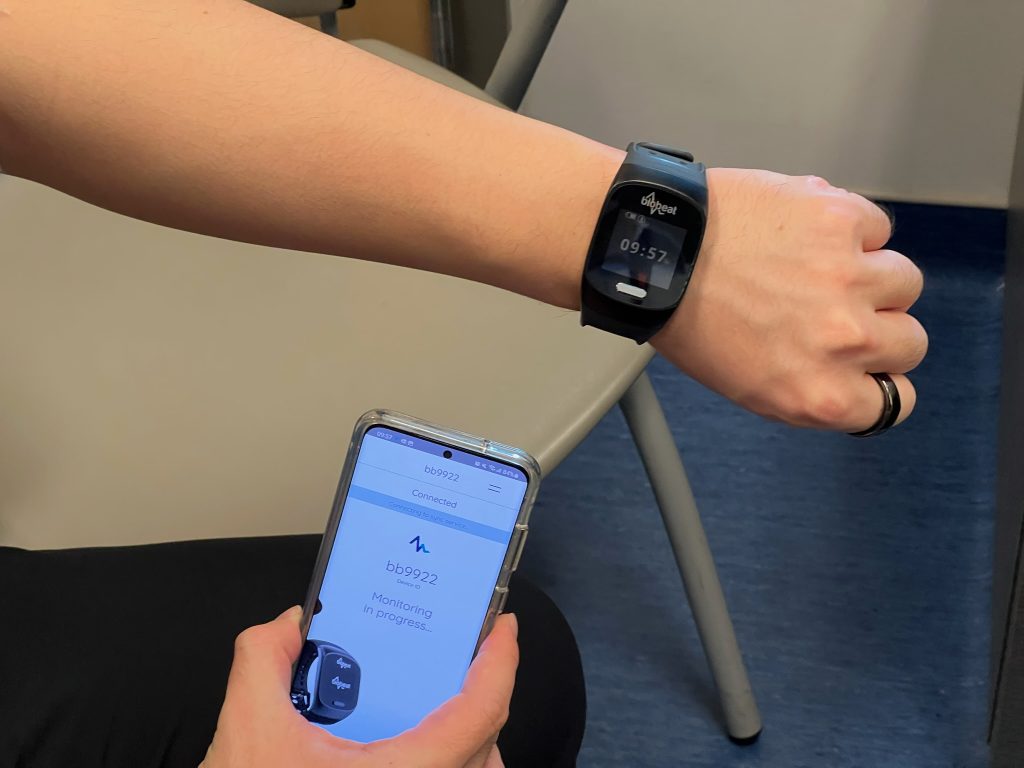
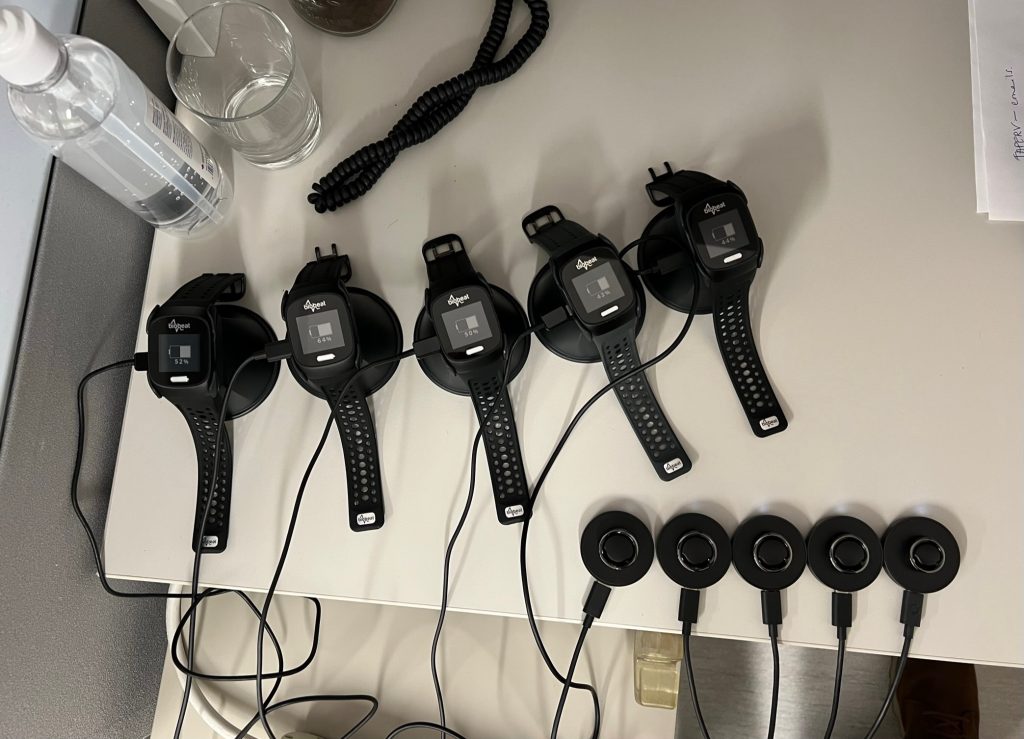
The artificial intelligence model developed by Jensen and his colleagues uses biometric data generated by a smart ring, smart watch, or smart clothing to accurately predict acute systemic inflammation—an early immune response to viral respiratory tract infections.
Although it is a natural defence mechanism of the body that usually does not resolve itself, this inflammation can cause serious health problems, especially in populations with pre-existing health conditions.
“If you think of an iceberg,” illustrated Jensen, who assures that this model is the only one in the world to use such physiological measures, and not symptoms, to detect a problem. “That’s what we view as symptoms. And so when somebody is already symptomatic, it’s as if the iceberg has already kind of breached the water now. But most of the iceberg is under the water.”

Experience
McGill researchers, part of the Research Institute of the McGill University Health Centre, administered an attenuated influenza vaccine to 55 healthy adults to simulate infection. The subjects were monitored from seven days before inoculation to five days afterward.
Participants also wore, simultaneously and for the duration of the study, a connected ring, watch and clothing to continuously monitor several physiological parameters and activities, including heart rate, heart rate variability, body temperature, respiratory rate, blood pressure, physical activity and sleep quality.
The researchers also measured biomarkers of systemic inflammation using repeated blood samples, performed PCR tests to detect the presence of respiratory pathogens, and used a mobile app to collect symptoms reported by participants, it was explained in a press release.
In total, more than two billion data points were collected to train machine learning algorithms. Ten different AI models were developed, but the researchers ultimately decided to retain only the model that used the least amount of data for the rest of the project.
Jensen says that while inflammation is a normal part of how our body fights off illness, it can get dangerous – especially for people with pre-existing health issues.
The new AI model was able to correctly identify nearly 90 per cent of positive cases. Researchers say that’s practical enough to use for daily health tracking.
Individually, Jensen said, none of the physiological or activity measures coming from just the ring, watch, or T-shirt are sensitive enough to detect how the body is responding.
“If the body is facing a viral challenge, so say like influenza or rhinovirus or COVID or SARS-CoV-2 infection, is that the immune system would activate and that would create subtle changes in many different physiological variables, he explained. “Your heart rate might elevate a bit.”
“Any one of those individual changes might be clinically insignificant,” he explained. “But when combined, using machine learning, is that we could see that how an individual’s physiology changes from before to after being exposed to a virus is that we would be able to see a deviation in their kind of normal behaviour and alert to an incoming or a basis of the body’s fighting an infection.”
Remarkably, the algorithms also successfully detected systemic inflammation in four participants infected with SARS-CoV-2 during the study. In each case, the algorithms reported the immune response up to 72 hours before patients tested positive through rapid testing.
Ultimately, the researchers hope to develop a system that will inform the patient of possible inflammation so they can communicate with their healthcare provider.
“In medicine, we often hear about delivering the right drug to the right person at the right time.” said Jensen. “Certainly, I think the industry has a lot of the right drugs. They have a lot of the right people, but they don’t necessarily have the right time.”
Jensen and his team are working on this technology to function as a preventative measure, and says it is therefore crucial to tackle the problem as early as possible, whether it is a simple cold or cancer, “because once the symptoms appear, it starts to get late, like you’re drowning and then somebody throws you a life preserver,” he said.
The findings of this study were published in the journal The Lancet Digital Health.
–With files from The Canadian Press