Montreal couple trapping pet cats, wild animals in backyard cages; borough passes bylaw in response
Posted August 6, 2025 5:19 pm.
Last Updated August 6, 2025 6:05 pm.
Esther Dayan first discovered something was amiss when she heard one of her three cats crying from her neighbour’s backyard, and found it trapped in a cage.
Based on the amount of time the cat was away from home, Dayan estimated it may have been caught for up to 24 hours.
“I didn’t realize the intensity, like what was going on exactly, until after I decompressed,” Dayan said.
The Saint-Laurent resident said her neighbour has been setting up traps in his own backyard. Dayan and other neighbours said he’s doing it with the intent of catching stray animals and relocating them outside the area.
But it’s clearly not just wildlife getting caught in the traps.
That first instance involving Dayan’s cat happened in May. This past Saturday, it happened again.
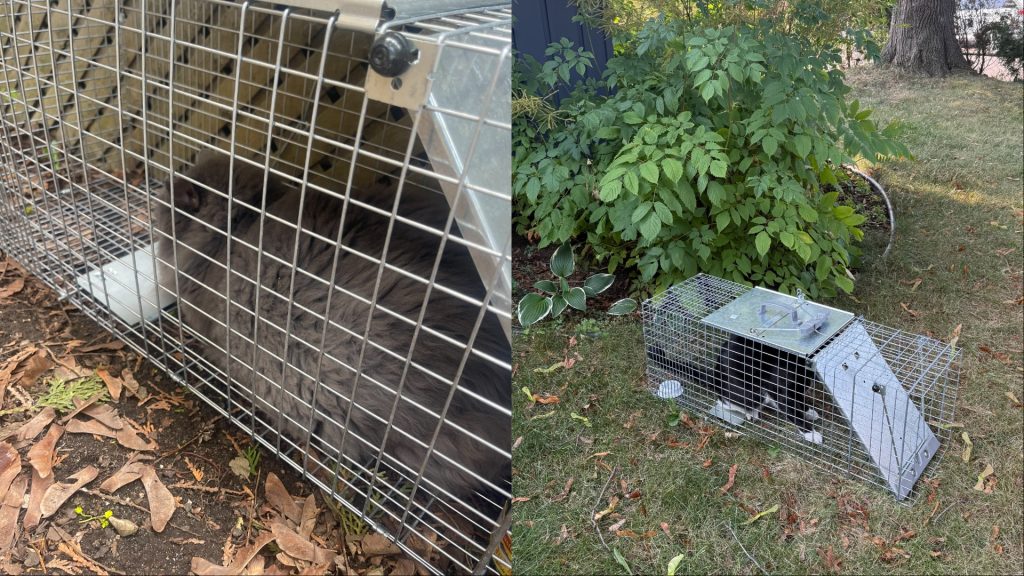
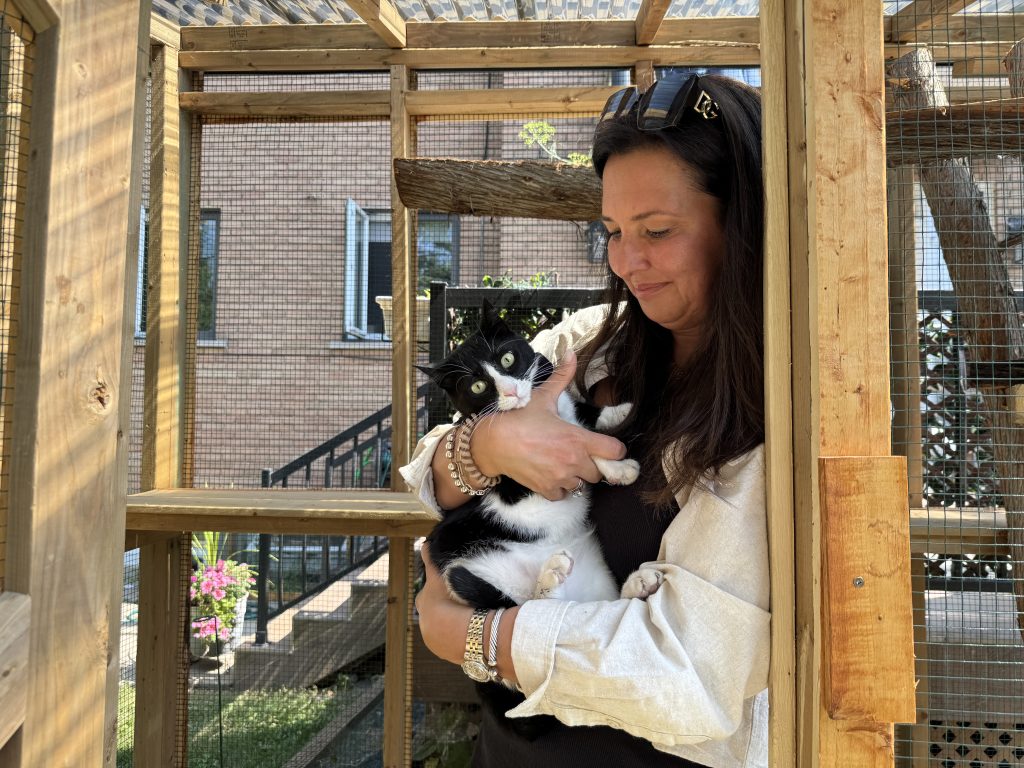
Dayan, a real estate agent by trade, says she was alerted of her cat’s location by a GPS tracker she placed on its collar. She and her neighbour called the police, and officers arrived to free the cat from the trap.
“We told them what happened, we cannot enter their house. But we took videos. Actually we could hear the cat shouting and crying,” recounted neighbour Sunil Dhote.
After that second incident, Dayan brought her concerns to the Saint-Laurent borough council meeting on Tuesday, calling on officials to ban the use of traps, especially when pets are at risk.
“I want people to be sensitized to these things,” she said, “and I want the laws to change, to be more clear.”
By Tuesday evening, the borough of Saint-Laurent passed a new bylaw banning the use of animal traps.
Officials there say the move is a direct response to Dayan’s case, with the bylaw meant to protect both animals and children from harm.
“Without knowing what are the different types of traps that might be out there and how lethal or dangerous they could be, we chose to be proactive,” said Saint-Laurent borough Mayor Alan DeSousa.
Those who are approved to used traps, such as animal rescue groups who trap, neuter and then release cats, will not be affected by the bylaw.
Dayan says while she understands concerns about pests, she urges residents to deal with the issue humanely – by contacting professionals who can ensure wildlife and pets stay safe.
“It’s not only for the safety of our animals. It’s also the safety of our kids,” she said.
“You don’t solve a problem by creating a problem. You solve a problem by doing things in a natural way, in a humane way.”