Quebec reports first case of tick-borne Rocky Mountain spotted fever
Posted August 19, 2025 2:40 pm.
Last Updated August 22, 2025 12:52 pm.
Quebec health officials say a first case of a tick-borne bacterial disease common in the United States has been detected in the province.
“What happens in that timeframe is that the bacteria gets transmitted from the tick into the human and starts going everywhere. It in fact, in fact, it infects the lining of the blood vessels. So you can imagine we are full of blood vessels and that’s where the bacteria starts to infect,” said Dr. Donald Vinh, an infectious diseases specialist.
“You may or may not even have a rash, but if you think you’ve been in an area where there’s ticks and you start develop developing symptoms, you need to seek medical attention.”
The single case of Rocky Mountain spotted fever was reported in the Eastern Townships region east of Montreal.
“So Rocky Mount Speed Spotted Fever is completely different from Lyme. Uh, in fact, Rocky Mount Spotted Fever is the most common and the most dangerous tick-borne infection in North America,” said Dr. Vinh.
Dr. Vinh clarifies that this is not a new disease, as the name was coined after being identified in the Rocky Mountain valleys of Idaho and Montana in the late 1890s.
He says what’s concerning with the most recent case is questioning how often we anticipate seeing it again.
“It is, um, an infection that can be quite problematic because at the beginning, um, people will have kind of flu-like symptoms. They’ll have sudden fevers. They’ll have severe headaches. They can have muscle aches, sometimes even things like nausea and vomiting. And then you get a rash, and the rash starts on the wrists and ankles, and then it spreads to the palms and soles of your feet and to the rest of your body. And it starts looking like spots, which is how it got its name, spotted fever. Uh, but the problem is this is not a skin infection,” Dr. Vinh explained.
Dr. Vinh warns that what people are seeing on the skin is just the tip of the iceberg because that infection spreads to the organs very quickly, affecting the brain, the liver, and even the heart. Without antibiotic treatment, the death rate is around 20-30 per cent.
The Ministry of Health and Social Services said they are aware of the situation and are closely monitoring it for further details on the presence of this disease in Quebec.
Alex Carignan, an epidemiologist with the local health authority, says on X that the patient responded well to antibiotic treatment.
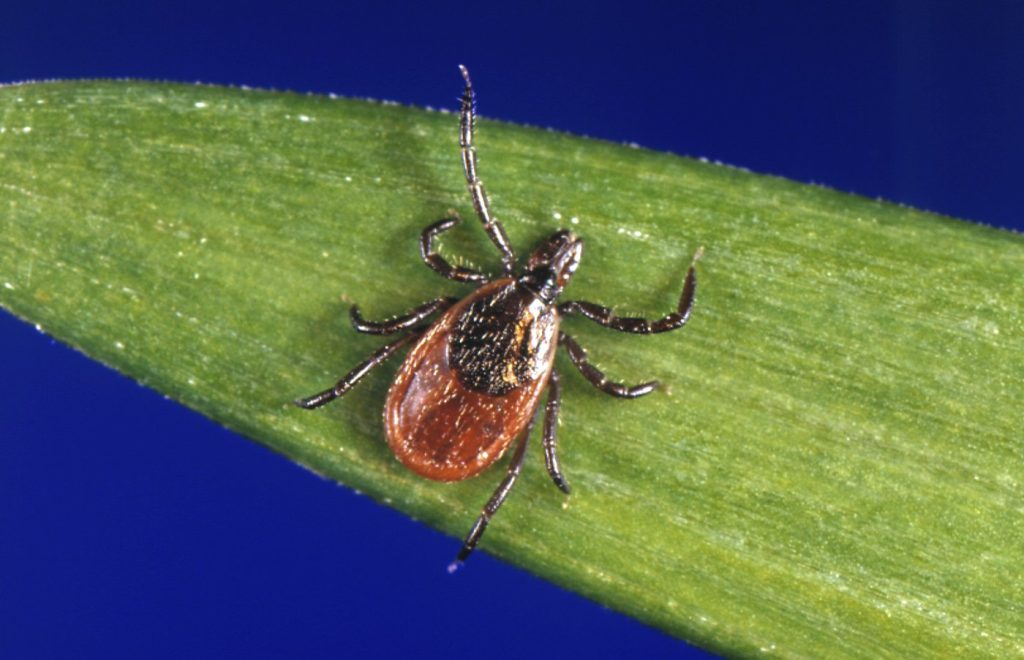
The infection is transmitted by the Dermacentor tick, also known as the American dog tick.
Carignan says experts assumed the disease would arrive in Quebec, but he says the first case was detected earlier than expected.
If you go outdoors, Dr. Vinh advises Montrealers and travellers to wear long-sleeve clothing, high socks, insect repellents, followed by a tick check.
“We have to be therefore vigilant about the fact that these ticks and mosquitoes may carry, uh, germs with them that can very much infect humans, but not just humans, also companion pets like dogs and cats.”